PPC Management for Small Business: How to Get the Best Results on a Budget
PPC management for small business doesn’t have to break the bank. This guide shows you how to run high-performing PPC campaigns on a budget, driving targeted…
Running a small business? I totally get it. You’re probably wearing a dozen hats: managing inventory, juggling customer service, and keeping your website up to speed.
Oh, and did I mention keeping your marketing on point? It’s a lot to handle. But here’s some good news: PPC (Pay-Per-Click) advertising is one of the best ways to boost your business without draining your budget!
At Midsummer Agency, I’ve helped small businesses, from cozy boutiques to B2B e-commerce platforms, scale with smart PPC strategies. If you’re looking to drive quality traffic, generate leads, and boost sales while staying within a tight budget, you’re in the right place.
In this guide, I’ll walk you through how small businesses can leverage PPC management to get the most out of every dollar spent.
Ready to make your PPC campaigns work harder for you? Let’s dive in!
Brief Introduction to PPC
Let’s start with the basics: PPC, or Pay-Per-Click advertising, is a type of digital marketing where businesses only pay when someone clicks on their ad.
Think of it like renting a billboard, but instead of paying for a flat fee, you only pay when someone actually looks at your ad and says, “I’m interested.”
If you’re running a small business on a budget, this model can be a total game-changer. And believe me, I’ve seen how well-crafted PPC campaigns can drive traffic, generate leads, and boost sales fast.
Why Small Businesses Need PPC
If you’re a small business owner, one of your biggest goals is likely to drive the right traffic to your website, traffic that actually converts into paying customers. While SEO and social media are important long-term strategies, PPC offers a faster, more targeted solution. Here’s why small businesses need PPC:
Drive high-quality traffic to your website
For small businesses, every marketing dollar counts. PPC allows you to target exactly the people who are most likely to be interested in your products or services.
Unlike traditional marketing, which casts a wide net, PPC helps you reach a highly targeted audience based on demographics, behavior, and search intent.
Pro Tip: Combine product-specific keywords with customer data. When you know what your audience is searching for and match it with the right landing page, you can drive the right traffic at the right time.
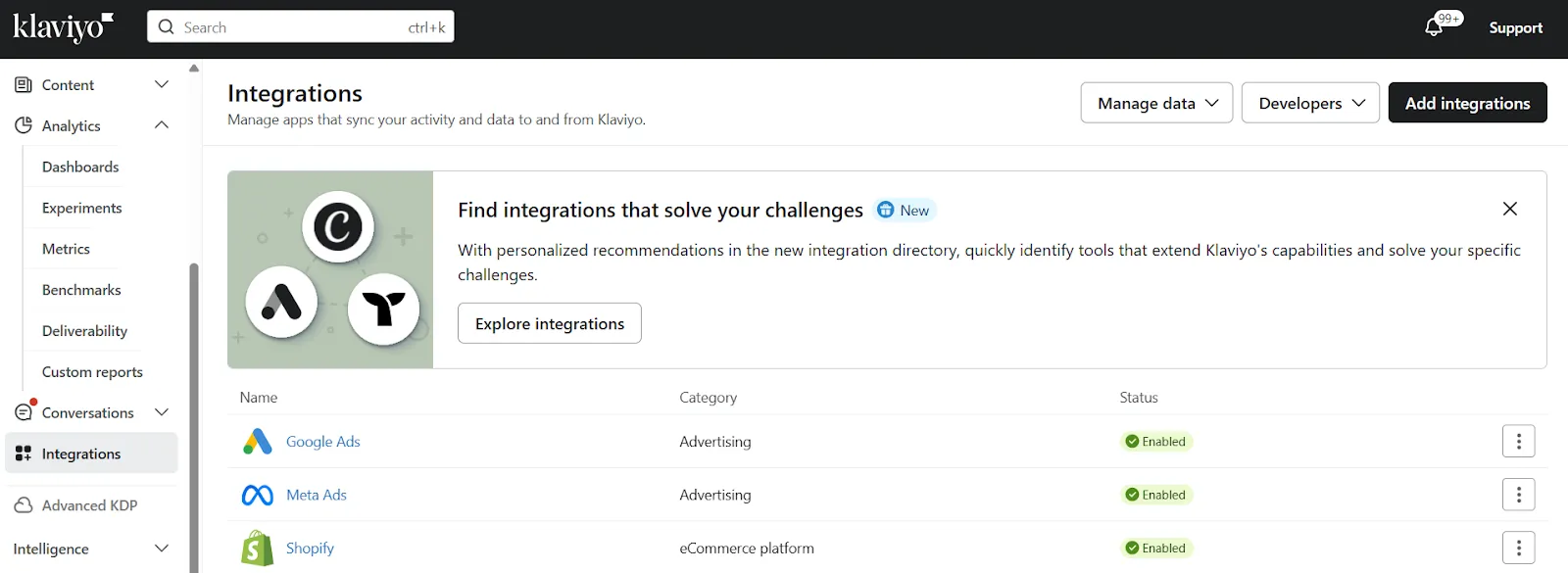
Did you know you can integrate Google Ads with tools like Klaviyo? This lets you retarget customers, optimize audiences, and exclude users based on purchase data.
Generate conversions almost immediately
Sure, traffic is great, but what about conversions? That’s where PPC really shines. A well-optimized PPC campaign does more than just drive visitors to your site: it helps you generate valuable conversions.
At Midsummer, I’ve seen firsthand how strategic PPC campaigns have helped businesses generate highly qualified leads, even on a modest budget.
Challenges Small Businesses Face with PPC
While PPC is a fantastic tool for small businesses, I know it’s not always a walk in the park. Here are a few hurdles that many small business owners face when diving into PPC:
Budget Constraints
Working with a limited budget is one of the biggest challenges small businesses face with PPC. Let’s face it: You don’t have the deep pockets of a Fortune 500 company. The beauty of PPC, however, is that it’s flexible.
You can set a budget that works for you, monitor your spending, and adjust your bids and targeting as needed.
Lack of Expertise
Not every small business owner is a PPC expert, and that’s okay! Managing campaigns, analyzing data, and optimizing ads can be time-consuming and requires a certain skill set. Without the right expertise, it’s easy to spend money on ads that don’t deliver the best results. This is where partnering with a PPC agency can make all the difference. We know what works, and we’ll make sure your campaigns are finely tuned to deliver the best possible ROI.
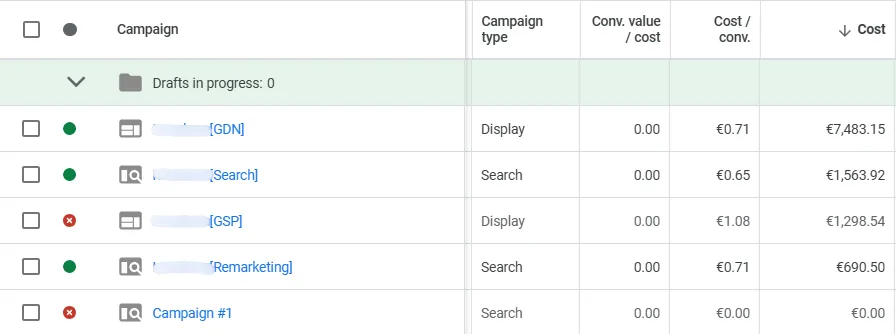
If you’re an ecommerce, and this is what your campaign structure looks like you may want to consider calling 911 (or a PPC agency like us) – because this is a robbery. Spending over 7K in display campaigns? Showing conversions (because we see data for Cost / conv. data ) but no revenue (because we don’t see Conv. value / cost data) is a crime – I’m sorry. Where are the shopping or PMAX campaigns?
Competition
In certain industries, small businesses often face the tough challenge of competing with larger players who have significantly bigger ad budgets. To succeed it is crucial to convert that traffic once it lands on your site. For ecommerce brands, where PPC campaigns often lead directly to product pages, strong UX and CRO practices can make all the difference.
Make sure your product pages are built to convert: use high-quality images, display clear pricing and shipping info, add trust signals like reviews, and ensure fast load times. A prominent, easy-to-tap CTA and mobile-friendly layout are non-negotiable. These optimizations help maximize the value of each click, essential when every ad dollar counts.
The Importance of Setting and Optimizing for a Clear Goal
Before diving into PPC, it’s essential to set clear, measurable goals. Whether your goal is increasing sales or generating leads to your website, having specific objectives helps you define success.
When you know what you’re aiming for, you can tailor your PPC campaigns to match your business goals. In PPC, when we talk about goals, we often call them “conversions”.
Pro Tip: Once you’ve defined your goals, make sure they’re being tracked accurately. I’ve seen it far too often – businesses of all sizes investing in ads while running with broken, duplicate, or completely missing tracking setups.
It’s painful to watch – and even worse for performance. If your tracking isn’t reliable, you can’t trust your data. And if you can’t trust your data, you can’t optimize your campaigns, budgets, and bids appropriately.
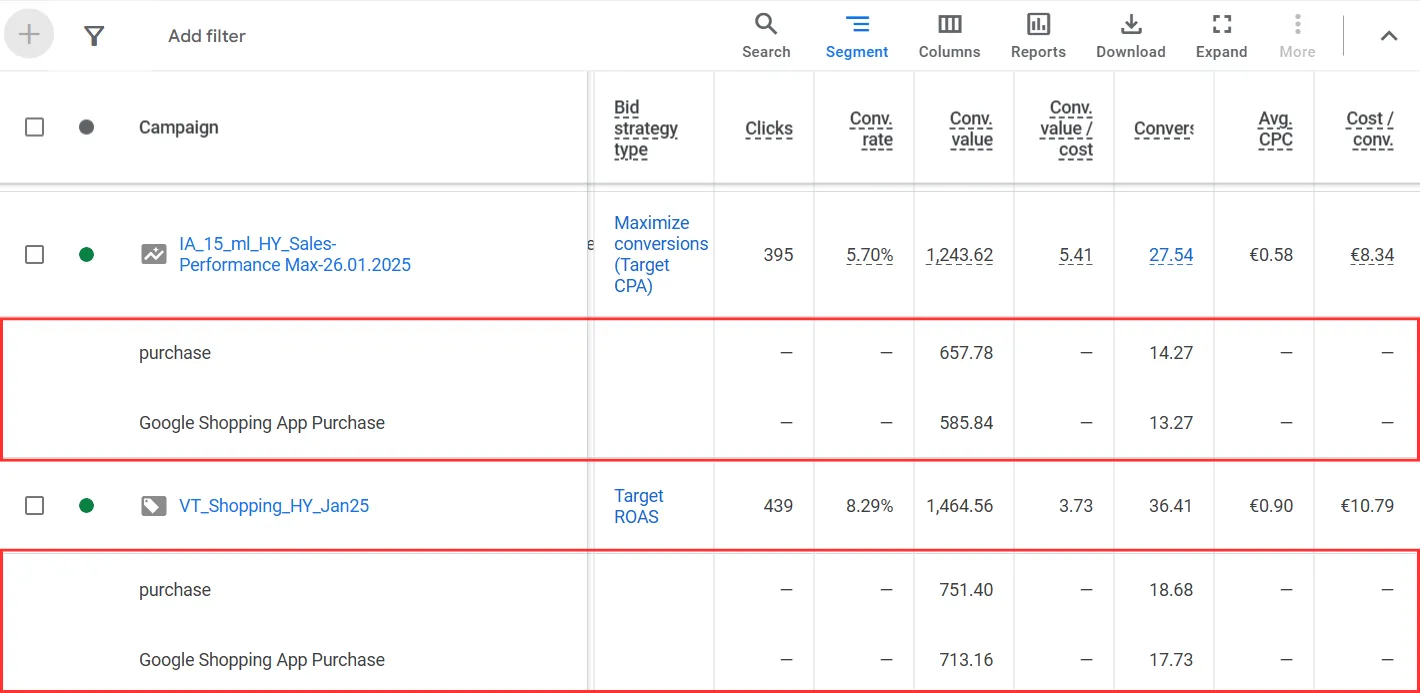
During an audit, we found two purchase conversions being counted per campaign, doubling ROAS and halving CPAs. This meant that campaigns were optimized on misleading data, making it easy to overspend while thinking performance was great.
How to perform Effective Keyword Research for Your PPC Campaigns
Keyword research is at the core of any successful PPC campaign. But when you’re on a tight budget, it’s essential to focus on the right keywords. Here’s how to do it:
Perform Long-Tail Keyword Research to Enrich your Strategy
Instead of bidding on broad, expensive keywords like “sunglasses,” go for more specific, less competitive long-tail keywords like “women’s silver aviator sunglasses”. These long-tail keywords are often cheaper to bid on and more likely to convert.
Pro Tip: I’ve helped multiple fashion brands succeed with long-tail keywords, capturing shoppers who are closer to the buying stage. It’s about finding those niche audiences that others might overlook.
Using Tools to Find Affordable Keywords
Tools like Google Keyword Planner and SemRush are essential for discovering keywords with high intent but lower CPC. By focusing on these keywords, you can stretch your marketing budget and target the right audience without the high costs.
Focus on Negative Keywords
As important as it is to focus on the right keywords, it’s equally important to exclude irrelevant keywords that might be eating up your budget.
Negative keywords ensure your ad doesn’t show up for irrelevant searches. For example, if you sell luxury handbags, you wouldn’t want your ads showing up for “cheap handbags” or “discount bags”.
Using shared negative keyword lists simplifies exclusion management and keeps your campaigns cleaner and more cost-effective.
Review and Prune Costly Keywords
As your campaign progresses, you’ll start to notice which keywords are working and which ones are draining your budget. By pruning ineffective or costly keywords, you can free up more of your budget for the keywords that are really driving results.
For example, let’s say you’ve been bidding on a broad term like “handbags,” but it’s getting you lots of clicks without conversions. You might decide to eliminate it and focus on more specific terms like “luxury leather handbags” or “designer handbags for women”.
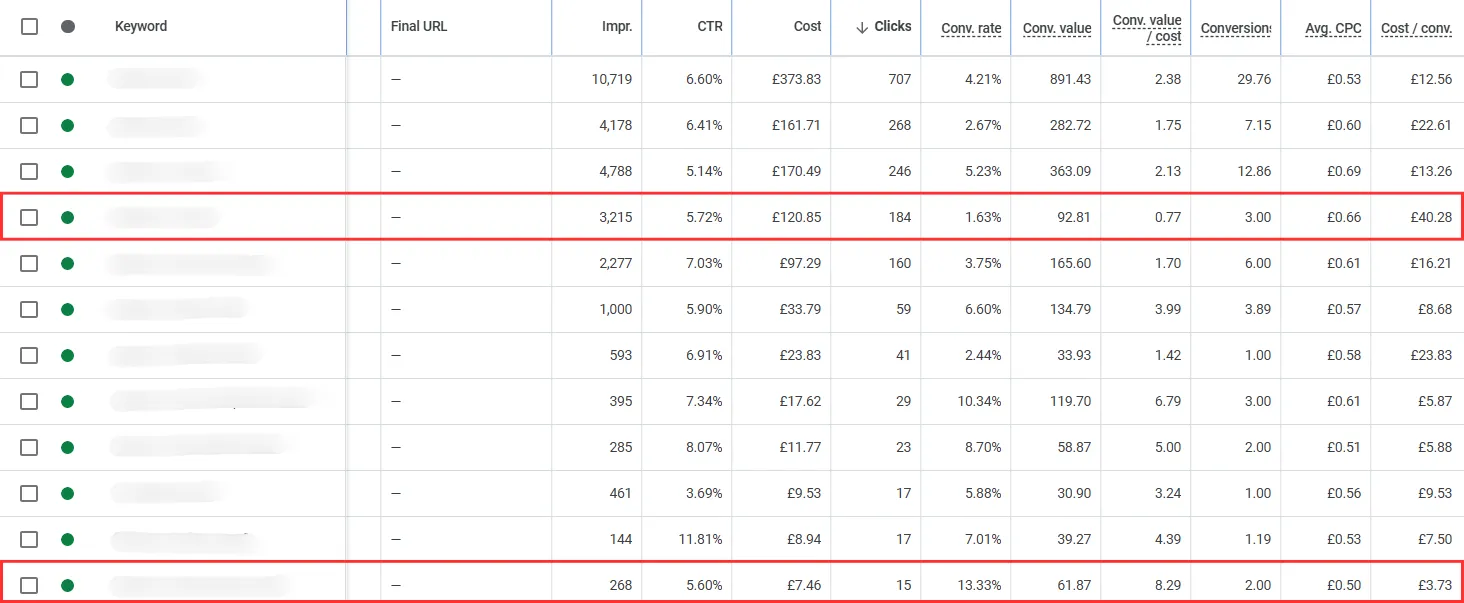
Long-tail keywords often come with lower CPCs, but always test and optimize to find the best CPAs – sometimes short-tail terms deliver big results too.
Refining Keyword Match Types
Another way to manage keywords is by adjusting your keyword match types. PPC platforms allow you to control how closely the search query matches your keyword. There are three main match types:
Broad Match: Shows ads for searches that include any variation of your keyword (e.g., “sunglasses” could trigger ads for “summer glasses”). Broad match keywords tend to perform better with automated bidding strategies like Target CPA or Target ROAS. However, these strategies typically require at least 30–50 conversions in the past 30 days to be effective.
Phrase Match: Shows ads for searches that include the exact phrase, but with additional words before or after (e.g., “women’s aviator sunglasses”).
Exact Match: Displays ads only when someone searches for your exact keyword (e.g., “silver aviator sunglasses”).
By selecting the right match types, you’ll ensure your ads are being shown to users who are more likely to convert, while avoiding irrelevant traffic.
The Importance of Geographic Targeting in PPC
If you’re a local business, geographic targeting can make all the difference. Targeting broader regions can be costly and competitive. But if you narrow it down to specific neighborhoods or cities, you’ll not only save money but also reach the most relevant audience.
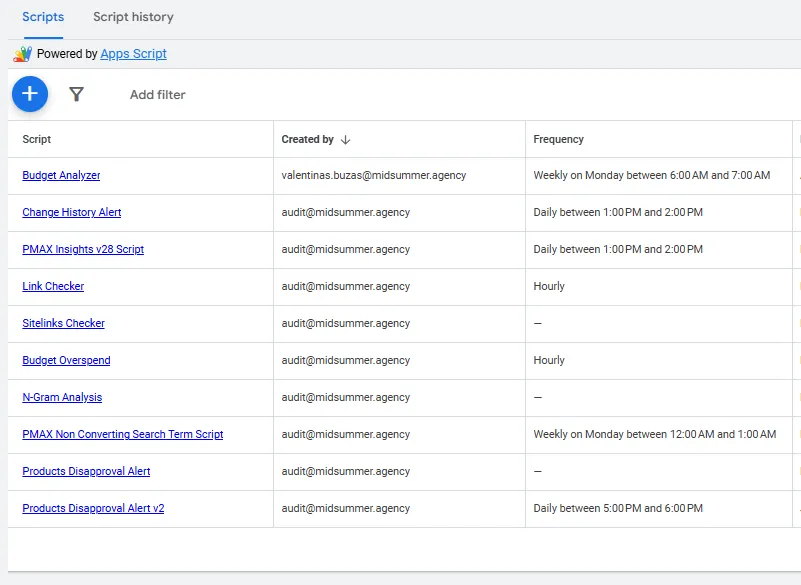
Pro tip: With scripts, you can automate and manage almost anything in your campaigns, including advanced geo-targeting. A powerful script we built is for businesses with many local service areas, like plumbing or pest control companies, where availability changes frequently. For example, if a local area runs out of available operators, you can simply remove the city or ZIP code from a Google Sheet. The script will automatically stop targeting that area in Google Ads, preventing wasted spend and keeping your campaigns aligned with real-time service capacity.
A list of App Scripts we use at Midsummer Agency.
Using Local Keywords
Including city names or regions in your PPC campaigns can dramatically reduce your CPC. For example, if you’re a restaurant in San Francisco, rather than bidding on a general term like “restaurants,” try bidding on “Italian restaurants in San Francisco”. This more specific keyword targets users who are actively searching for businesses in your area.
Optimize Ad Copy and Landing Pages for Maximum Conversions
When it comes to PPC, your ad copy and landing pages work hand-in-hand. It’s not just about getting clicks; it’s about getting conversions. If your landing pages and ad copy aren’t aligned, you could be losing valuable leads. Here’s how to make sure your PPC ads shine:
Crafting Compelling Ad Copy: The First Step in Conversion
Your ad copy is the first impression potential customers will have of your business, so it needs to stand out. Focus on making it clear, compelling, and relevant to your target audience. Highlight your unique value proposition and why users should click on your ad.
Here are the essential components of a Google Ads PPC ad:
Headline 1 (30 characters): Make it attention-grabbing. This is the first thing people will see.
Headline 2 (30 characters): Add value or a call to action.
Description (80 characters): Explain your offer or highlight benefits.
URL/Path 1 (15 characters): Include your main keyword or product category.
URL/Path 2 (15 characters): Further clarify your offering (e.g., specific product or feature).
Make sure to include a call to action (CTA) that tells users exactly what to do next, whether it’s “Shop Now,” “Get 20% Off Today,” or “Learn More.”
Pro Tip: A/B testing your ad copy is a powerful tool to see what resonates best with your audience. Test headlines, CTAs, and descriptions regularly to ensure you’re getting the highest click-through rate (CTR).
Optimizing Landing Pages for a Seamless User Experience
Once users click on your ad, it’s essential that your landing page delivers what the ad promises. If there’s a disconnect between the ad and the landing page, visitors may bounce before they convert. Make sure your landing pages are optimized for conversions by focusing on:
Clear CTAs: Your CTA should be highly visible and easy to click. Use action-oriented language like “Buy Now” or “Sign Up Today.”
Relevance: Make sure the page mirrors the offer or message from your ad. For example, if your ad promotes a sale, the landing page should highlight that sale prominently.
Page Load Time: Slow load times are a deal breaker. Aim for a load time of 2 seconds or less to ensure users don’t abandon your site before it even loads.
Mobile Optimization: With mobile traffic on the rise, your landing pages must be mobile-friendly to provide a smooth user experience across devices.
With mobile traffic taking the lead, not optimizing for mobile users is a critical mistake. Ensure your ads are mobile-friendly and your landing pages load quickly on smartphones. Mobile optimization is essential for maintaining a high-quality user experience and improving your conversion rates.
How to Measure and Maximize ROI with PPC
To truly understand the effectiveness of your PPC campaigns, you need to track the right KPIs (Key Performance Indicators) and use that data to optimize your efforts. Here’s how to maximise your results:
Key Performance Indicators (KPIs) to Track
To get a clear picture of how well your PPC campaigns are performing, monitor these essential KPIs:
CTR (Click-Through Rate): This measures how often people click on your ad after seeing it. A higher CTR usually means your ad copy and targeting are on point.
Conversion Rate: The percentage of visitors who take the desired action after clicking on your ad.
Cost Per Conversion: The amount you spend to generate a conversion. This metric helps you understand how efficiently your budget is being used to drive actual results.
Quality Score: This metric is specific to Google Ads and evaluates how relevant your ads, keywords, and landing pages are to your target audience. A higher Quality Score often leads to lower CPC and better ad positioning.
At Midsummer, we make sure to set up conversion tracking from the get-go. This helps our clients measure exactly how many conversions come from their PPC campaigns, giving them a clear idea of their ROI.
Leveraging Analytics and Reporting Tools
Tools like Google Analytics and Google Ads provide valuable insights into your PPC campaigns. We use these tools to track performance, analyze trends, and optimize campaigns. Regularly analyzing these reports ensures that your strategy is always evolving and that you’re getting the best results possible.
Why and when you should start considering working with a PPC agency
If you’re short on time, expertise, or especially results, partnering with a PPC agency can make a big difference.
At Midsummer, we’ve helped many small businesses grow through data-driven strategy, continuous testing, and clear reporting – all aligned with your goals.
When choosing a partner, look for proven results, transparency, and strategic alignment.
Pro tip: always ask for case studies. Talking about that, we’ve got a few to share!
Case Studies: Successful PPC Campaigns for Small Businesses
I’ve seen first-hand how well-managed PPC campaigns can help small businesses grow and scale. Here are two success stories from clients we’ve worked with:
Local Pest Control Service
We worked with a local pest control company to enhance their lead generation efforts through PPC. By implementing a data-driven PPC strategy, refining keyword targeting, and optimizing their ad spend, we helped them achieve a 300% increase in closed deals. This approach not only boosted lead quality but also ensured a higher return on investment.
Key takeaway: Even businesses in highly competitive industries can achieve big results with the right PPC strategy. It’s all about targeting the right audience with relevant ads.
B2B E-commerce
A B2B e-commerce company sought to improve its online sales performance. We worked with them to implement Google Analytics 4 and optimize their Google Ads campaigns. By refining their digital marketing strategy, we helped them achieve a 20% increase in sales.
Key takeaway: Data-driven optimization and strategic targeting are key to increasing sales, no matter the industry.
These examples show the power of PPC when campaigns are managed well. With the right targeting, budget allocation, and optimization, small businesses can see massive returns, even in competitive markets.
Conclusion
PPC management for small businesses is an incredibly cost-effective way to boost leads, traffic, and sales. By setting clear goals, choosing the right platforms, and continuously optimizing your campaigns, you can achieve fantastic results, even on a limited budget.
We believe that every small business can rise and shine with the right PPC strategy. Ready to take your business to the next level? Reach out to us today for a consultation, and let’s create a PPC campaign that works hard for you.