PPC Keyword Research: How to Find High-Converting Keywords
Running a successful PPC campaign isn’t just about bidding on keywords. It’s about bidding on the right keywords. The difference between a profitable paid search strategy…
Running a successful PPC campaign isn’t just about bidding on keywords. It’s about bidding on the right keywords.
The difference between a profitable paid search strategy and wasted ad spend often comes down to keyword research. Finding high-converting keywords helps you connect with your target audience at the right time. It also improves ad relevance and boosts ROI.
In this guide, we will help you with the basics of PPC keyword research. We will cover the best tools, effective strategies, and advanced techniques to improve your paid search campaigns. Whether you run an e-commerce store, handle digital marketing, or grow a brand, these insights will help you make smart decisions. These choices can improve your results.
Keywords are the foundation of any paid search campaign. They determine when and where your ads appear, who sees them, and how much you pay per click.
PPC keyword research is different from SEO keyword research. SEO focuses on long-term visibility. In contrast, PPC looks for terms that bring quick, high-intent traffic.
1. Reaching the right audience
PPC advertising is all about user intent. Unlike organic SEO, where users might be casually browsing, paid search campaigns allow you to target customers who are actively looking for products like yours. However, if you target the wrong keywords, you risk spending money on clicks that won’t convert. Effective keyword research ensures that your ads appear for search queries with strong commercial intent, bringing in high-quality traffic.
2. Maximizing ROI and lowering costs
Bidding on irrelevant or overly competitive keywords can drain your budget quickly. Smart keyword research helps you find the perfect balance between search volume, competition, and cost-per-click (CPC). By targeting high-converting keywords with reasonable CPCs, you can maximize your return on ad spend (ROAS) and drive more profitable campaigns.
3. Staying competitive in the PPC landscape
E-commerce is a highly competitive space, with businesses vying for the same customers on platforms like Google Ads and Microsoft Advertising. Conducting thorough keyword research gives you an edge by identifying keyword opportunities your competitors may have overlooked. This can help you optimize bids, improve ad relevance, and outperform competitors in search results.
How to Find High-Converting Keywords for PPC
1. Define your PPC goals
Before you start researching keywords, clarify your campaign objectives. Are you looking to:
Drive direct sales?
Increase brand awareness?
Capture leads for future remarketing?
Your goals will dictate the types of keywords you target. For example, high-intent commercial keywords (e.g., “buy running shoes online”) are great for conversion-driven campaigns, while informational keywords (e.g., “best running shoes for beginners”) might be better suited for content marketing or top-of-funnel awareness ads.
2. Start with a seed keyword
Seed keywords are the foundation of your PPC keyword research. These are broad, industry-related terms that describe your product or service. For example, if you sell eco-friendly sneakers, seed keywords could include:
“sustainable sneakers”
“eco-friendly running shoes”
“vegan sneakers”
These initial terms will help generate more specific, long-tail keywords that attract buyers with high purchasing intent.
3. Use PPC keyword research tools
To refine your list, leverage advanced keyword research tools that provide valuable insights into search volume, competition, and CPC. Some of the best tools include:
Tool
Description
Google Keyword Planner
A free tool that provides search volume, competition levels, and cost-per-click estimates.
Semrush
Very popular tool that provides competitive analysis and keyword gap insights.
Ahrefs
It offers in-depth PPC keyword research and cost estimations.
Ubersuggest
Great for generating long-tail keyword variations.
SpyFu
Allows you to analyze competitors’ PPC strategies and keyword choices.
Google Search Console
Helps you identify terms your website already ranks for organically.
Using these tools, you can analyze historical performance data, forecast trends, and uncover profitable keyword opportunities.
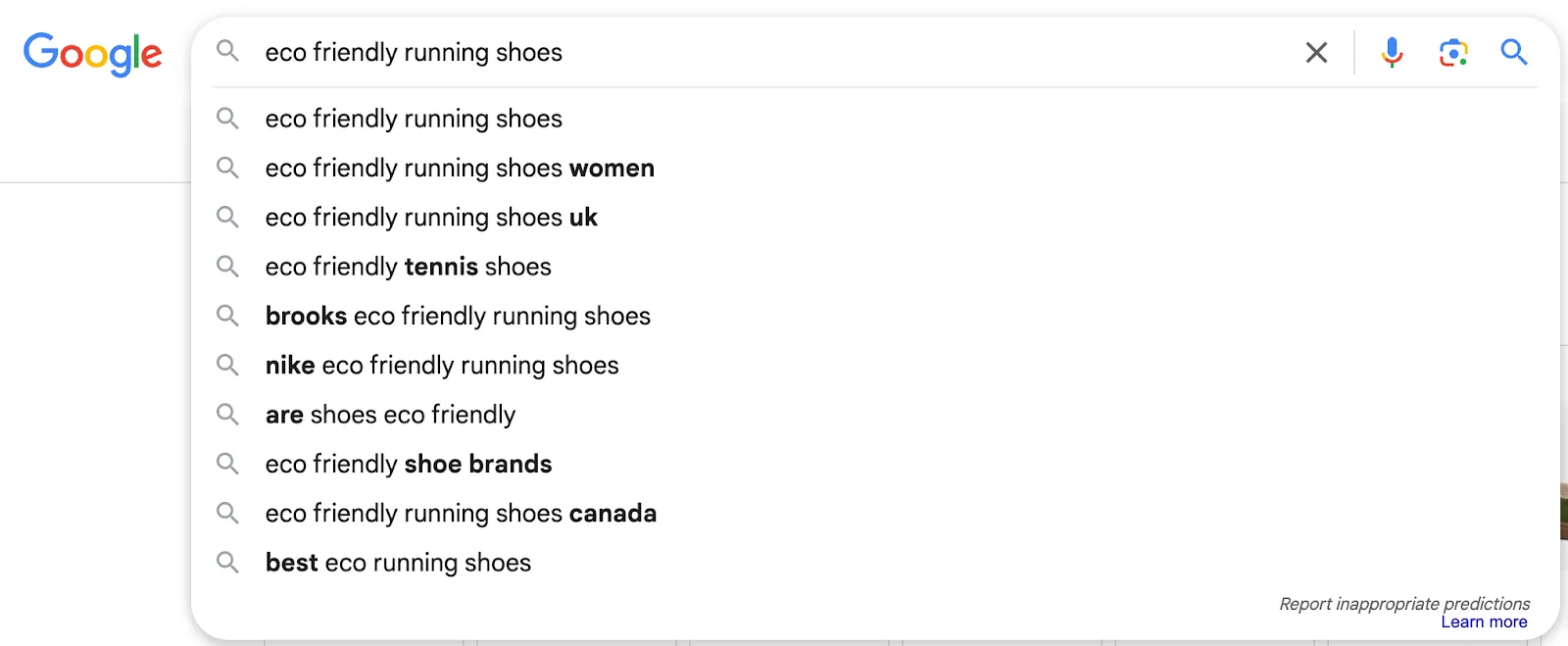
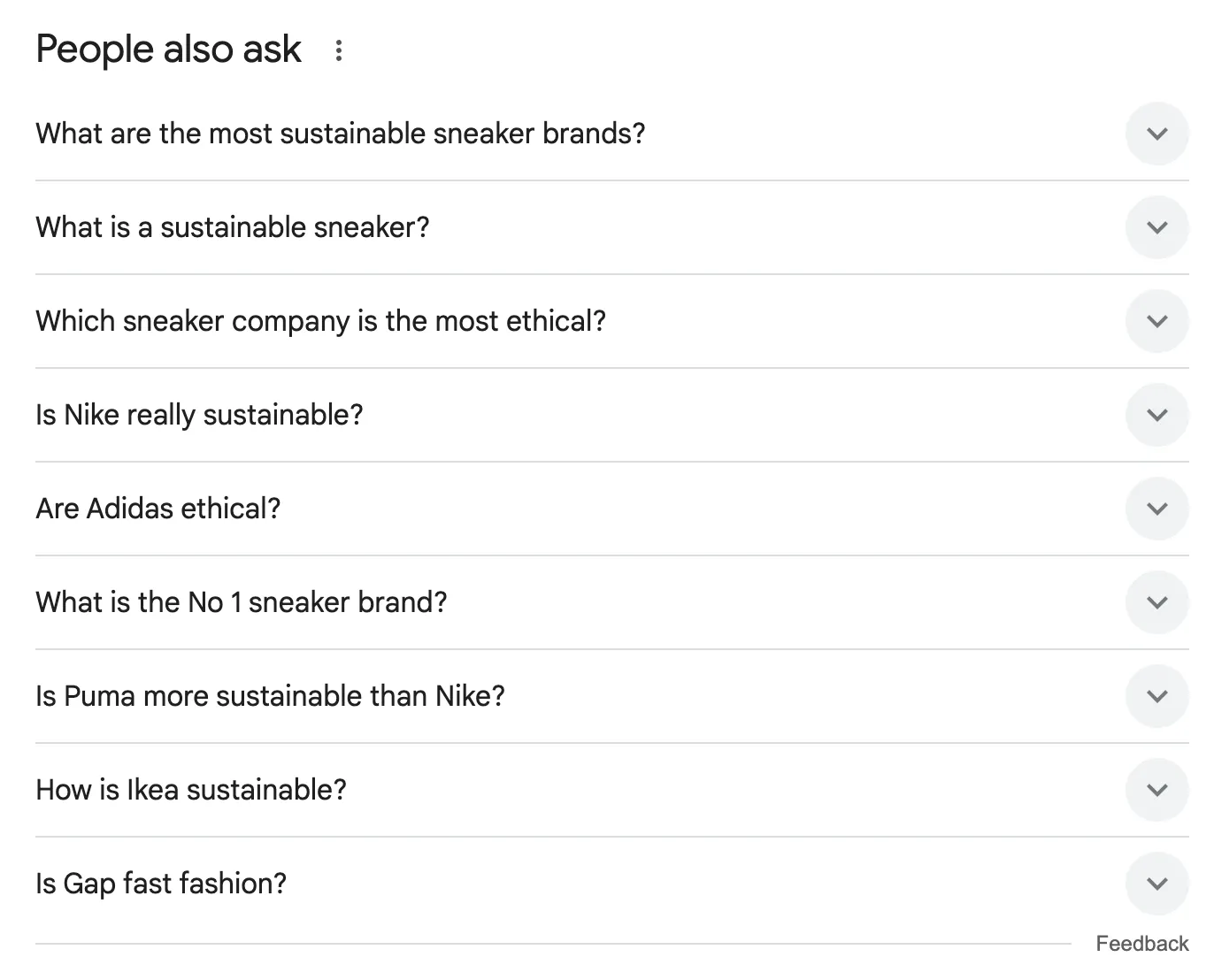
If you don’t have access to these ppc keyword research tools or want to refine your analysis further, you can also use Google Search itself. The “People Also Ask” box and Google’s autocomplete suggestions provide valuable insights into what your potential customers are searching for.
3. Focus on high-intent keywords
Not all keywords drive conversions. The key is to prioritize high-intent keywords that indicate a strong likelihood of purchase. These fall into 3 main categories:
Transactional keywords: Users searching with “buy,” “discount,” or “best price” signals strong purchasing intent (e.g., “buy eco-friendly sneakers online”).
Product-specific keywords: Keywords that include brand names, models, or product features (e.g., “Nike vegan running shoes”).
Competitor keywords: Bidding on competitor brand terms (if allowed) can help you capture potential customers (e.g., “alternative to Allbirds sneakers”). This, however, is a double-edged sword that must be used with caution.
4. Identify negative keywords to reduce wasted spend
Negative keywords prevent your ads from showing up for irrelevant searches, saving you money on clicks that are unlikely to convert. For example, if you sell premium sneakers, you may want to add negative keywords like:
“cheap sneakers”
“DIY running shoes”
“free sneakers giveaway”
Identify in advance and regularly update your negative keyword list helps refine targeting and improve overall ad performance.
For example, if you sell luxury leather bags, you might add “cheap” or “synthetic” as negative keywords to avoid unqualified clicks.
5. Analyze competitor keywords
Understanding what keywords your competitors are targeting can reveal valuable opportunities. Tools like SEMrush, SpyFu, and Ahrefs allow you to analyze competitor ad copies, bidding strategies, and keyword selections. Look for gaps where you can bid on overlooked but valuable keywords to capture additional market share.
6. Optimize for long-tail keywords
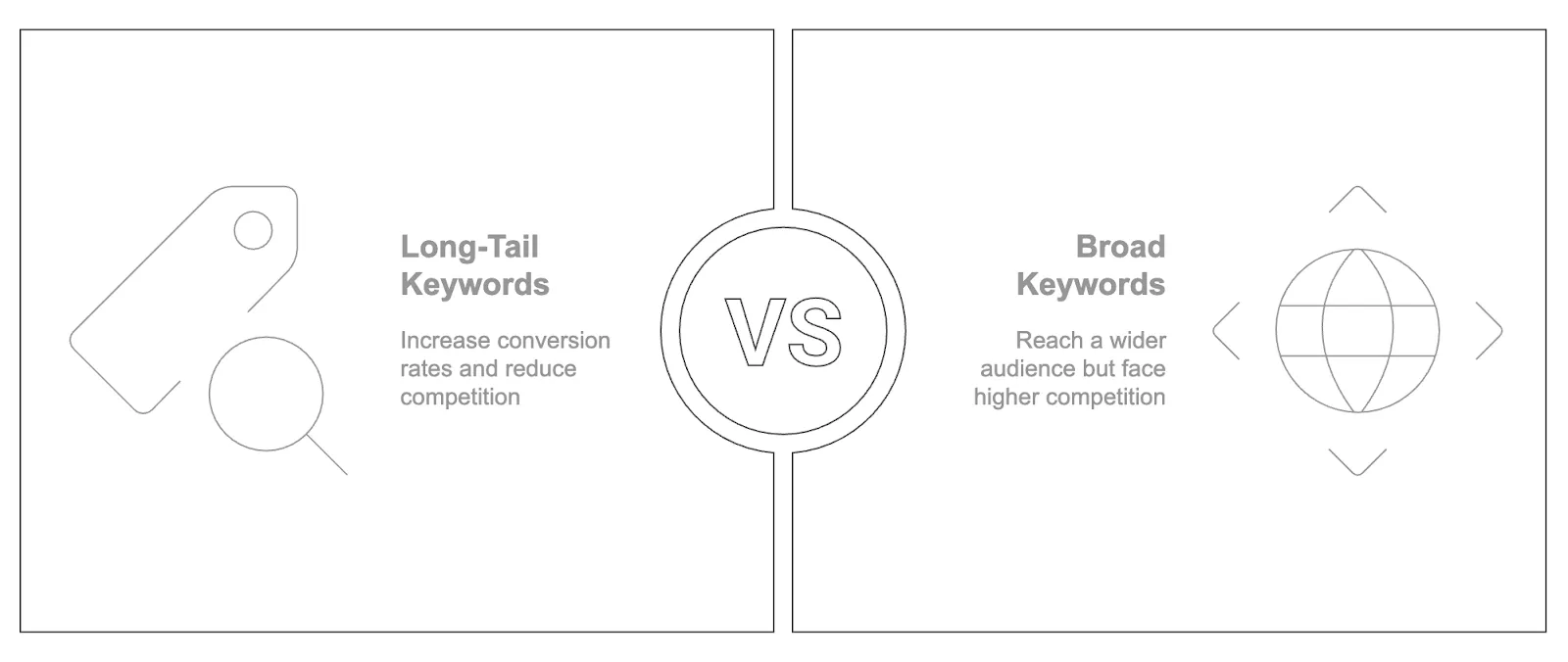
Long-tail keywords are longer, more specific search phrases that typically have lower competition and higher conversion rates. Instead of bidding on broad terms like “running shoes,” targeting “best eco-friendly running shoes for men” will likely yield better results.
Long-tail keywords not only help lower CPC but also improve ad relevance and quality scores, ultimately reducing the cost per acquisition (CPA).
Implementing your PPC keyword strategy
1. Organize keywords into ad groups
Once you’ve finalized your keyword list, segment them into tightly themed ad groups. Grouping similar keywords together improves ad relevance and Quality Score, which in turn lowers CPC and boosts ad rankings.
For instance:
Ad Group: Eco-Friendly Sneakers
“buy eco-friendly sneakers”
“best sustainable running shoes”
“vegan sneakers for running”
Ad Group: Affordable Running Shoes
“best running shoes under $100”
“affordable marathon sneakers”
“budget-friendly trail running shoes”
2. Continuously monitor and optimize
Keyword performance isn’t static. Regularly analyze your PPC data, track conversions, and refine your keyword strategy based on:
Search term reports: Identify new profitable keywords and negative keywords.
CTR and conversion rates: Adjust bids for high-performing keywords.
Seasonality and trends: Update keywords to align with changing customer behavior.
By continuously optimizing your keyword strategy, you ensure your PPC campaigns remain competitive and cost-effective.
Why your PPC keyword research matters
PPC keyword research is the foundation of any successful paid search campaign. It is both an art and a science. By combining data-driven insights with a strategic approach, you can uncover high-converting keywords that drive real results. From understanding search intent to leveraging competitor insights and optimizing match types, every step you take to refine your keyword strategy directly impacts your campaign’s success.
But keyword research alone isn’t enough. The key to long-term PPC success lies in continuous optimization, data analysis, and strategic refinement. At Midsummer Agency, we help e-commerce brands navigate the complexities of paid search, ensuring that every campaign contributes to growth.
What makes Midsummer different?
We’re not just PPC specialists—we’re business growth strategists. Our approach goes beyond keyword bidding to ensure your PPC campaigns align with your margins, customers, and growth objectives.
We focus on profitability over vanity metrics.
We tailor campaigns to your unique selling points, whether you’re selling high-ticket fashion or affordable accessories.
We continuously optimize campaigns based on real conversion data, not just click volume.
And yes, we track every click. But we care even more about what happens after it.
Want us to help with your PPC strategy?
If you’re running PPC campaigns but aren’t sure if they’re truly optimized—or if you’re starting from scratch and want to build a high-performing strategy from day one—let’s chat.
✅ Free PPC audit: We’ll review your campaigns and identify opportunities for improvement.
✅ Strategy session: We’ll map out how PPC can accelerate your e-commerce growth.
✅ Full-service PPC management: We’ll handle everything while you focus on scaling your brand.