If you’re an e-commerce brand owner, you know that the first step in making a sale is getting your audience’s attention. In a world where attention spans are shorter than ever, writing a headline that stands out is essential for driving clicks and conversions.
From my experience with ads for e-commerce brands, I’ve learned something important. Creating good headlines doesn’t rely on a strict formula.
Here’s a guide on how to create effective Google Ads headlines. It includes best practices for killer Google Ads headlines, let’s dive into it!
Google Search Ads: Key Components, Long-Tail vs. Generic Keywords, and More
Before getting started, let’s review some of the basics of how Google search ads work.
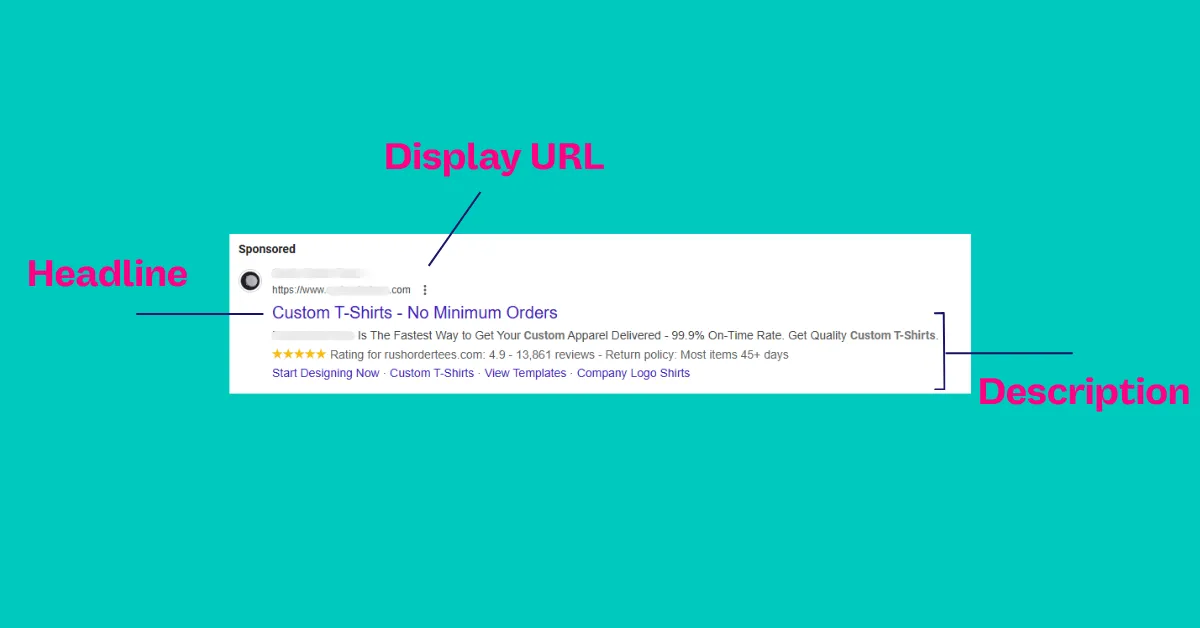
Example of a Google search ad and its key components.
A standard Google Ads search ad includes three primary components: the headline, description, and display URL. Your headline is the first chance to grab attention. While Google displays up to 3 headlines at a time (each with a 30-character limit), you can write up to 15 when creating your ad. Google then automatically tests and combines them to show the most effective combinations based on the user’s search intent. Use concise, compelling language that speaks directly to what your audience is looking for.
When it comes to keywords, using the right ones can make or break your campaign. Generic keywords like “shoes” are broad and have higher search volume, but they also tend to be more competitive and expensive. On the other hand, long-tail keywords such as “best ergonomic chairs for back pain” are more specific and often have lower competition. While long-tail keywords may have fewer searchers, they usually attract a more targeted audience who are further along in their buying journey, which can lead to higher conversion rates.
In Google Ads, it’s essential to strike a balance between using broad, generic keywords and specific, long-tail keywords. Doing so allows you to reach both a wider audience and a more qualified one. Incorporating these keywords into your ad headlines and descriptions not only increases your ad’s relevance to the searcher but also boosts your Quality Score, potentially lowering your cost per click (CPC).
By understanding headlines, descriptions, keywords, and ad relevance, you can create Google Ads campaigns that not only drive traffic but also increase conversions and ROI for your business.
1. Align Your Headlines with User Intent
Understanding what your target audience is actually searching for is key. When people use Google to search for products, they’re looking for specific solutions to their needs. Your ad should directly speak to that need. Always keep in mind that Google doesn’t create demand, it captures it.
For example, if you sell ergonomic office chairs, use a clear headline. A good option is “Shop Comfortable Ergonomic Office Chairs.” This will attract people who are looking for these chairs.
You are matching your ad copy with what the user wants. This is a simple but effective way to boost your chances of conversion.
2. Highlight What Makes You Different
In the crowded world of e-commerce, difference is everything. What makes your brand stand out? Make sure your headline shows what makes you special. This could be free shipping, exclusive products, or a special discount.
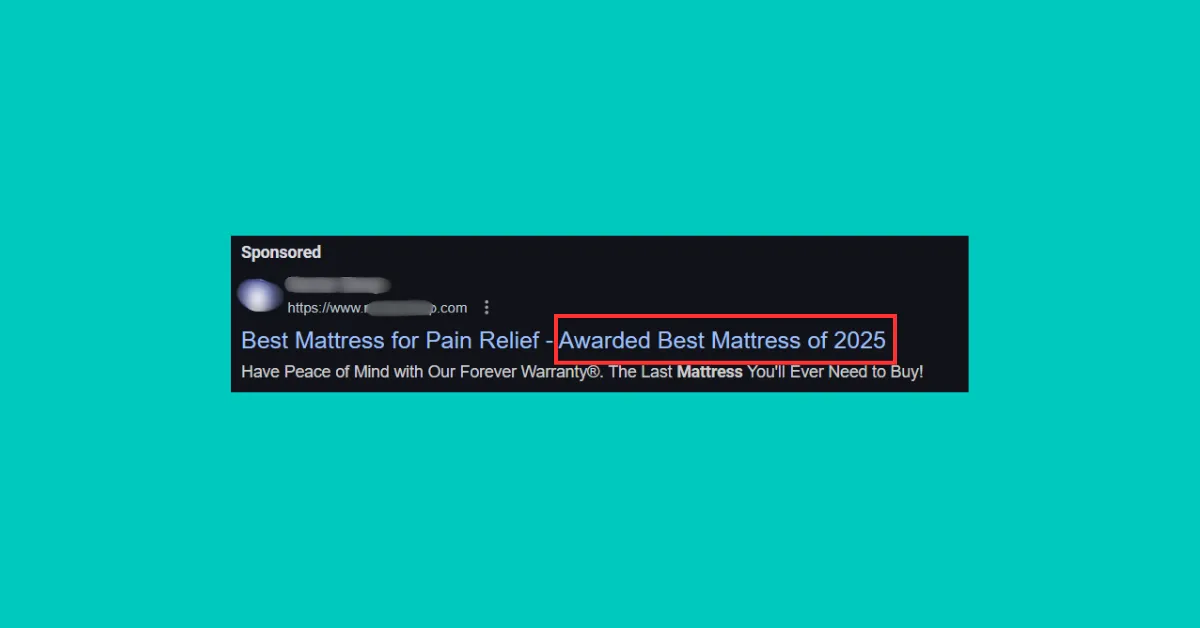
A headline that includes Unique Selling Points (USPs) such as “Extensive Customization Options” or “Eco-Friendly Practices” effectively highlights what makes the offer stand out.
Example of a USP in a headline.
3. Use Actionable and Urgent Calls to Action (CTAs)
A strong call to action (CTA) is the backbone of any high-converting ad. You need to make it clear what you want the user to do next. Phrases like “Shop Now,” “Get Yours Today,” or “Limited Time Offer” encourage users to act quickly. This sense of urgency can make them click.
For example, “Shop Now for Exclusive Summer Collection – Hurry, While Stocks Last!” encourages them to shop quickly. This sense of urgency can make them more likely to click.
Surely, you do not need to add CTAs to all the headlines! You can also test some with and without call-to-actions (ex. Shop Ergonomic Chairs VS Comfortable Ergonomic Office Chairs) and see what works best. The right balance is the secret.
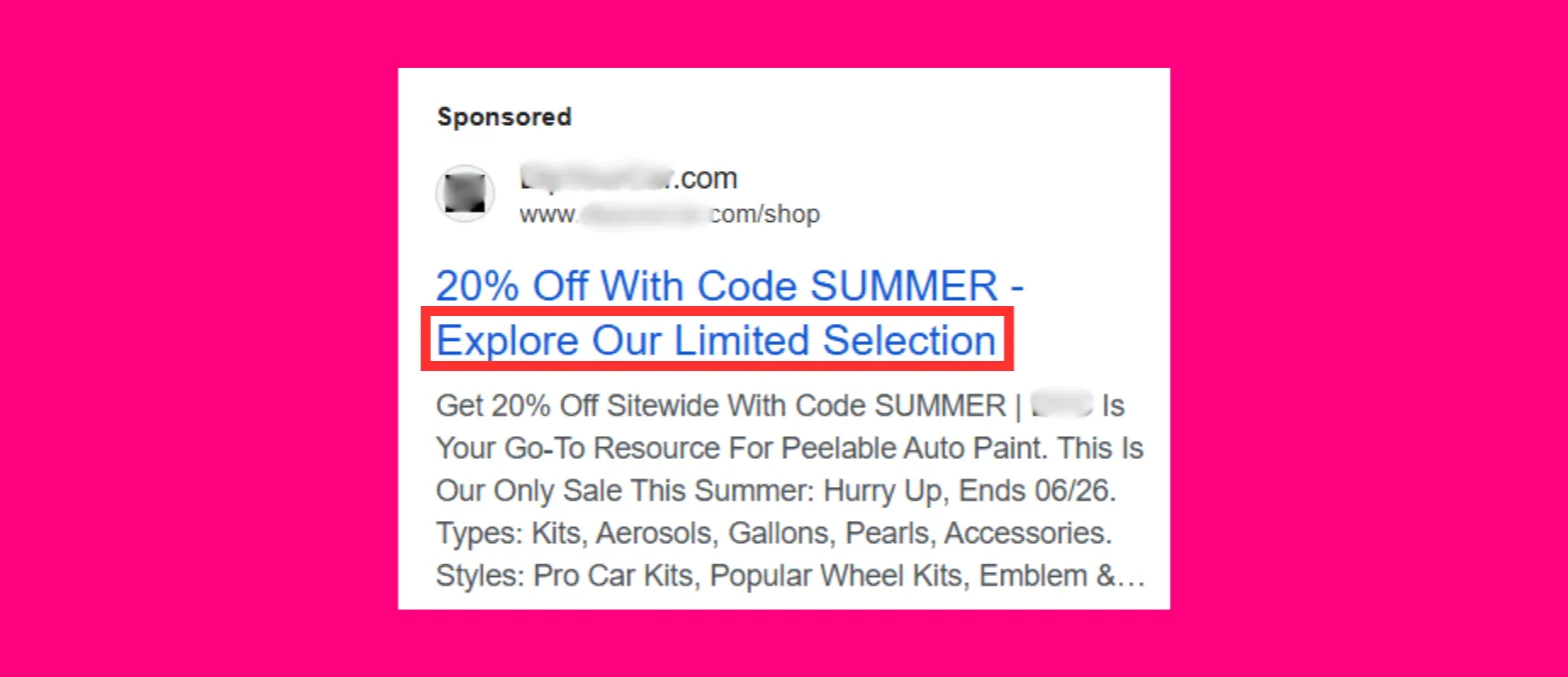
Example of a Google Ads headline with a clear call-to-action.
People are more likely to act when they feel like they’re running out of time or there’s limited availability. Using phrases like “Last Chance,” “Only a Few Left,” or “Ends Tonight” can trigger that feeling of urgency.
An example of this might be: “Flash Sale: 50% | Ends Tonight.” It makes users feel like they have to act now, and that can significantly boost conversions. Be careful when using imperative phrases on Google. Sometimes, people add exclamation points ‘!’ This can trigger Google’s algorithm and cause your ad to be rejected.
4. Include Relevant Keywords in your Headlines
Your headline should match what people are searching for. If someone’s looking for pest control services in Rome, you want to make sure your ad says exactly that.
The more closely your headline matches the keywords people type in, the better your chances of getting noticed.
In Google Ads, you can also use keyword insertion to dynamically include the exact search term in your ad headline, making it more relevant to the user. You do have to be careful to ensure you don’t show up for strange search terms, so it must be managed properly!
Plus, using relevant keywords can help boost your Quality Score, which means you’ll pay less per click! Win-win.
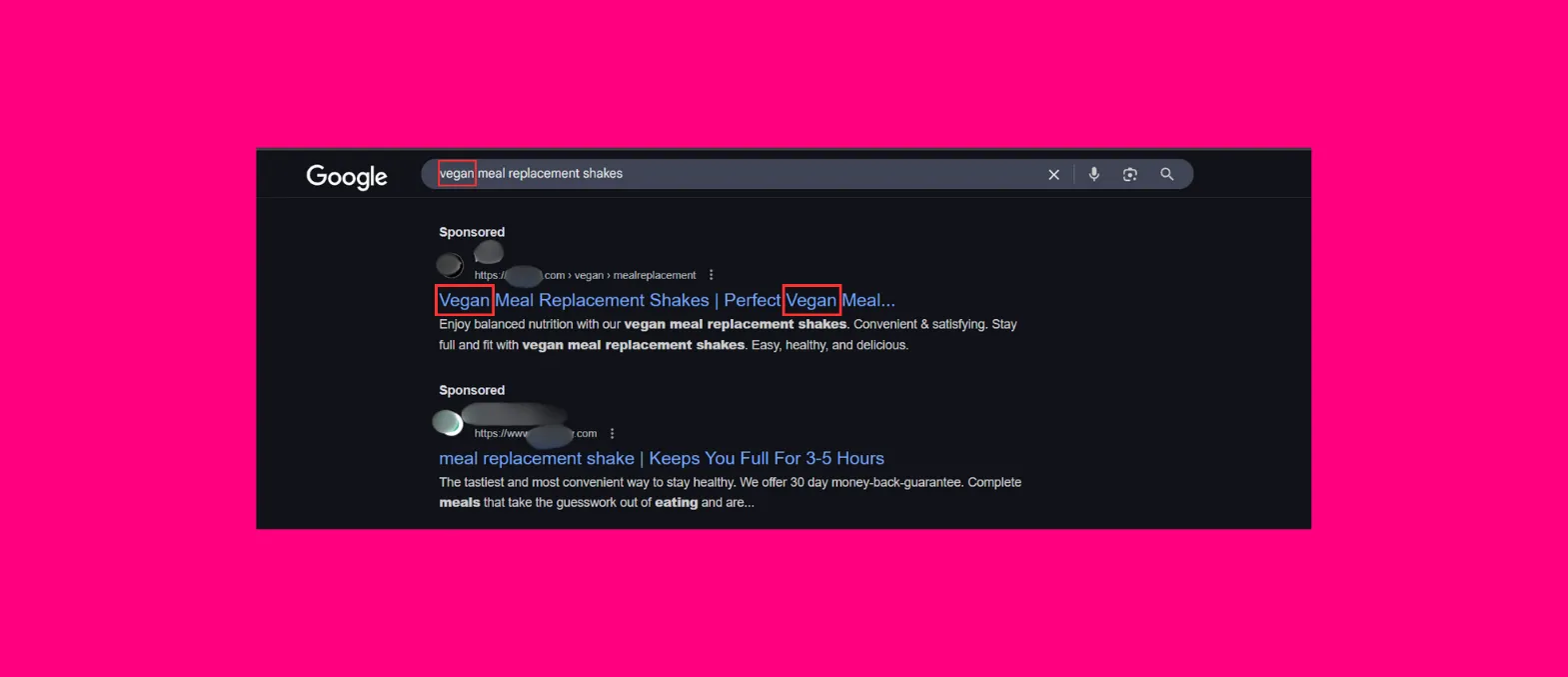
In this example, the second ad does not include the keyword “vegan” which was searched by the user. Chances are he or she will click on the first ad instead, which matches more closely to the search query.
5. Consistency Is Key: Match Your Ad with Your Landing Page
When it comes to digital advertising, one of the most important yet often overlooked elements is consistency. Your ad and your landing page must be aligned in terms of messaging, visuals, and offers. Consistency is not just a good practice; it’s a fundamental element in building trust and improving conversions.
Nothing kills a potential sale faster than clicking on an ad and landing on a page that doesn’t match the message. For example, if your ad says, “20% Off Winter Coats,” the landing page should immediately showcase those coats and reflect the 20% off offer. If the user is instead greeted with an irrelevant product or no mention of the discount, they’re likely to bounce away from your site and look elsewhere.
This lack of consistency can cause frustration and erode trust. A user who clicks on an ad expecting to find a specific product or offer and doesn’t get what they were promised feels misled. This feeling of mismatch can lead to skepticism about the quality of your brand and its reliability. In turn, this negatively affects your conversion rates and ultimately hurts your bottom line.
So remember, when your ad message and landing page align, you increase the trust and confidence of the user, reduce bounce rates, and ultimately increase your chances of conversion. By ensuring that the offer, messaging, visuals, and call-to-action are all in sync, you’re setting up your ad campaigns for long-term success.
So next time you create an ad campaign, ask yourself: “Does the landing page reflect exactly what’s promised in the ad?” If the answer is no, you may want to make adjustments before your potential customers click away. A seamless experience from ad to landing page is a small but critical factor in boosting your conversion rates and ensuring a positive return on investment.
While that’s not much, you can still pack a punch! Keep it short, sweet, and to the point.
Make sure the most important message is right there at the start. Try to exploit all the 30 characters as Google will reward longer headlines. Were you aware of this?
Well, if not, now you know it! In fact, character count matters. While you may feel like it’s tempting to keep things minimal, Google actually rewards longer headlines because they typically provide more detailed information.
The more context you give in a headline, the better it aligns with the user’s intent and the search query. For example, instead of a headline like “Get 50% Off,” you could try “50% Off on First Orders”.
This adds more context and may help with ad relevance and targeting.
7. Use Numbers to Grab Attention
One of the most effective techniques I’ve learned when crafting Google Ads headlines is the use of numbers. People are naturally drawn to numbers because they convey specificity and a sense of trustworthiness. Numbers stand out in a sea of text, and they have the ability to quickly communicate a clear message. Whether it’s a discount, a rating, or a quantity, numbers are concrete and make your ad feel more trustworthy.
When users see numbers in ads, they tend to assume the information is more factual and reliable. This sense of trust comes from the fact that numbers are precise and often represent something measurable. For example, stating “Save 20% Today” feels more tangible and believable than a vague “Big savings” message. By using specific numbers, you’re giving the user a reason to believe the offer is real and valuable.
In addition to discounts, numbers like “5-Star Rated Course” or “500+ Happy Clients” are powerful because they tap into social proof. People are more likely to trust something that has been positively rated by a large number of others. Ratings and figures help convey authority and establish credibility, both of which are essential in driving user action. We’ll talk more about that in the next paragraph.
8. Add Social Proof for Extra Credibility
When it comes to crafting compelling Google Ads headlines, one of the most effective elements you can incorporate is social proof. Social proof is a psychological phenomenon where people tend to follow the actions or decisions of others, particularly when they are uncertain. In advertising, social proof helps build credibility and trustworthiness by showing that others have already decided to purchase, use, or endorse your product or service.
One of the easiest ways to incorporate social proof into your Google Ads headlines is by using specific numbers that highlight the volume of customers or users who have already engaged with your brand. Phrases like “Rated by +1,000 Customers” or “Joined by Thousands” are incredibly powerful. They provide tangible evidence that your product or service is popular, widely accepted, and trusted by many.
Numbers are naturally attention-grabbing, and when paired with social proof, they give an added layer of credibility to your message. For example, “Over 2,000 Customers” not only boosts confidence in potential buyers but also signals that a large number of people have already chosen your product.
This creates a feeling of FOMO (Fear of Missing Out). It makes users think more about your product. They don’t want to miss out on what many others have already picked. Social proof is a psychological idea. It means people often follow what others do, especially when they are unsure.
Using social proof is not just about showing that others like your product. It’s also about making potential customers feel comfortable and confident. This helps them feel compelled to make the same choice. Social proof is a strong tool. It can help increase conversions and make your product more appealing. You can highlight ratings, reviews, or purchase numbers to show this.
9. Test, Test, Test
One of the best things about Google Ads is the ability to test different headlines and approaches to see what works best. A/B testing is vital in discovering what really resonates with your audience. Small tweaks can often lead to big results, so never stop experimenting.
My Personal Experience with Improving Headlines
One of the most valuable lessons I’ve learned from running ads for e-commerce businesses is the power of constant testing. In the beginning, I thought that if something was doing well, I should leave it alone. I wanted to focus on other areas. After running several A/B tests, I quickly saw how small changes can greatly affect ad performance. It became clear that testing is not just a one-time task but a continuous process.
For instance, I vividly remember a specific test where I made a seemingly minor change to the headline of an ad. I swapped out the phrase “Shop Now” for “Get Yours Today.” While this seemed like a small shift, the results were striking. The click-through rate increased significantly, which was a clear sign that the wording made the ad more compelling and actionable.
This experiment taught me something important: small changes can make a big difference. For example, changing the tone, urgency, or words can affect how potential customers react to an ad. It’s easy to think that the first version of your ad is the best. However, A/B testing showed that this is not true. It’s interesting to see how testing one part, like a headline, can affect larger numbers like CTR. This can lead to better conversions. It’s interesting to see how testing one part, like a headline, can change larger numbers like CTR. This can lead to better conversions. It’s interesting to see how testing one part, like a headline, can change larger numbers like CTR. This can lead to better conversions.
The key takeaway here is: don’t settle for “good enough”. Just because something works doesn’t mean it’s the best it can be. There’s always room for improvement, and small adjustments can lead to big results.
You can change the call-to-action, adjust the wording, or try different emotional triggers. The options are endless. In the world of digital marketing, it’s essential to keep testing and refining to keep your performance at its peak.
In conclusion, testing headlines isn’t just a strategy; it’s a mindset. Over the years, I’ve learned that even the smallest changes can drive substantial improvements. By adopting this mindset and regularly testing, I have improved my ads. This helps me achieve better results for the businesses I work with.