YouTube is one of the most powerful platforms for reaching audiences, and it’s not just for B2C brands. In fact, YouTube Ads can be a game-changer for B2B businesses looking to generate leads, drive conversions, and increase brand awareness.
By leveraging YouTube’s vast reach, targeting options, and engaging video format, B2B companies can effectively engage decision-makers, showcase their products or services, and build trust with their audience in ways that traditional methods can’t match.
Whether you’re educating prospects, sharing customer success stories, or promoting your latest offering, YouTube provides a versatile platform for creating impactful content that resonates with other businesses.
But how exactly can you use YouTube Ads to build quality B2B leads? Let’s break it down!
Why Use YouTube Ads for B2B Lead Generation?
YouTube isn’t just a platform for listening to music, watching funny videos, or searching for viral challenges to create content around.
It’s also one of the most effective ways to capture the attention of decision-makers and business professionals, offering a vast audience.
By using YouTube Ads, you can target highly specific B2B segments and nurture potential leads with engaging, informative content.
Set Up Your Google Ads Account for YouTube Ads
Before you can start running YouTube Ads, you’ll need a Google Ads account. Don’t worry, setting it up is simple!
Once you have your account, link it with your YouTube channel to start running ads. You’ll need to decide which type of campaign will work best for your B2B goals.
Video campaigns are the traditional YouTube Ads that play before, during, or after a video and they can also appear in YouTube search results or as banners across the platform.
For B2B, these ads are fantastic for introducing your business and driving awareness.
Video Ads for B2B Lead Gen
There are many types of video ads, but the ones that, based on your objectives, may work best are the following:
Non-Skippable In-Stream Ads
These ads, as per my experience, work pretty well as they force viewers to watch for 15-20 seconds, making them ideal for delivering a clear and concise message.
While these ads can be more intrusive, they are perfect when you need to convey important information to decision-makers who don’t want to skip.
I would recommend this ad type if you want to drive awareness of specific features or key benefits of your product or service.
Otherwise, you can use them if you want to advertise time-sensitive campaigns like promotions, offers, sales or events.
YouTube Non-Skippable In-Stream Ads
Skippable In-Stream Ads
These are the most common YouTube ads that play before, during, or after a video.
Viewers can skip them after 5 seconds, but if your content is engaging enough in that initial window, they may continue watching.
You can use these ads to quickly showcase your solution and grab attention in the first few seconds (bear in mind that these 5 seconds are crucial for you, so you need to find a strong hook to convince your audience to watch your ad).
I’d recommend opting for this video type if you are introducing your service or product to new B2B audiences. It’s also a quick way to generate leads with concise messaging in the first few seconds.
YouTube Skippable In-Stream Ads
Bumper Ads
Sometimes I get asked by B2B clients if bumper ads are good for lead gen.
First of all, bumper videos are short, 6-second non-skippable ads, which are great for brand awareness.
While not directly for lead gen, they can be used as part of a larger funnel strategy to introduce your brand or product to a new audience and drive interest for follow-up action.
Personally, I would not recommend using this directly to generate leads. However, these can be integrated into a strategy focused on raising awareness about a product or service before targeting with longer-form videos.
Finally, I would use these to target larger and broader audiences for initial touchpoints.
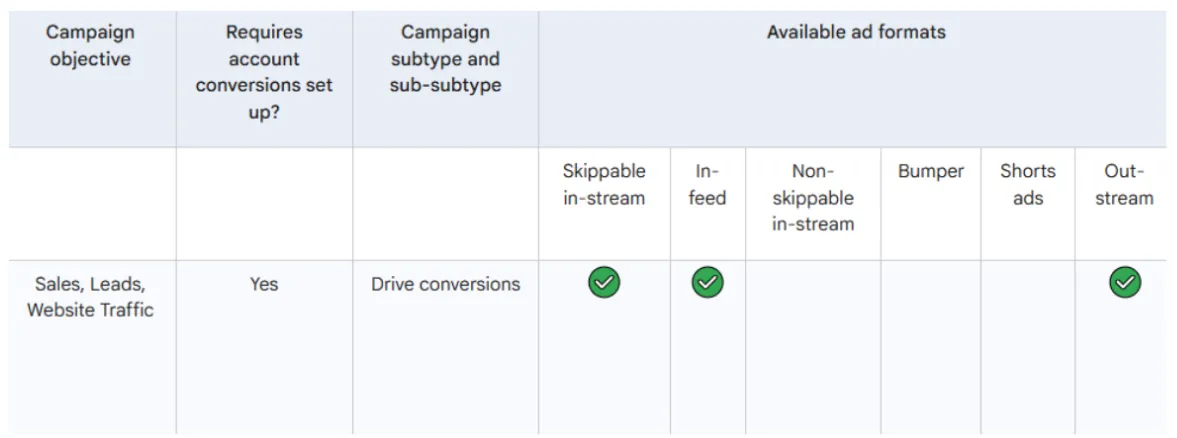
Ad formats for campaign type
Targeting the Right Audience
Google Ads offers a powerful array of targeting options, which is one of the platform’s biggest strengths, especially for B2B lead generation.
Proper targeting ensures that your ads are shown to the right people at the right time, which can significantly improve your ad performance and return on investment (ROI).
If you are launching a new campaign, I would recommend checking your account’s history and using the most effective audience.
If you don’t have this data, don’t worry: you can run keyword research for your services or products.
Let’s dive deeper into some of the key targeting options available:
Demographic
Demographic targeting is particularly valuable for B2B businesses that need to reach specific types of individuals within a certain context.
Age and Gender
If your product or service is more relevant to a certain age group or gender, demographic targeting can help.
For example, if you’re offering a product aimed at young professionals in the tech industry, age and gender targeting can be used to ensure your ad reaches that group specifically.
Household Income
In B2B settings, targeting based on income is often tied to the decision-making power.
You can tailor your targeting to focus on individuals who fall within the top income brackets, ensuring that your ads are reaching potential customers who have the budget and authority to make purchasing decisions.
Parental Status
While this demographic may not be as relevant in all B2B contexts, it can still be valuable in specific niches.
For instance, targeting professionals with young families may be useful if your product or service is focused on work-life balance or home-office solutions.
By combining these demographic filters, you can further refine your audience and avoid wasting ad spend on irrelevant segments, making sure that your ads are hitting the right people with precision.
Interests and Intent
Interest-based (aka affinity audience) and intent-based (aka in-market audience) targeting can be a powerful way to connect with potential B2B leads who may already be interested in what you have to offer.
These targeting methods focus on people’s previous actions and behavior, allowing you to engage with prospects who are already exhibiting signs of interest in your products or services.
Interest Targeting (aka Affinity Audience)
Google Ads allows you to target users based on their interests. This is particularly effective for reaching people who have shown interest in related areas or topics that align with your business.
For instance, if you sell software that helps improve project management, you can target users who have shown an interest in productivity tools, project management software, or leadership resources.
Intent Targeting (aka In-Market Audience)
Google Ads uses intent signals to target users who are actively researching or considering a purchase.
This means you can deliver your ads to people who are showing intent to buy based on their recent searches, website visits, and engagement with similar content.
This is fundamental for B2B businesses looking to convert prospects who are already in the consideration stage of the buying process.
Here, users are actively searching for solutions to the problems your product or service solves.
Targeting this audience allows you to reach people whose search behavior indicates they are actively researching products, services, or solutions that closely match what you offer.
Create Engaging Content for B2B Audiences
Content is king, especially when it comes to YouTube Ads. You need to ensure your video content resonates with your target audience.
Here are some tips and ideas to get you started, based on my experience.
Product or Service Demos
Show how your products or services work and highlight their value to other businesses.
Make sure your demo is concise and solves a problem your target audience cares about.
I’ve worked with a lead gen client in the healthcare market, and the video ads were the top-performing ad types.
Some creatives not only featured the doctor talking about the various services offered, such as preventative care, cosmetic dentistry, or specialized treatments, but also captured the warmth of the clinic’s environment, giving potential patients a real sense of what to expect.
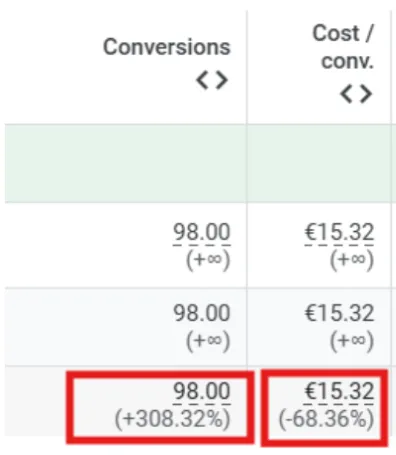
Conversion and CPA
This one is an example of the last 30 days of data: we achieved 308% more conversions at a 68% more efficient CPL.
Success Stories
Sharing success stories from clients who have benefited from your product or service is one of the most powerful ways to build trust and credibility.
These stories allow potential clients to see real-life examples of how your solution has made a positive impact, making your offering more relatable and tangible.
When clients share their experiences, especially in the form of testimonials, it creates a sense of authenticity and helps others envision the results they could achieve by using your product.
For instance, in the healthcare sector, like with our dentist client, success stories become even more essential. When patients share their positive experiences with specific treatments or services, it not only showcases the effectiveness of the procedures but also demonstrates the compassionate care they received from the staff and doctors.
For potential patients who may be hesitant or nervous about dental procedures, hearing from others who have had a positive experience can reduce anxiety and build confidence in the clinic.
Client Testimonials
People trust peer recommendations, especially when making B2B purchasing decisions. Client testimonials are a powerful way to showcase the value of your product or service.
Videos featuring happy clients sharing their experiences add authenticity and build credibility. When potential customers hear directly from others in their industry who’ve had success with your offering, it creates social proof that influences their buying decisions.
These testimonials help humanize your brand, attract attention, and make your business more approachable and trustworthy.
In conclusion, I would say videos are incredibly effective and powerful in lead generation because they combine visuals, sound, and emotion, providing a multi-sensory experience that static images or text alone can’t match, driving more engagement and, ultimately, higher conversion rates.
Your content should be engaging, but also clear, professional, and solution-focused. Always aim to provide value (don’t just sell).
Use Effective CTAs (Calls to Action)
The goal of your B2B YouTube Ads should always be to drive leads, so make sure your CTAs are crystal clear. Your CTA should align with your overall B2B lead generation strategy.
You could encourage viewers to visit your website for more information, to ask for a consultancy or a service, to download something, to sign up for a webinar or demo, or to request a quote or a personalized consultation. Coherence is the way.
Optimize Your YouTube Ads
Once your YouTube Ads are live, it’s important to keep an eye on performance. Google Ads offers great tools for monitoring how well your videos are doing.
Track Conversions
Make sure your activity is tracking properly. You can use Google Tag Manager (GTM) and Google Analytics to track if viewers take the desired action after watching your video (like filling out a form or signing up for a newsletter).
This helps you understand whether your video ads are driving the desired outcomes and if your audience is engaging as expected. Without proper tracking, it’s nearly impossible to measure success or pinpoint areas for improvement.
A/B Testing
A/B testing is fundamental when it comes to YouTube ads. By testing different versions of your videos, calls-to-action (CTAs), or targeting strategies, you can determine what resonates best with your audience.
This could be as simple as testing two different video thumbnails, adjusting your script, or experimenting with different messaging or offers.
Even small tweaks, such as changing the length of your video or altering the CTA wording, can lead to significant improvements in engagement and conversions.
Measure Your Success and Adjust
After running your YouTube Ads for a bit, you’ll have enough data to determine what’s working and what’s not. I’d suggest keeping an eye on video metrics like:
View-through rate (VTR)
This shows how many people watch your video to completion. The higher this number, the more engaging your content is.
Cost per lead (CPL)
You’d also want to track how much it costs to acquire each lead through your YouTube campaign.
Cost per view (CPV)
With this metric, you pay when a viewer watches your video for at least 30 seconds. If your video is shorter than 30 seconds, you pay when they watch the whole video. You also pay if they interact with the video.
Cost per mille (CPM)
This stands for cost per thousand impressions. This is the amount you pay for 1,000 views of your ad. An “impression” happens whenever your ad is shown to a viewer, even if they don’t interact with it.
I’d recommend testing different ad types, targeting options, and creative formats to find what works best for your business.
Conclusion
In conclusion, YouTube Ads offer a unique and highly effective way for B2B businesses to connect with their target audience, generate quality leads, and drive conversions.
If you’re looking to enhance your B2B lead generation efforts and take full advantage of YouTube’s potential, it’s important to understand how to use Google YouTube Ads effectively.
With the right approach, your YouTube campaigns can be a game-changer, driving both brand awareness and valuable business conversions.
And don’t forget, Midsummer Agency is here to help.
Explore our PPC services or reach out for a custom audit, and we’ll dig deep, clean up the mess, and help your Google Ads account perform the way it should.
Ready to level up your B2B lead generation with YouTube Ads? Let’s make it happen!