
Web Analytics
Building A First-party Data Strategy For Ecommerce After The Cookie
Third-party cookies are gone and platform signals keep shrinking. We show you what data to collect first, how to activate it, and where it outperforms.
Read MoreWhat is web analytics? If you’ve ever wondered how businesses track website traffic and user behavior, you’re already thinking like a data-driven marketer. Web analytics isn’t…


If you’ve ever asked yourself this question, good news – you’re already thinking like a data-driven marketer. Or maybe you’re just really curious (which is also great). When I first started working in marketing and analytics, I wasn’t too concerned about definitions.
I just wanted to know one thing: how do businesses actually benefit from tracking all this data? At first, it seemed easy – measure everything, right? Every click, every visit, every tiny interaction must be valuable.
Well… not exactly. In this guide, I’ll break down a web analytics definition, why it’s crucial for your business, and how to use it effectively. We’ll cover key metrics, the best tools, and practical strategies to optimize your website’s performance. Let’s dive in!
Web analytics isn’t just about tracking numbers. It’s about understanding what’s actually working. And when businesses use web analytics properly, great things happen:
So yes, knowing what’s happening on your website helps you optimize marketing efforts, improve user experience, and (let’s be real) make more money.
GPT would say that Web analytics is the process of collecting, analyzing, and interpreting website data to understand and optimize user behavior. I think it’s an accurate way of answering the question, but said it in a simple way, it’s what allows you to track how visitors arrive, interact, and engage with your website.
I’ll tell you later how you can achieve this result. If you want to sell your product online, you have to reach a lot of people and push them to your website (through ads, word of mouth, and so on).
If nobody sees your website, you’re invisible. But first, you need to know how many people reach your website, of course! With Web Analytics, you can track how users arrive on your site and what they do once they get there.
Let’s go on with the basics. Web analytics falls into two main categories: on-site and off-site. On-site web analytics focuses on data collected directly from your website, tracking metrics like page views, session duration, bounce rate, and conversions, but not how much people love your product.
How can you do that? You can use Tools like Google Analytics 4 (GA4), Adobe Analytics, and other web-based platforms to help businesses measure user behavior and website performance. Off-site web analytics examines how a website performs beyond its own domain.
This includes competitor benchmarking, social media analytics, and brand mentions across platforms like SEMrush, Ahrefs, and SimilarWeb, offering insights into visibility and audience reach. We won’t focus on those in this guide.
This is the more technical part. Web analytics tools gather data through tracking codes, cookies, and pixels embedded on a website. When a user visits a page, a tracking code logs details such as location, device, pagesviewed, time spent, and referral source.
Tools like Google Analytics provide us with the code, which you “only” need to implement on the website. If a user takes an action and you want to track it, the website needs to load a new code to tell GA4 that a specific event has taken place.
So yes, you need a developer or someone technical to handle these tracking codes. If you work with a CMS like WordPress, you could do something yourself, but of course, your tracking will be limited and not customizable.
With modern tools, there are very few limits on the data you can track. When I ask my teammates what they’d like to see on GA4/Google Ads reports, the most common answer is “EVERYTHING!” (They usually get very excited to see a river of data ready to be analyzed.)
Unfortunately, even with tons of data available, you’ll still end up checking the same old boring – yet crucial – metrics, like the revenues.
Ok, then which are the essential KPIs (Key Performance Indicators) you should focus on? I can’t tell you, unfortunately, because every business is different. But I’m here to help you in the best possible way, so here’s a list. Remember, less is more, even if we talk about Web Analytics.
Why it matters: Understanding traffic sources helps optimize marketing efforts and budget allocation.
Why it matters: These metrics reveal how well visitors interact with your website and whether they find it useful.
Why it matters: These metrics directly impact business growth by measuring how effectively the website turns visitors into customers.
Why it matters: Helps pinpoint friction areas and improve user flow for better retention.
Have you ever heard about Vanity Metrics? I’m talking about things like social media likes and followers. They look nice on paper, but they don’t pay the bills. You can spend hours trying to improve them, but does that mean your business is growing?
Not necessarily. The same goes for metrics like bounce rate, sometimes useful, sometimes just misleading. The real question is: what actually matters? Another common mistake is ignoring audience segmentation.
Not all visitors behave the same way, and if you’re looking at your data as one big, messy pile, you’re probably drawing the wrong conclusions. Analyzing traffic sources, device types, and user behavior separately gives you a much clearer picture.
Of course, not all segments are useful – you need to focus on what’s relevant for your business. And then there’s bad tracking. At Midsummer, we regularly run Account Audits for Google Ads, GA4, and Google Tag Manager. The number of misconfigured tracking codes, duplicate tags, and broken event setups we find is… impressive (and not in a good way).
When tracking is off, your decisions are based on bad data. Bad data leads to bad decisions. And bad decisions? They cost you money. Finally, collecting data without acting on it is pointless.
You can have the most detailed analytics dashboard in the world, but if you’re not using that data to make improvements, it’s all just numbers on a screen. Web analytics is only as valuable as the actions it inspires.
A custom phone case eCommerce brand struggled with inaccurate tracking, affecting ad performance. Traffic was misattributed due to lost UTM and GCLID parameters, while Meta Pixel tracking limitations and the lack of server-side tracking (SST) led to data loss and inflated Google Ads conversions.
Solution: We overhauled their tracking with Google Tag Manager (GTM), restored UTM tracking, implemented server-side tracking, and refined Google Ads conversion tracking. Result: Traffic attribution accuracy jumped from 25% to 100%, leading to better campaign optimization and improved ad performance.
Key Lesson: Accurate tracking ensures reliable data, enabling smarter marketing decisions and increased ROI.
Now that we understand what web analytics is and which metrics matter, the next step is choosing the right tools to track and analyze your website performance. There are almost infinite web analytics tools available, each offering different features and functionalities.
Some are free and beginner-friendly, while others are premium tools tailored for enterprise-level analytics. I’ll talk about the most famous one.
Here are my top web analytics tools:
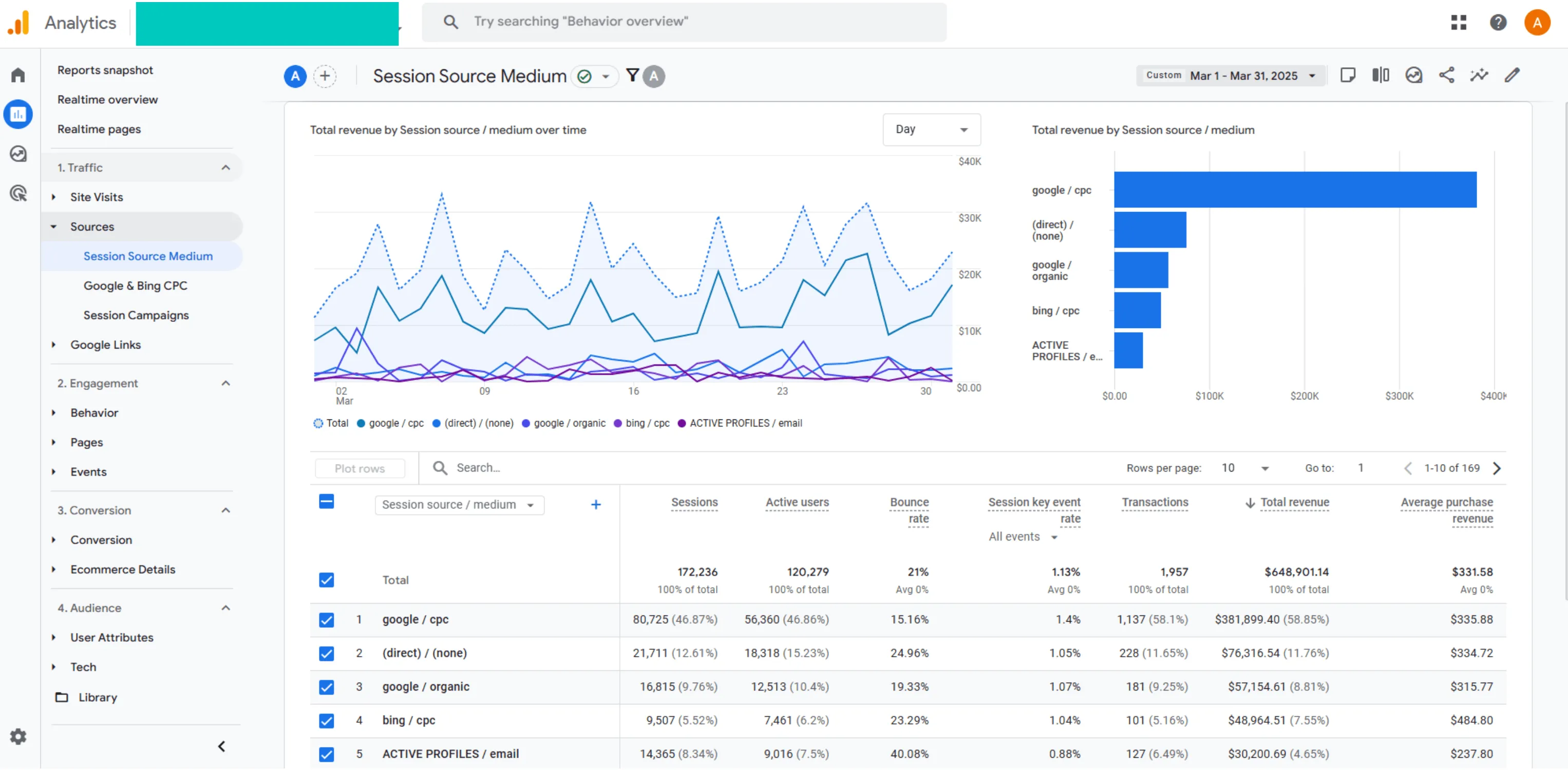
Google Analytics 4 overview with the Session Source Medium report
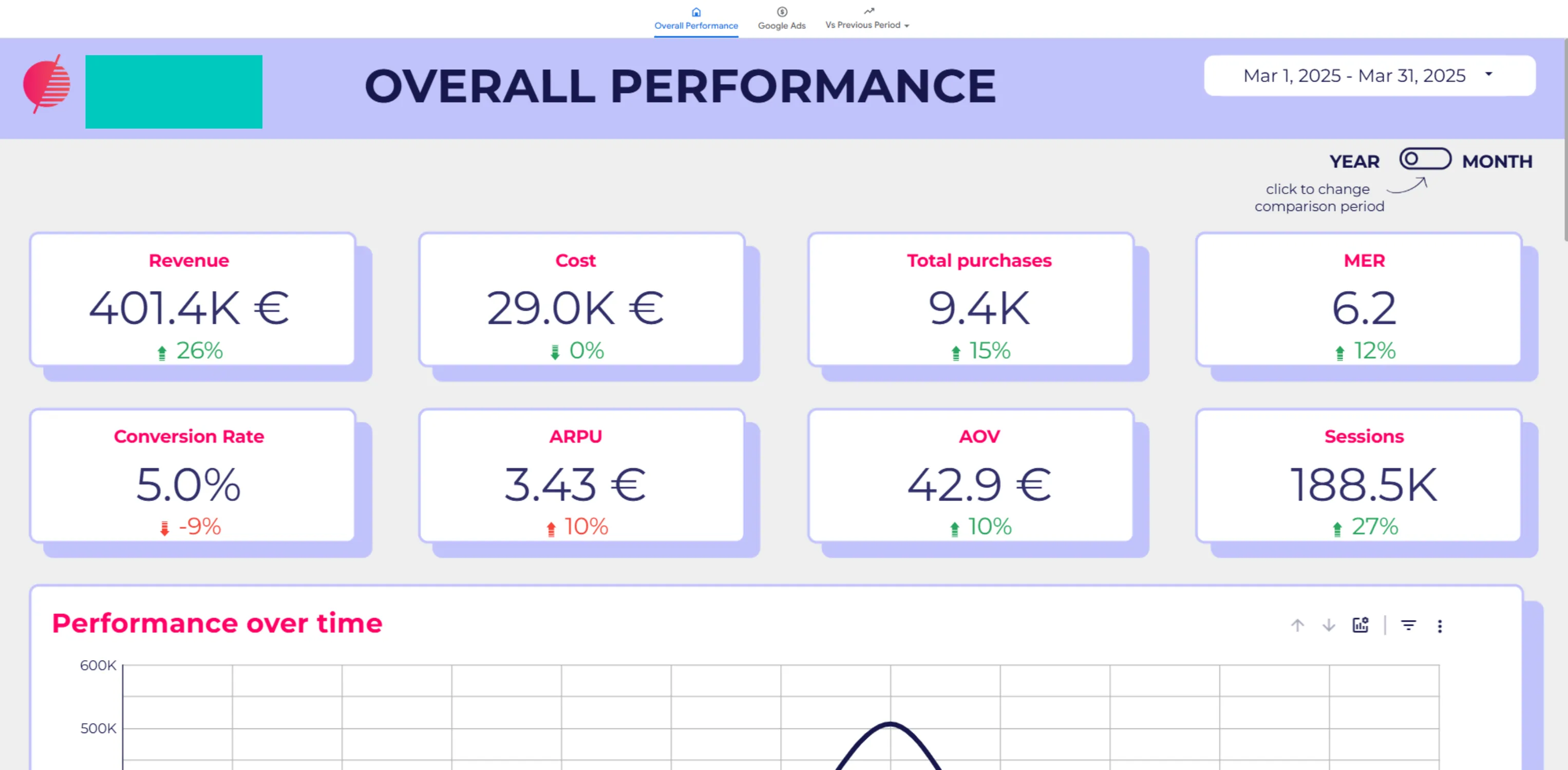
Google Data Studio report example
Maybe you’re wondering, how do you actually set up a proper Web Analytics system? Good question. You’re right to ask – this is important, and I’m here to guide you through it. Tracking website data is great, but without a structured approach, you risk collecting a flood of irrelevant information.
And let’s be honest, drowning in useless data isn’t exactly the dream. The first step is simple but crucial: create a clear tracking strategy. Before diving into implementation, take a step back and figure out exactly what you need to measure, which user actions are actually important for your business, and how you’ll make sense of the data once you collect it.
Once you have a solid plan, then it’s time to take action and implement the right tracking setup on your website. No guesswork, no wasted effort – just a well-structured analytics system that actually helps you grow.
This was the first thing that came to my mind while thinking about this article. The Tracking Plan is so underrated yet so essential! A tracking plan is your roadmap. It’s where you clearly define your business goals – things like increasing leads, improving conversions, or making sure your marketing efforts actually pay off.
These goals need to be set in stone from the start, because if you don’t know what you’re aiming for, you’ll just be collecting random data with no real purpose. Identifying key user actions is what makes the difference. Not every interaction matters, and tracking everything just because you can is a terrible idea.
Focus on what really moves the needle for your business. If you want to track purchases, you first need to break down the steps leading to a purchase – a product is viewed, added to the cart, then comes checkout and payment. If those are the main actions, put them in the plan and track them. Once your data starts coming in, you’ll see where users drop off and start connecting the dots. Is the problem in the ads? The landing page? The checkout process?
Knowing where users stop helps you understand where you need to optimize, tweak, and test. And one last thing – naming matters. Keeping event names consistent across platforms (like using form_submit for contact forms or add_to_cart for eCommerce) makes reporting a lot smoother. If you keep changing names on a whim, analyzing the data will be a nightmare.
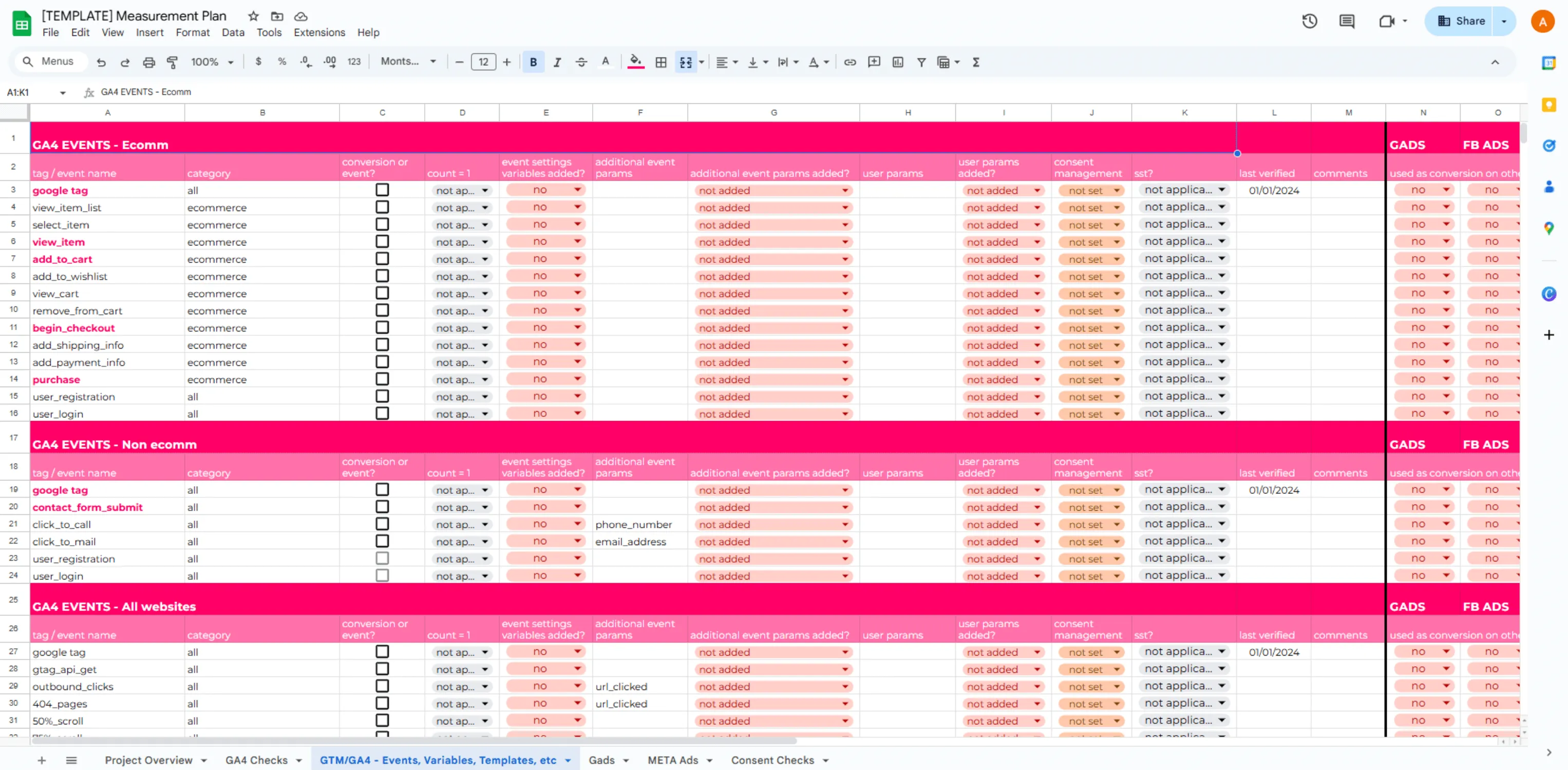
The Tracking Plan template we created and use at Midsummer Agency
Now that you have a clear idea of what you want to track, you’ll need a techy to help you set up the code. As I previously mentioned, sometimes you could be able to “implement” the tracking by yourself. E.g. if you have a Shopify E-Commerce, you can use the Google & YouTube app to have the most important events tracked and working on your Google Ads and GA4 accounts.
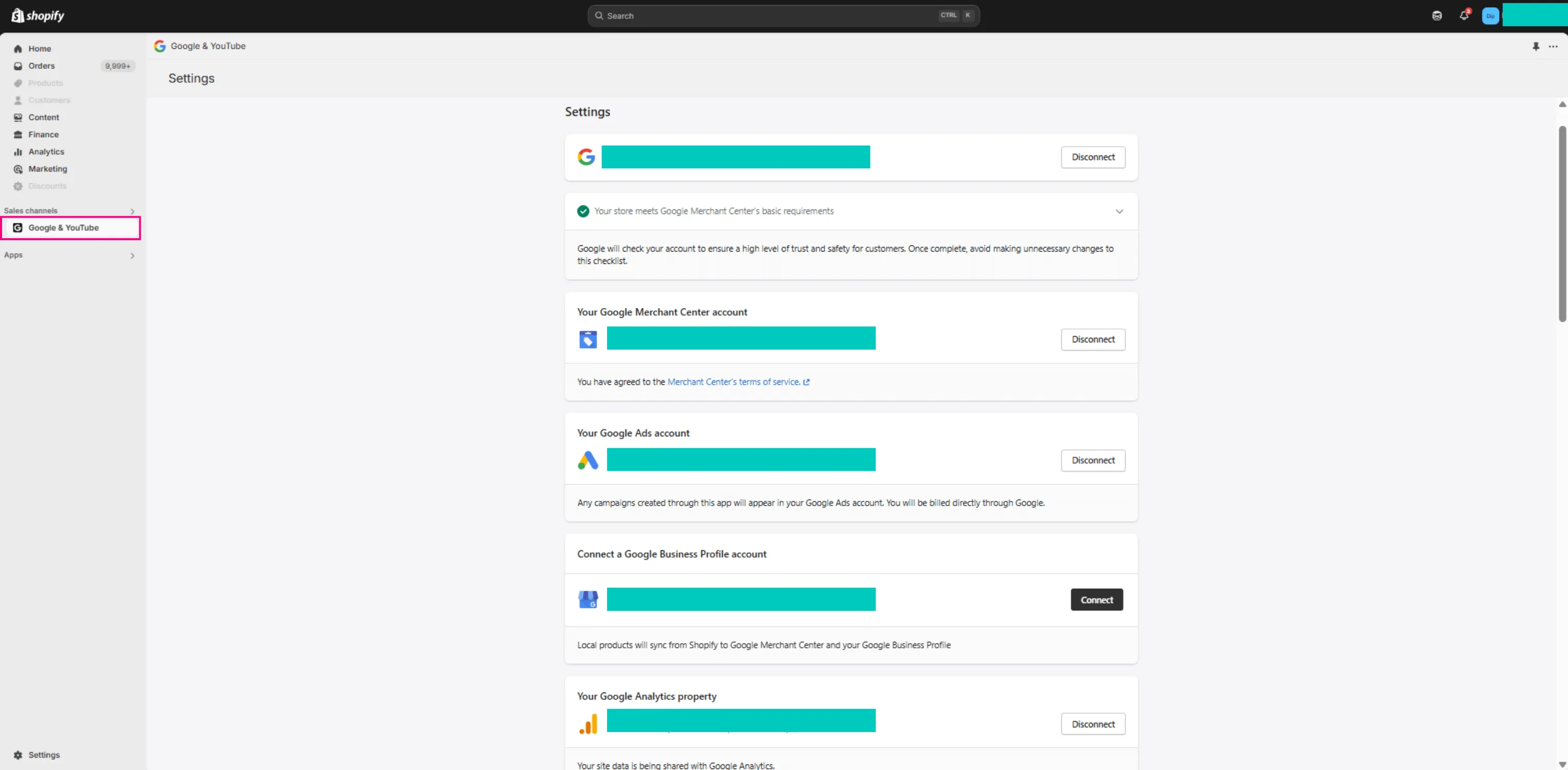
Settings in the Google & YouTube app for seamless tracking
It’s fine if you don’t have that much budget or experience and you need something standardized and not customizable. But if you’re working with a marketing agency or with Web Developers, I strongly recommend using Google Tag Manager and a custom setup.
If you rely on an app, you will have no way to fix any issue and you’ll be forced to wait for their customer service to solve the issue for you. Moreover, you won’t have the chance to track custom actions, such as a click on a very important button for your customer journey (e.g. “Request a free trial”).
Tracking both macro conversions (e.g., purchases, lead form submissions) and micro conversions (e.g., product page views, add to cart clicks) provides a complete picture of user behavior.
Once your setup is in place, all you need to do in Google Analytics 4 is go into the Admin section, mark your most important conversions as Key Events, and fine-tune the rest.
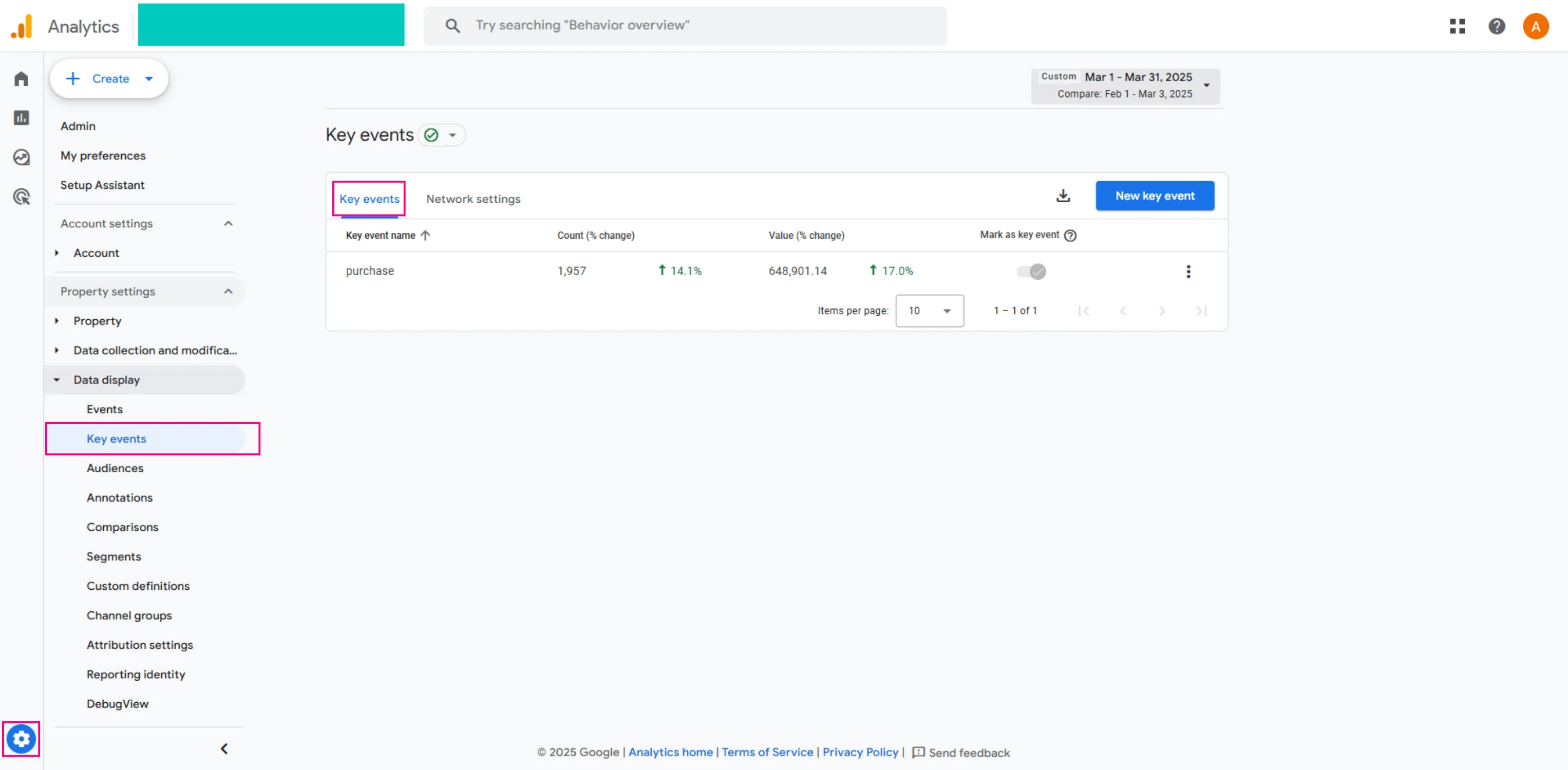
Key Events settings under admin > property settings > data display
Also, while you’re there, take a look around – you might find some extra settings that make your tracking even better.
We’ve made it to the final section! Don’t be sad – there’s more to come in the future, but for now, let’s wrap this up with some next-level insights. Once you’ve got a solid tracking plan in place and understand how to optimize website performance, it’s time to level up.
Advanced analytics techniques help you dig deeper, spot opportunities, and ensure your data is as accurate as possible – without breaking privacy regulations. Let’s talk about customer journey tracking, audience segmentation, multi-touch attribution, Google Tag Manager (GTM), and server-side tracking.
It might sound complex, but trust me, it’s easier than it seems.
The customer journey refers to the entire path a user takes from their first interaction with your website to final conversion (purchase, lead submission, sign-up). Why It’s Important:
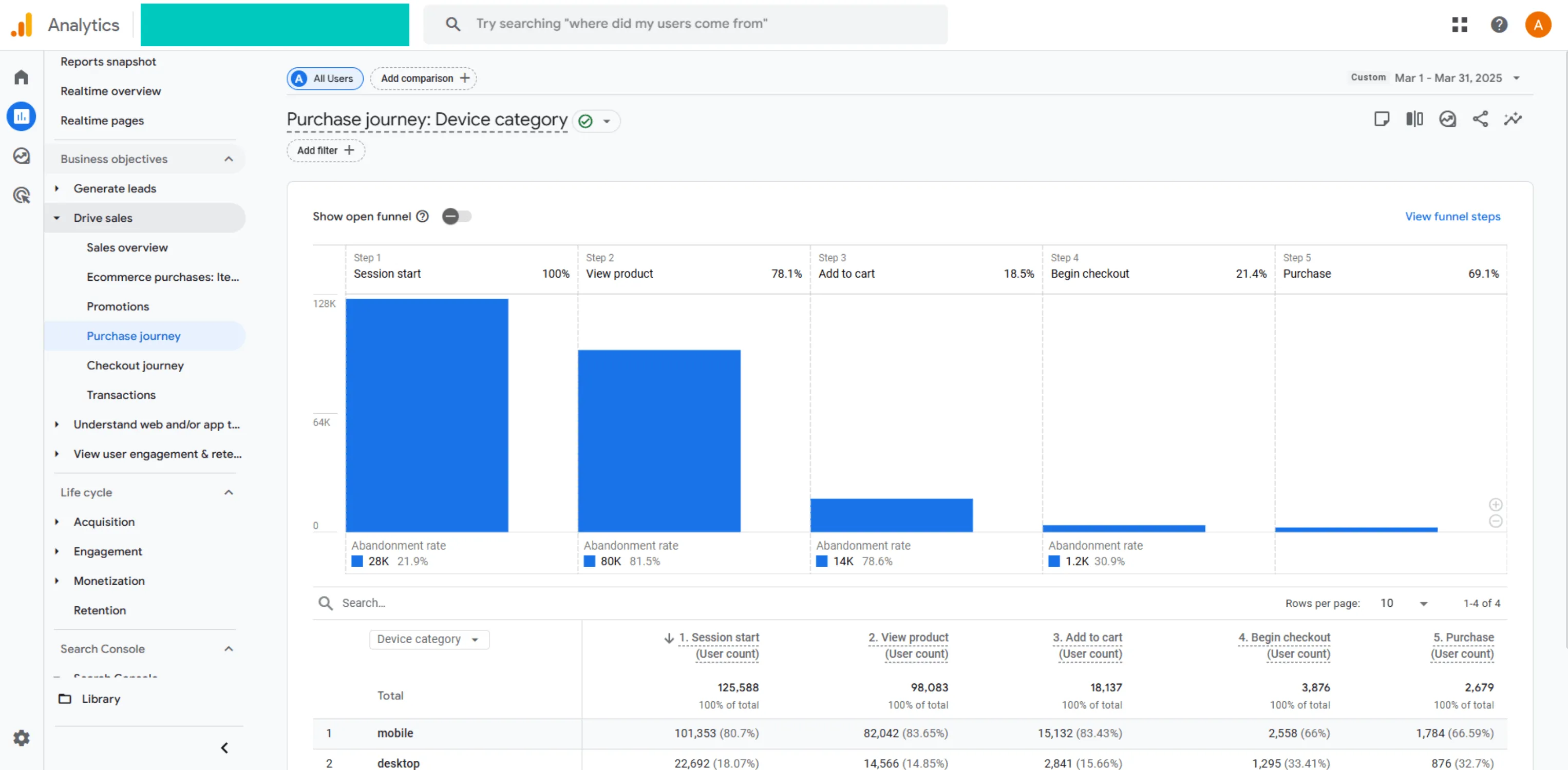
Purchase Journey report in GA4
📌 My 2 cents: Set up event tracking for key actions like scroll depth, clicks, form fills, and add-to-cart interactions to get more granular insights. You can also use Google Data Studio for reporting and data visualization.
User segmentation is one of the most powerful ways to analyze web analytics data. Instead of looking at “all users,” segmentation allows businesses to identify high-value customer groups and optimize their marketing efforts accordingly.
📌 Example: If mobile visitors convert at a lower rate than desktop users, consider optimizing the mobile experience by improving page speed or adjusting CTA placement.
Only the ones who have read ‘till here will see my opinion on GTM. Well… this is THE TOOL! Both me and my colleagues at Midsummer rely on Google Tag Manager (GTM) as a central hub for managing tracking codes across websites efficiently. And after tons of hours spent on it, I can tell you that it’s really great, and it’s 100% free!
Google Tag Manager (GTM) simplifies tracking implementation by allowing businesses to add, edit, and manage analytics scripts without modifying website code.
📌 Case Study: A multi-country WooCommerce store faced tracking inconsistencies that disrupted ad performance. Their improper GTM setup caused data loss, preventing ad platforms from optimizing campaigns effectively. At Midsummer Agency, we restructured their GTM tracking, ensuring accurate eCommerce event tracking, checkout funnel monitoring, and remarketing signals for Google Ads. Result: Conversion tracking accuracy increased from 26% to 100%, resolving all multi-language tracking issues. The add_to_cart event saw a 391% increase, improving Meta Ads optimization and boosting campaign performance.
A super common challenge in web analytics is understanding which marketing channels truly drive conversions. 💡 Example Problem: A user searches for a product on Google, clicks a Facebook ad a week later, then finally buys after clicking an email link.
Multi-touch attribution models help answer this by assigning credit to multiple touchpoints. There are more types of Attribution Models in Web Analytics, and unfortunately, there won’t be one telling you everything. So you’ll have to choose the one that best fits your needs and do your analysis accordingly.
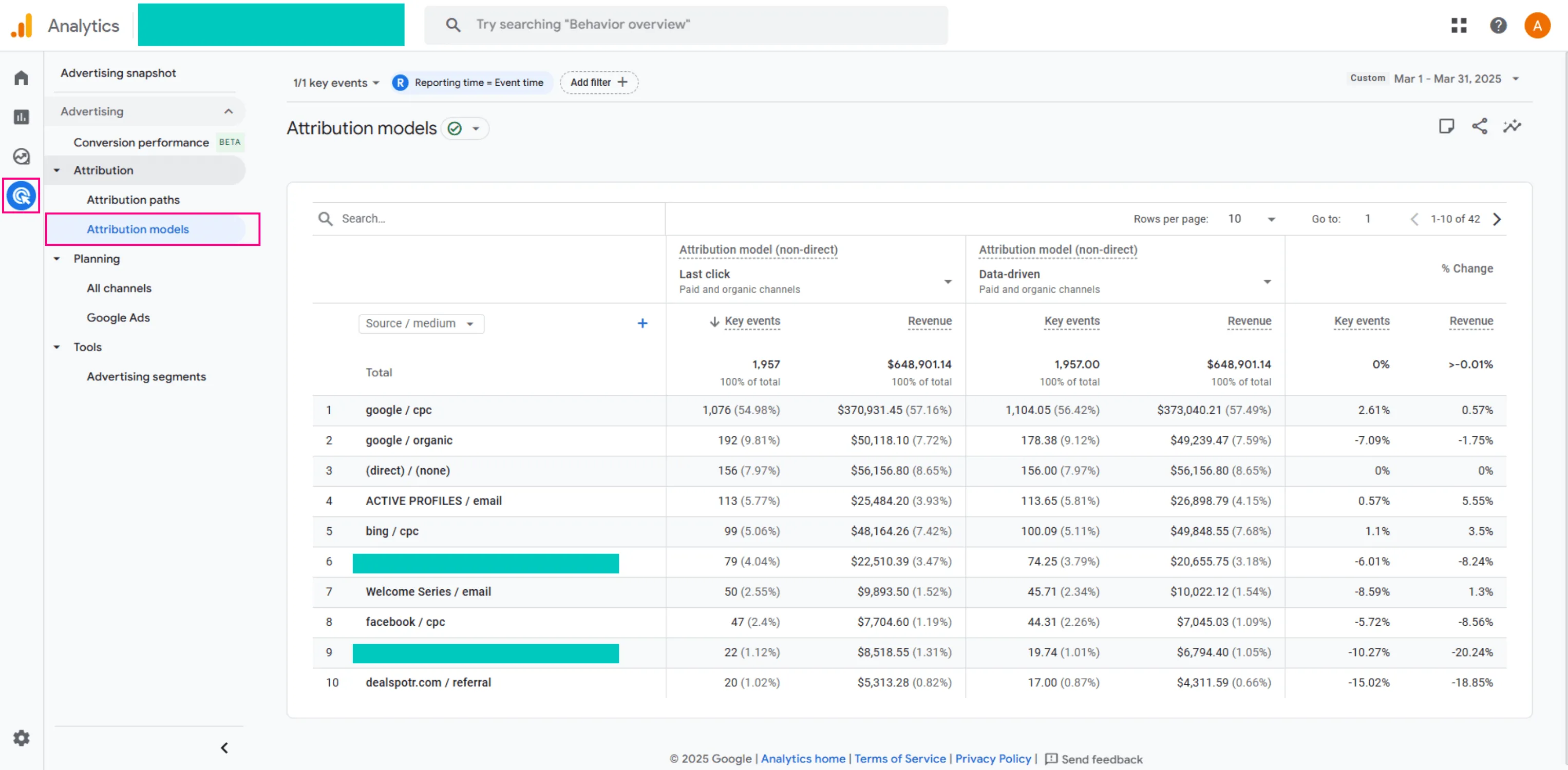
Attribution Models under the Advertising section
📌 Example: If Google Analytics shows that paid ads drive initial visits but email converts users, then increasing retargeting efforts via email marketing could improve conversions.
Let’s talk about cookies – no, not the chocolate chip ones (unfortunately). We’re talking about third-party cookies, which have been the backbone of online tracking for years. But with privacy regulations tightening and Google officially phasing out third-party cookies in Chrome by late 2024, businesses need to rethink how they track users while respecting privacy laws. So, what’s the alternative?
Instead of relying on browser-based tracking (which is increasingly blocked by ad blockers and privacy-focused browsers), server-side tracking shifts data collection to your own server. This means:
At Midsummer Agency, we use Google Tag Manager to set the Server-Side tracking too. Yes, it requires a deep knowledge of GTM, and yes, some apps can do this setup for you, with the same issues we’ve talked about before (no customization, no options for debugging, and so on). If you are managing a Shopify store, there is a Meta app that helps you set up both client and conversion API (similar to server) conversions.
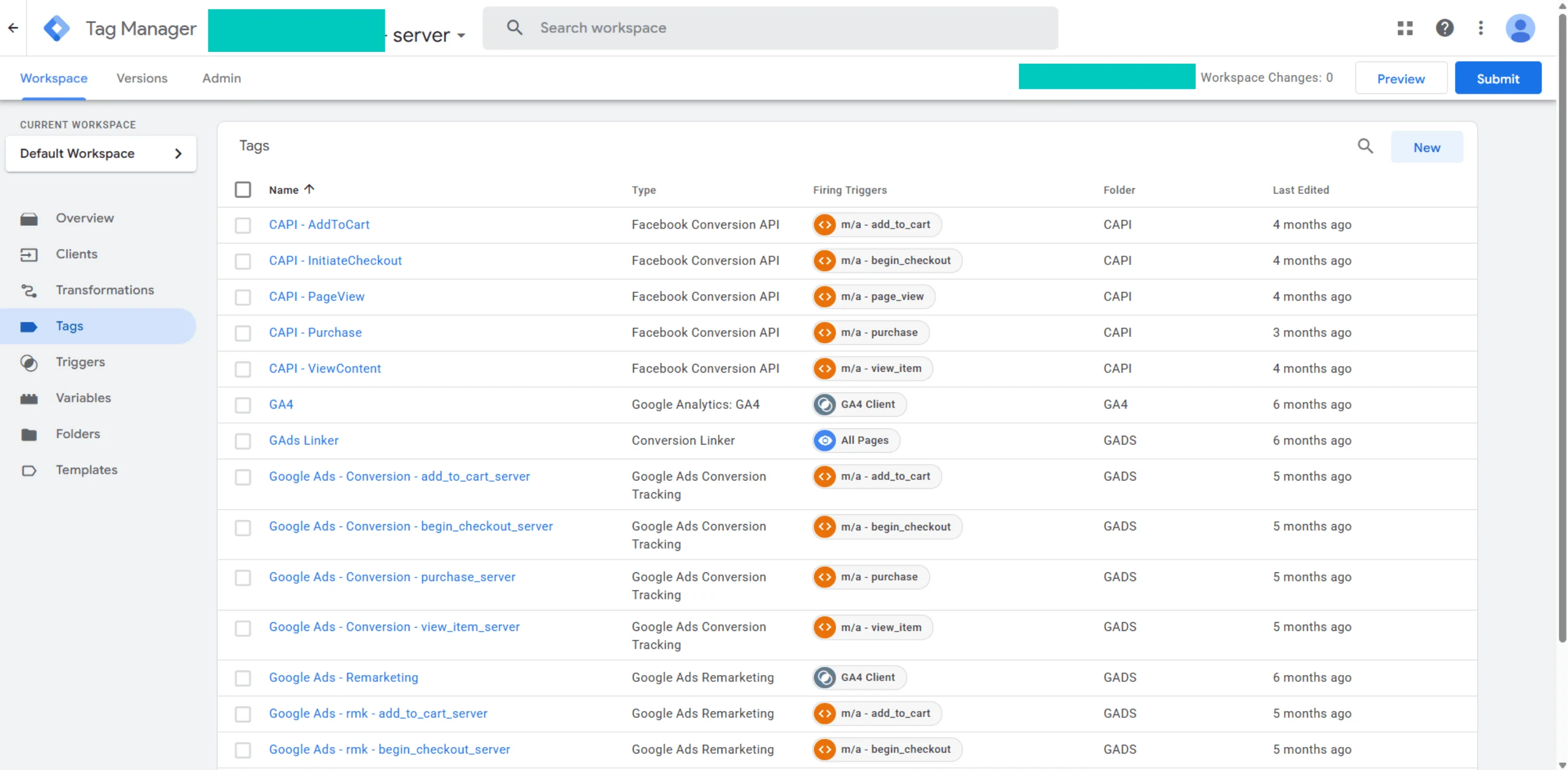
Server Side Google Tag Manager for advanced tracking
A cookieless world isn’t the end of tracking – it’s just a shift towards privacy-first analytics. Businesses that adapt early will stay ahead. Here’s how:
The bottom line? The digital world is evolving, and web analytics must evolve with it. Those who embrace privacy-first tracking and adapt to the cookieless landscape will gain a competitive edge while keeping user trust intact.
Gone are the days when web analytics was just about tracking traffic. Today, it’s a powerful decision-making tool that helps businesses fine-tune their marketing strategies, optimize user experience, and drive revenue growth. But having data isn’t enough – you need a clear tracking plan, meaningful KPIs, and the right tools to extract real value.
As third-party cookies fade out and privacy regulations tighten, the shift towards first-party data collection, server-side tracking, and privacy-first analytics is essential. Businesses that embrace solutions like Google Tag Manager (GTM) for centralized tracking and multi-touch attribution models for deeper insights will stay ahead in this evolving landscape.
At Midsummer Agency, my colleagues and I help businesses future-proof their analytics – whether by implementing server-side tracking, refining attribution models, or optimizing conversion paths. Want to make smarter, data-driven decisions? Let’s make it happen. 🚀