The Top 7 eCommerce SEO Mistakes (And How to Actually Fix Them)
Let’s be clear: eCommerce SEO is hard. There’s product turnover, seasonal demand, technical complexity, and endless competition for the same few transactional keywords. So it’s no…
There’s product turnover, seasonal demand, technical complexity, and endless competition for the same few transactional keywords. So it’s no surprise that even established brands still get key things wrong.
At Midsummer, we audit dozens of eCommerce sites every year, from fast-growing DTC players to niche multi-brand stores, and we keep seeing the same issues over and over again.
Here are 7 of today’s most common eCommerce SEO mistakes, and more importantly, how to fix them before they cost you traffic, rankings, and revenue.
1. Weak or Empty Category Pages
Most eCommerce brands treat category pages as purely functional: a grid of products, a filter bar, maybe a title. But that’s not what search engines want, and not what users need to feel confident in their purchase journey.
Why it matters?
Category pages are often the most powerful SEO assets on your website. They target high-intent, high-volume queries like “men’s running shoes” or “organic baby skincare”. If your page has no content, no context, and no internal linking, Google has no reason to rank it.
How to fix it:
Write clear, specific copy that sits above or below the product grid
Use long-tail variations: e.g. “vegan winter boots” or “linen shirts for summer”
Include internal links to related categories and featured products
Add buyer-relevant content: size guides, materials, care instructions, or FAQs
When done right, category pages combine conversion-focused UX with SEO-optimized content and drive traffic that’s ready to buy.
An example of e-commerce category page done right.
2. Duplicate Product Descriptions
You’re uploading new products quickly, and the manufacturer’s description is right there, so you copy it. That’s fine, right?
Not really.
Why it matters?
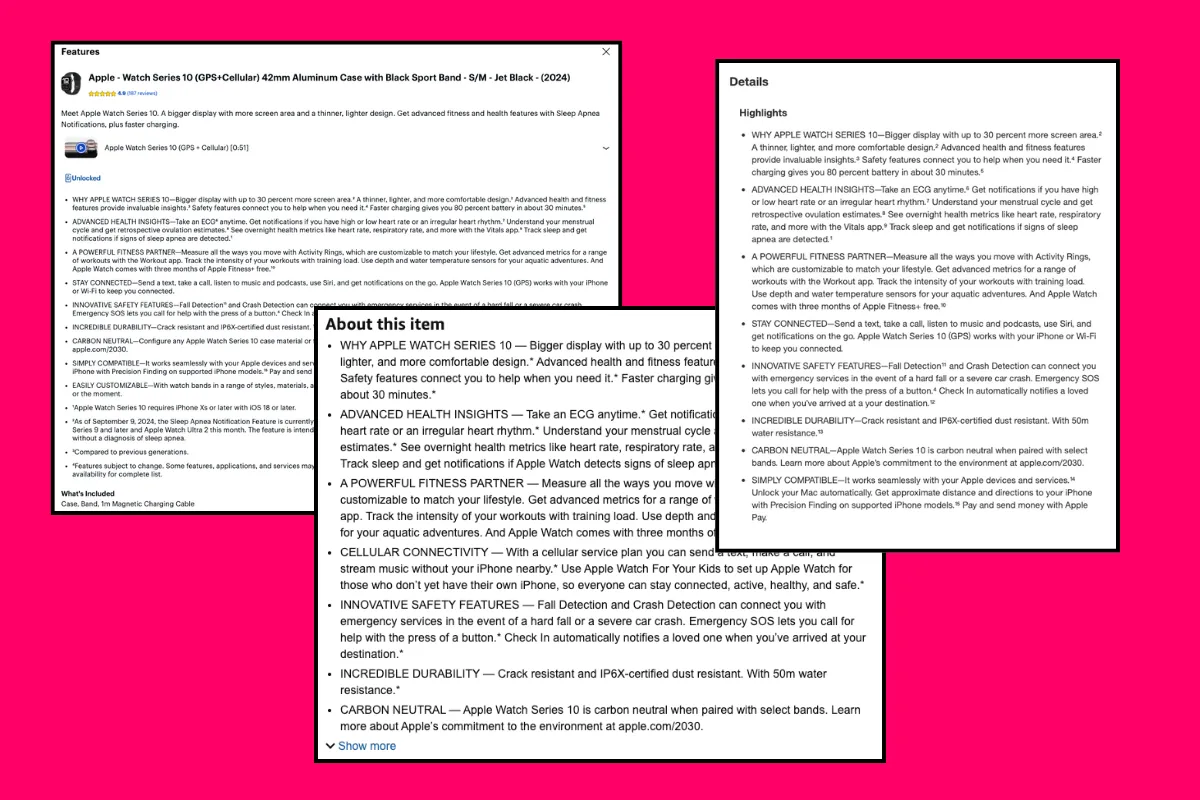
Google filters out duplicate content aggressively, especially for product-level pages where competition is fierce. If your copy is the same as a dozen resellers, marketplaces or competitors, your chances of ranking are slim.
Even worse: duplicated content offers zero brand value to users, and might hurt your conversion rate.
Google penalizes websites that have duplicate content.
How to fix it:
Rewrite descriptions using your brand’s tone and customer language
Highlight what makes your product and/or brand different (material, use case, story)
Use structured copy that includes keywords, benefits and key specs
Prioritize rewriting your most important SKUs (bestsellers, high-margin, seasonal)
Think of product descriptions as micro landing pages: they sell, they inform, and – when written well – they rank.
3. Overindexing Filter and Variant Pages
Your platform automatically generates a new URL for every filter or variant: color, size, material, price, stock status…the list goes on. These URLs are often crawlable and indexed by Google.
Why it matters?
This creates hundreds or thousands of thin, low-value pages that cannibalize each other. It confuses search engines, wastes crawl budget and prevents your real money pages (like clean categories or featured collections) from gaining visibility.
It also leads to serious duplication and dilution of ranking signals.
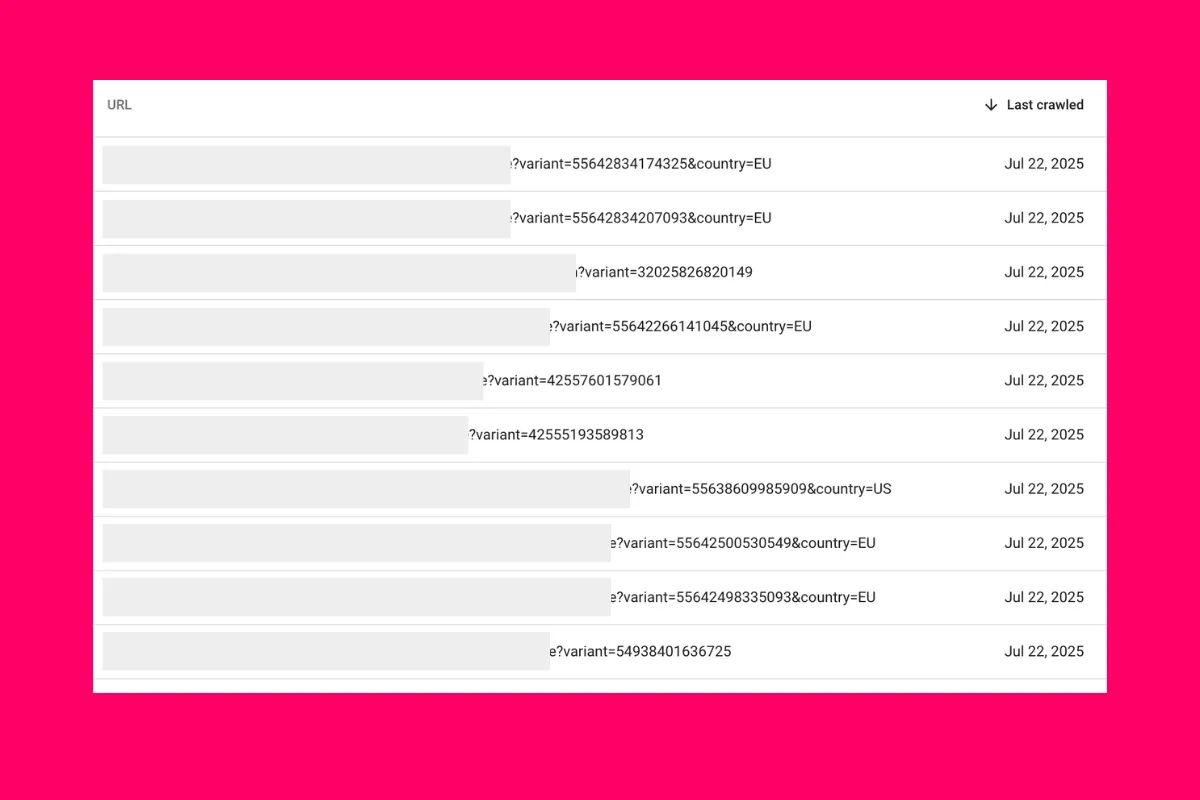
A list of variant pages URLs – better not index them all!
How to fix it:
Identify and block low-value parameter URLs via robots.txt or meta noindex
Use canonical tags to point variants back to the main product or category
Create and allow indexing only for filter combinations that have actual search volume (e.g. /shoes/women/running)
Regularly audit your index coverage in Google Search Console
Faceted navigation is great for users, but it has to be handled intentionally, or your SEO performance will suffer.
4. Lack of Structured Data (Schema Markup)
Despite having beautifully designed product pages, your site doesn’t appear with rich results in search. No stars, no pricing, no availability. Just blue links.
Why it matters?
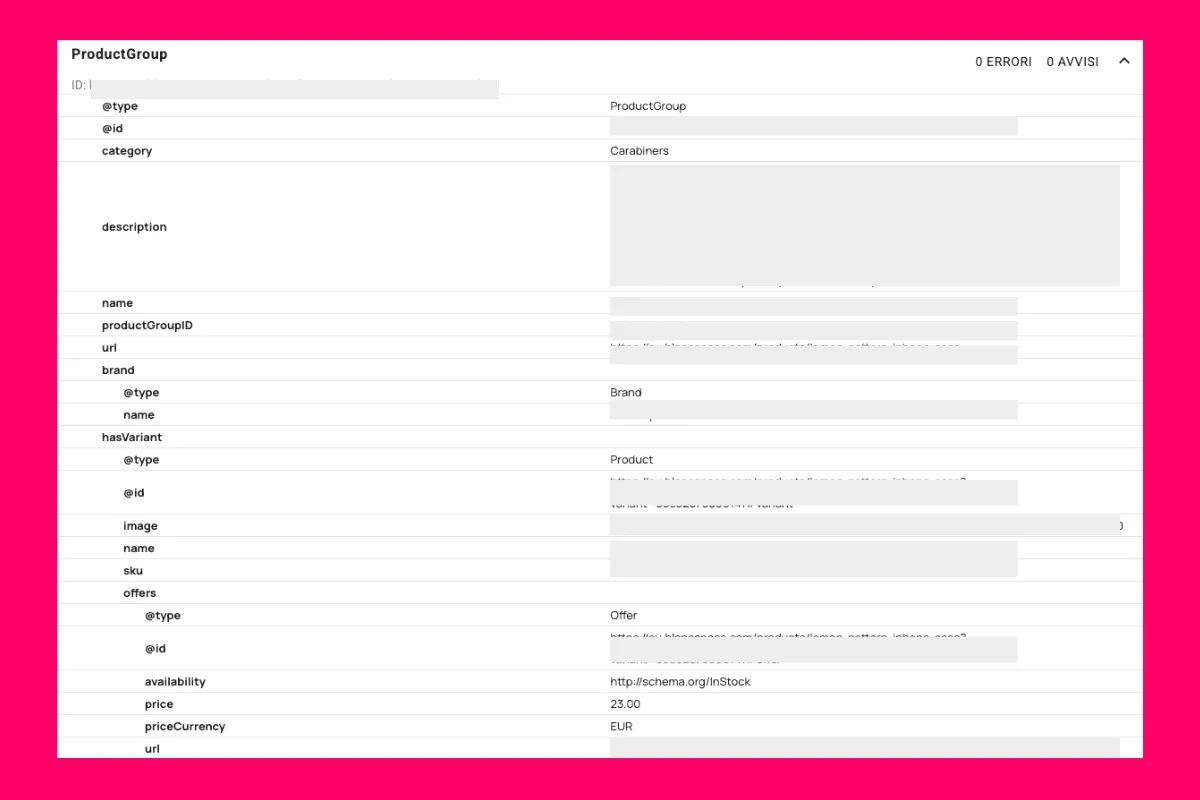
Structured data (also known as schema markup) helps search engines understand your content better – and unlocks rich results like product ratings, price, brand, and availability directly in the SERP.
This improves visibility, CTR, and trust. It’s also increasingly important for AI-powered search features and future-proofing your content.
How to fix it:
Implement schema markup for Product, Offer, Review, and Breadcrumb on all product pages
Use JSON-LD (preferred by Google) and validate with Rich Results Test
Monitor performance in Google Search Console’s “Enhancements” report
If you’re using Shopify or WooCommerce, check your theme or app integration to avoid errors or conflicts
Schema isn’t optional in 2025. It’s the baseline for competing in visual, AI-driven search.
5. Misaligned Content with Search Intent
You’re investing in blog content. You’re targeting keywords. But nothing is ranking, or if it does, traffic isn’t converting.
Why it matters?
Each keyword has a dominant search intent behind it. If your content doesn’t match that intent – format-wise and goal-wise – Google won’t prioritize your page.
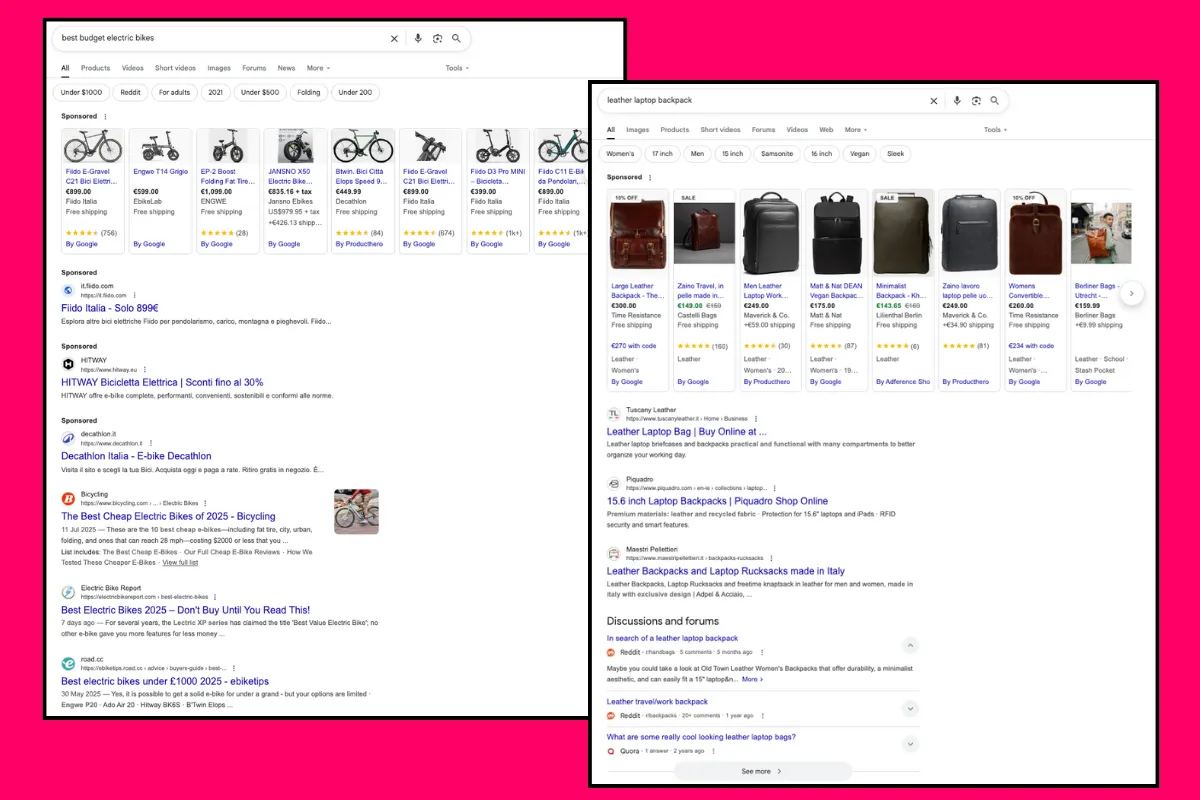
For example:
A keyword like “best budget electric bikes” typically shows listicle-style blog posts
A keyword like “leather laptop backpack” shows collection or category pages
Mismatch the format, and you’re out of the game. No matter how good your content is.
How to fix it:
Analyze the current SERP before creating content: what formats are ranking?
Match your content type (blog, category, product) to what users are clearly looking for
Use “People Also Ask” and Featured Snippets as a guide for structure
Reoptimize existing pages that are mismatched or underperforming
In a world of evolving SERP features, search intent is your compass. Ignore it, and your SEO efforts will feel random and ineffective.
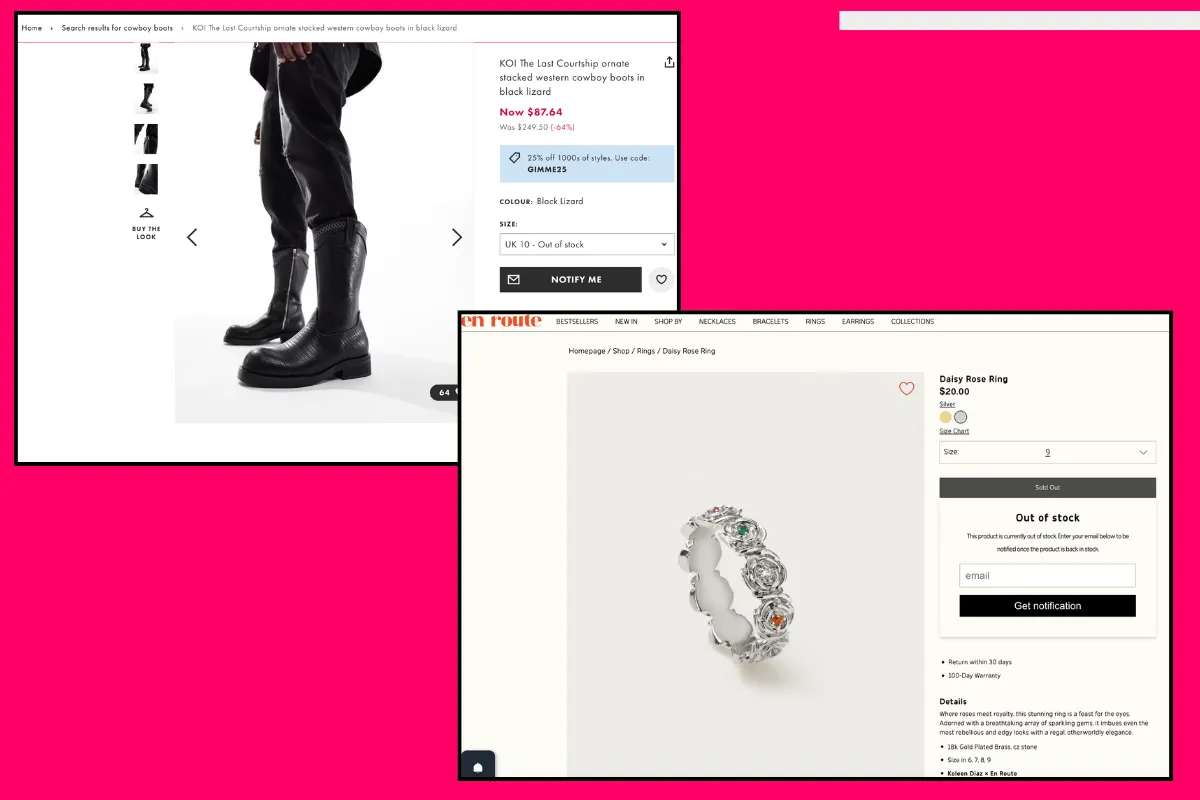
6. No Plan for Out-of-Stock or Seasonal Products
A product runs out of stock. Or a seasonal item goes offline after the holidays. So the page gets unpublished – or worse, deleted. No big deal, right?
Why it matters?
Every product page that ranks – or has been linked to – carries SEO value. If you remove it without a plan, you’re throwing away link equity, indexed URLs, and user trust. It’s one of the most overlooked eCommerce SEO mistakes, and one that can quietly erode performance over time.
How to fix it:
If the product will return, keep the page live and mark it “Out of Stock.” Add messaging about availability and link to similar alternatives.
If the product is gone for good, set up a 301 redirect to the most relevant category or related product.
Never delete pages without redirecting, especially if they had traffic, backlinks, or strong internal links.
Pro tip: if seasonal products come back every year, optimize the same URL annually instead of creating new ones. That way, you retain historical SEO value and avoid competing with yourself.
7. Ignoring Technical SEO Basics
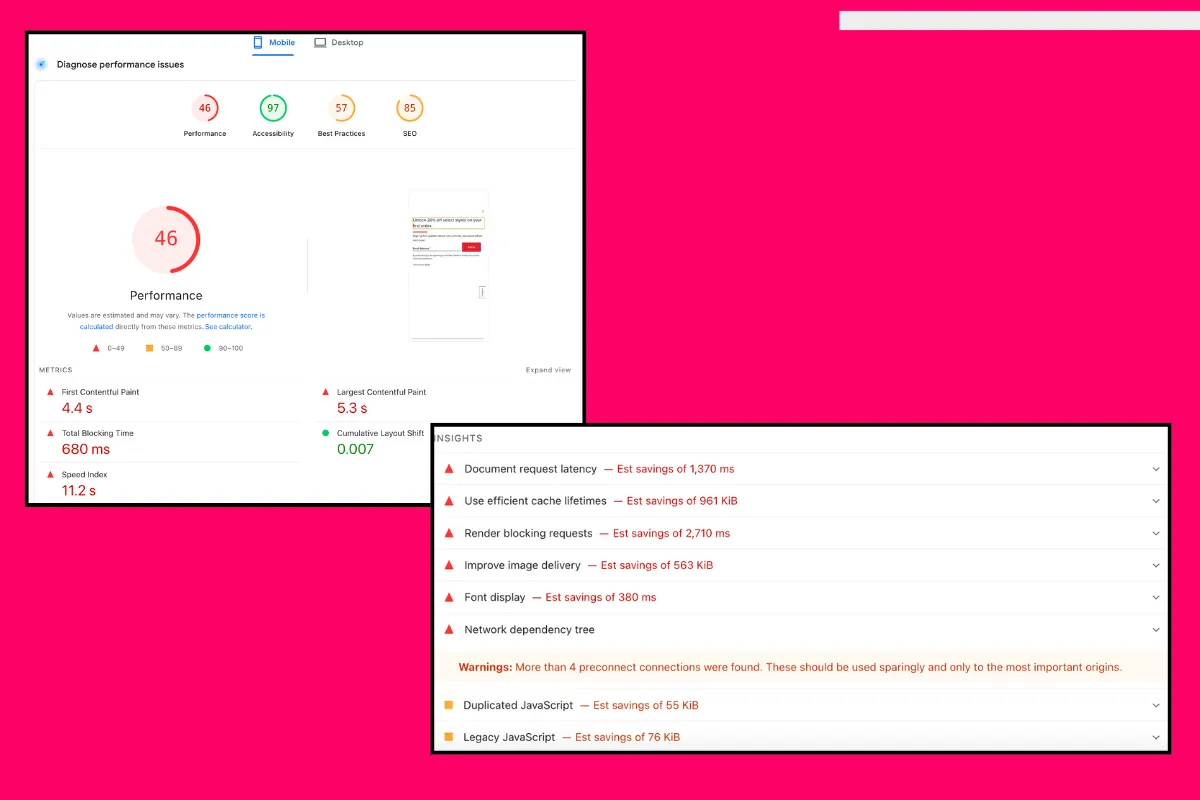
Page speed is lagging. Internal links break after a collection update. Canonical tags are missing – or worse, conflicting. There’s no updated XML sitemap, and crawl errors pile up in Search Console.
These aren’t edge cases. They’re the baseline technical issues we still see on far too many eCommerce sites.
Why it matters?
You can have the best content and product strategy in the world, but if your website is slow, messy, or unreadable by crawlers, it won’t rank. Technical SEO is what enables everything else to work. If it’s broken, so is your entire SEO engine.
How to fix it:
Run regular audits using tools like Screaming Frog, Ahrefs, or Sitebulb
Prioritize Core Web Vitals, especially on mobile: speed, stability, and interactivity
Set canonical tags to prevent duplicate content from variants or filtered URLs
Maintain a clean XML sitemap and monitor index coverage in Google Search Console
Technical SEO won’t win awards or go viral – but without it, your organic growth just doesn’t scale.
Want Us to Take a Look at Your eCommerce SEO Strategy?
Avoiding these common eCommerce SEO mistakes isn’t about chasing hacks. It’s about getting the fundamentals right.
These aren’t advanced tactics. They’re the non-negotiables of modern SEO for online stores.
If your brand is serious about scaling through organic search, SEO has to be baked into how your website is structured, how your content is created, and how your products are marketed.
If you’re making one (or more) of these mistakes, don’t panic. But don’t ignore them either.