Google’s introduction of AI Overviews marks one of the most significant shifts in how users interact with search results. These AI-powered summaries appear at the very…
Google’s introduction of AI Overviews marks one of the most significant shifts in how users interact with search results. These AI-powered summaries appear at the very top of the SERP, providing synthesized answers drawn from multiple sources across the web. For searchers, this creates an experience that feels faster, smarter, and more intuitive.
For businesses and marketers, however, it introduces a new layer of complexity.
SEO has always been about visibility and clicks. However, with AI now interjecting itself between users and websites, the very foundations of how traffic flows from Google are shifting. To understand what this means, we need to break down the mechanics of AI Overviews, explore their potential impact on organic search, and identify the strategies brands can adopt to adapt in an AI-first search environment.
What Is Google AI Overview?
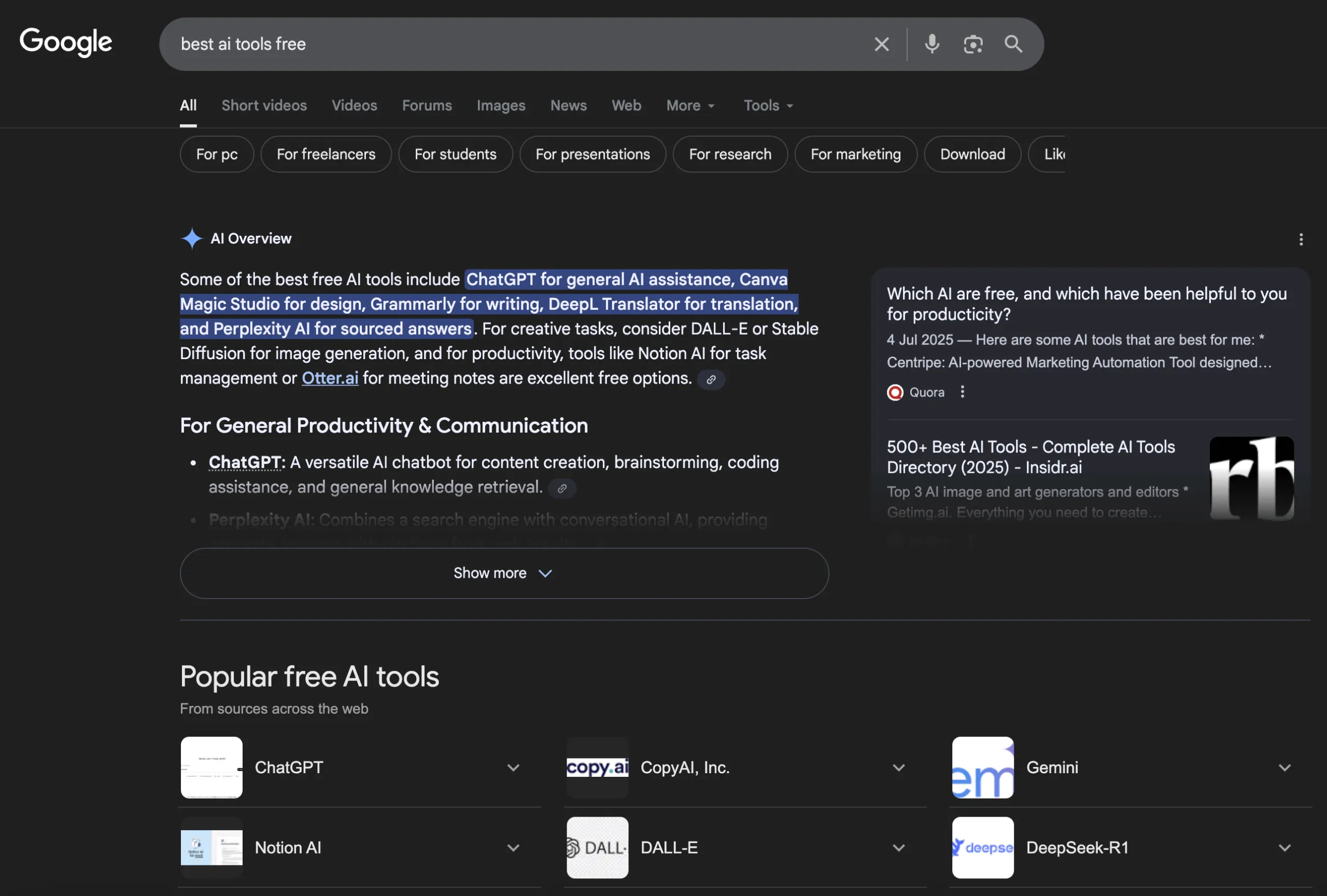
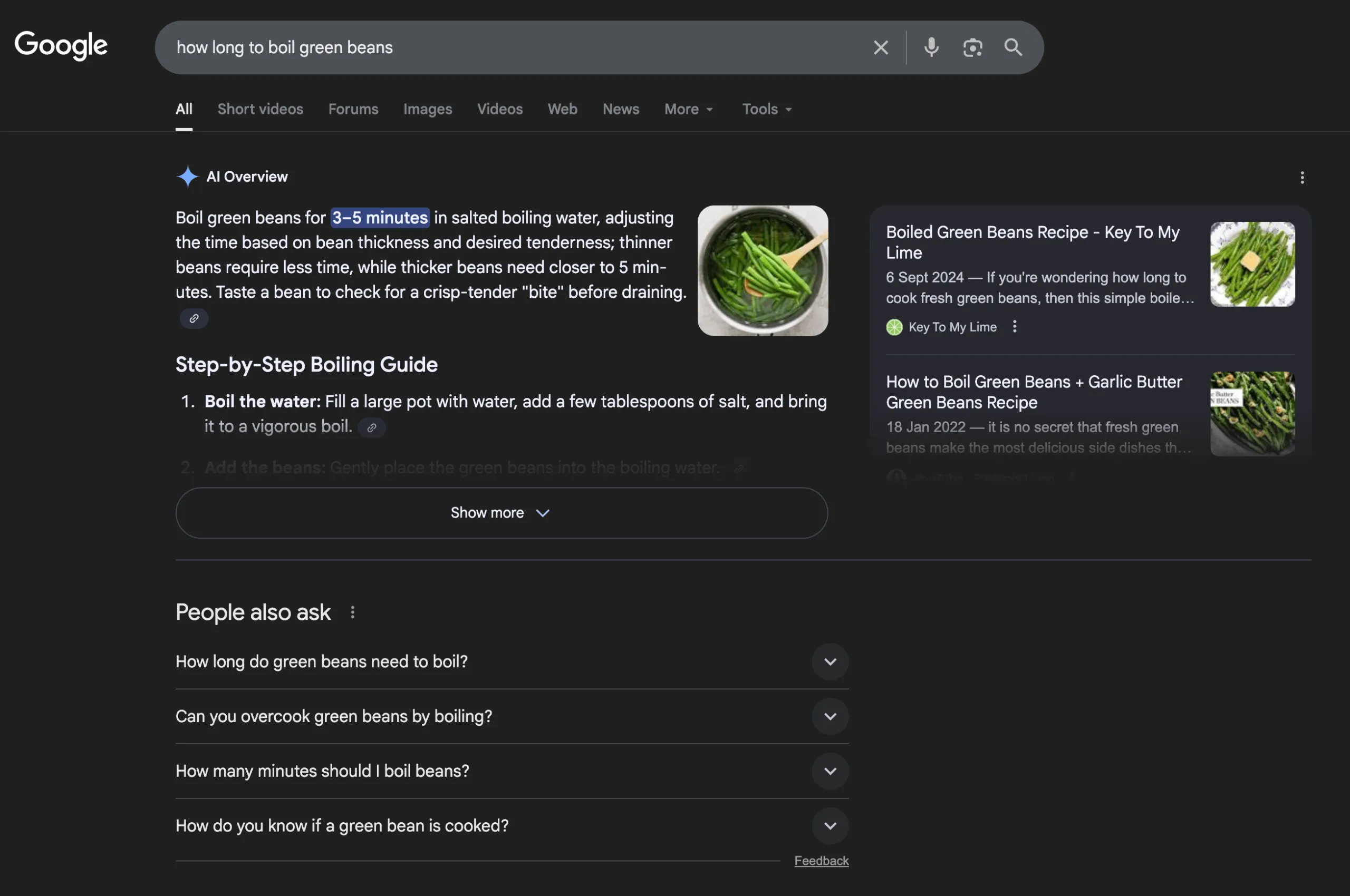
At their core, Google AI Overviews are generative AI responses to search queries. Instead of a user scrolling through 10 different blue results to find an answer, Google now provides a synthesized, conversational response at the top of the SERP.
These overviews are not static snippets: they can combine insights from multiple web pages, highlight related questions, and even guide users toward follow-up queries.
The positioning of these overviews is critical. They appear above the fold, pushing traditional organic results further down. This placement gives them a level of authority in the eyes of the user – if Google is surfacing an AI summary first, it feels like the “official” answer. The challenge for brands is obvious: if the AI satisfies user intent immediately, there may be little reason for a searcher to click deeper into the results.
The Potential SEO Impact of AI Overviews
The introduction of AI Overviews has far-reaching implications for SEO visibility and performance. One of the most direct consequences is on click-through rates (CTR). Even if your content still ranks in the top three organic positions, if an AI-generated answer dominates the screen, fewer users may scroll down to engage with your link.
At the same time, there’s a potential upside. If Google chooses to cite your content within the overview, your brand can gain a level of prominence that goes beyond a standard organic ranking. In many cases, the overview highlights a site with a clickable link as its “source,” meaning the few clicks that do occur may be higher quality, coming from users who already trust the AI’s recommendation.
This creates a paradox for marketers: overall traffic volume may decline, but the value of each click could rise. It shifts SEO from being purely about rankings and impressions to being about earning a place within the AI-curated summary.
How AI Overview Is Changing Your SEO Strategy
The rise of Google AI Overviews is forcing brands to rethink traditional SEO approaches, and our recent client experiences provide some real-world insight into these changes.
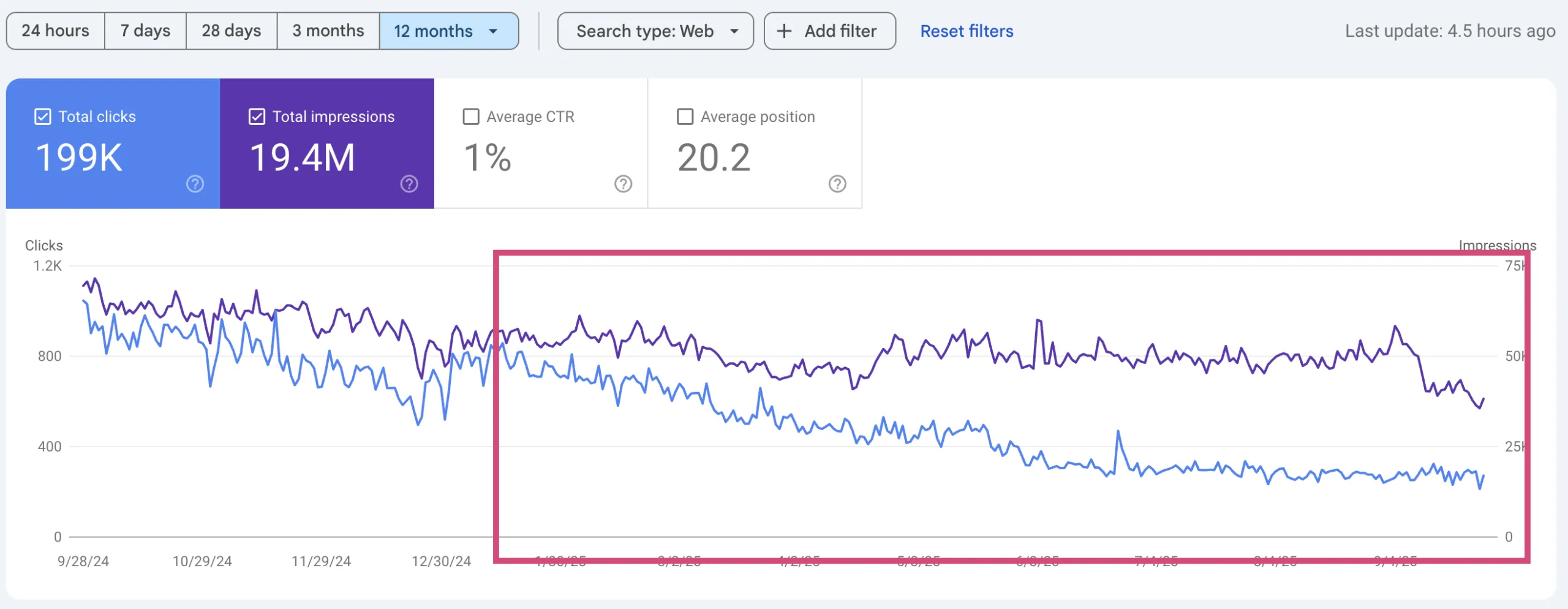
In one of our most recent SEO audits, we analyzed a site that had experienced a significantorganic traffic lossover the last months. At first glance, the metrics were puzzling: overall impressions were stable – or even slightly increasing – and there were no major shifts in page rankings.
Digging deeper, we discovered that the traffic loss was concentrated in editorial areas of the website, such as the blog, while other areas – like the homepage and product pages – were still growing. These are precisely the types of pages that are most impacted by AI-generated overviews globally. While the pages were still appearing in search results and maintaining strong visibility, users were increasingly interacting with the AI-generated summaries at the top of the SERP rather than clicking through to the result itself.
We refer to this as the “crocodile mouth effect”: impressions are rising on Google Search Console, but click-through rates are dropping as the AI summary effectively “swallows” potential clicks. In this case, it accounted for a significant portion of the perceived traffic decline, alongside a few technical SEO issues that needed fixing.
This example highlights a critical shift for SEO strategy. It’s no longer enough to focus solely on rankings or impressions; brands must now consider how AI interacts with their content and how searchers are engaging with AI-generated answers.
Optimizing for AI visibility may involve creating more concise summaries, structuring content in a way that AI can parse easily, and emphasizing unique insights that can’t be easily distilled into a short overview.
For brands seeing similar patterns, understanding the crocodile mouth effect and its influence on click behavior is essential. Rather than panicking over “lost traffic,” it’s a signal to adaptcontent strategy: strengthen authority, highlight distinctive expertise, and design content to work alongside AI-driven search, rather than purely for traditional organic ranking.
The Negative Impacts of AI Overviews on SEO
For all its promise, AI-driven search comes with clear risks, especially for businesses that have built their growth model around organic traffic. The most pressing concern, as discussed, is traffic loss. If AI can satisfy a user’s question instantly, the incentive to click through to the source diminishes. This is especially damaging for informational content, which has historically driven top-of-funnel awareness for many brands.
Another challenge is the erosion of brand visibility. In traditional SERPs, a first-page ranking meant a significant portion would almost certainly see your website in search. With AI overviews dominating the top of the page, even strong organic rankings may be relegated to a secondary position, reducing brand exposure.
There’s also the issue of content commoditization. AI overviews may summarize unique insights, research, or perspectives in a way that removes the need for users to engage directly with the source. This could undermine publishers, niche bloggers, and even product-focused sites that rely on content differentiation to stand out.
Last but not least, competition is likely to intensify. Larger, established sites with higher authority will have a natural advantage when it comes to being cited within AI summaries. Smaller brands may struggle to break through unless they can provide truly distinctive expertise or proprietary data.
Strategies to Adapt Your SEO for AI Overviews
Some may think that once AI overviews take over a portion of the SERP, there’s nothing left to do, but that couldn’t be further from the truth.
SEO is evolving, and the brands that succeed will be those that readjust their strategies, embrace the change, and focus on the right metrics. The emergence of AI-driven summaries and zero-click results doesn’t mean SEO is dead; it means we need to be smarter about how we capture attention and guide users toward our content.
Here’s what businesses can do to stay competitive:
Optimize for Click-Deserving Content: Curiosity-driven headlines, exclusive insights, downloadable resources, and interactive tools are now more important than ever. AI overviews often surface concise answers, but users will still click when they perceive a unique value that can’t be captured in a snippet.
Strengthen Technical Structure: A solid technical foundation remains essential. Fast site speed, crawlable pages, proper schema implementation, and a mobile-first design ensure that your content remains visible and easily interpretable by both users and AI systems. Strong architecture isn’t just for rankings; it safeguards long-term SEO performance.
Structure for Rich Results: Implement schema markup strategically to increase chances of being featured in enhanced SERP features such as featured snippets, FAQs, and knowledge panels. Structured content helps search engines (and AI) understand your pages better, increasing visibility even in competitive landscapes.
Track Non-Click Engagement Metrics: With more users consuming information without clicking, traditional metrics like organic traffic and CTR don’t tell the full story. Focus on engagement signals such as scroll depth, hover actions, and time spent on page. These provide a better understanding of content effectiveness and audience satisfaction.
Leverage All Channels: AI overviews may reduce clicks on some pages, but multi-channel strategies can recover this lost traffic. Ads, newsletters, retargeting campaigns, and lead magnets can guide users back to your site, creating additional touchpoints beyond the organic search snippet.
SEO in 2025 requires a shift in mindset. Success depends on measuring beyond clicks, optimizing for visibility and engagement, and building an unshakable technical foundation. By adapting to AI-driven search features, businesses can not only survive this shift but they can thrive.
The Future of SEO in an AI-Driven World
AI overviews represent more than just a tweak to Google’s interface, they signal a new direction for search itself. In this future, SEO will be less about climbing the ranking ladder and more about proving value within a system where AI is the gatekeeper.
We may see entirely new performance metrics emerge. Instead of focusing only on keyword rankings or CTR, brands and marketers may want to focus on quality metrics, like engagement rate, scroll depth, and hover actions.
SEO will become as much about brand positioning and authority as about traditional technical optimization.
The brands that thrive will be those that recognize SEO as an evolving discipline. They will invest in trust-building, original research, and formats that complement AI-driven search rather than compete with it.
Final Thoughts
So, how is Google AI Overviews going to affect SEO? The answer is complex. Some sites will see declines in traffic, while others will gain new visibility inside AI-driven summaries. What is certain is that the role of SEO is changing, shifting away from purely driving clicks and toward establishing authority in a search environment increasingly mediated by AI.
Businesses that take proactive steps today – optimizing for structured answers, investing in authority signals, and diversifying their channels – will be best positioned to navigate this transition. AI may reduce raw traffic, but it also opens the door to more targeted, high-intent exposure for those who adapt quickly.
Want help future-proofing your SEO strategy against AI-driven search changes?
At Midsummer Agency, we specialize in helping brands navigate transformations like Google AI Overviews.
Let’s talk about how to adapt your content for the next era of search. Drop us a message!