How to Create an Effective SEO Content Strategy in 2025
A well-crafted SEO content strategy is the foundation of long-term organic growth. It ensures that your content aligns with search intent, ranks well on search engines…
A well-crafted SEO content strategy is the foundation of long-term organic growth. It ensures that your content aligns with search intent, ranks well on search engines, and drives meaningful traffic to your website. But an effective SEO content strategy isn’t just about creating new content, it also involves optimizing existing content to improve its visibility and relevance.
In this guide, we’ll break down the key steps to developing an SEO content strategy that enhances rankings, attracts your target audience, and supports your broader content marketing goals.
What Is an SEO Content Strategy?
An SEO content strategy is a structured plan for creating, optimizing, and distributing content that ranks on search engines and meets the needs of your audience. It involves selecting the right keywords, understanding user intent, optimizing existing content, and consistently publishing valuable content that drives organic traffic.
A strong SEO content strategy isn’t just about targeting high-volume keywords – it’s about providing the right content at the right time, ensuring it serves searchers’ needs while aligning with your business goals.
Understanding User Intent: The Core of SEO Content Strategy
User intent is the driving force behind effective SEO content.
Creating content that ranks isn’t just about keywords – it’s about understanding what users really want when they search. Google prioritizes content that aligns with search intent, which generally falls into four categories:
Informational Intent: Users are looking for knowledge (e.g., “What is SEO content strategy?”).
Navigational Intent: Users want to find a specific website (e.g., “Midsummer Agency blog”).
Transactional Intent: Users are ready to buy (e.g., “best SEO content tools”).
Commercial Investigation: Users are comparing options before making a decision (e.g., “SEO content strategy vs. content marketing”).
Map your SEO content to these different intents, ensuring that each piece of it is designed to meet the needs of your audience at the right stage of their journey.
Step 1: Audit Your Existing Content
Before creating new content, take a step back and assess what you already have. Because you may be either sitting on a goldmine, or a pile of clutter. A well-executed SEO content audit helps you identify which pages are ranking well, which need improvement, and which should be removed entirely.
But let’s be clear, performing a content audit is not as easy as it seems: especially if you have thousands of pieces of content.
You need to start with a quantitative audit to understand how many pieces you have. Tools like Screaming Frog can help you scan your entire site and see just how big your content jungle really is.
Then comes the qualitative audit – the part where you roll up your sleeves and make the tough calls. Is this page still relevant? Is it driving traffic? Is it overlapping with another piece of content? Is it saying anything new or useful?
Here’s when it’s time to rewrite or remove content:
It is no longer aligned with search intent
It covers outdated trends or old statistics
It never ranked well and doesn’t receive traffic
It duplicates information covered more effectively elsewhere
Regularly reviewing and decluttering your content can boost your website’s overall SEO performance by ensuring only high-quality, relevant pages are indexed by search engines.
Step 2: Conduct Keyword Research the Right Way
Keyword research is at the core of an SEO content strategy, helping you uncover what your audience is searching for. Use a mix of tools and methods to find high-impact keywords:
Google Keyword Planner – Great for discovering search volume and competition.
AhrefsorSEMrush – Ideal for competitive analysis and keyword difficulty assessment.
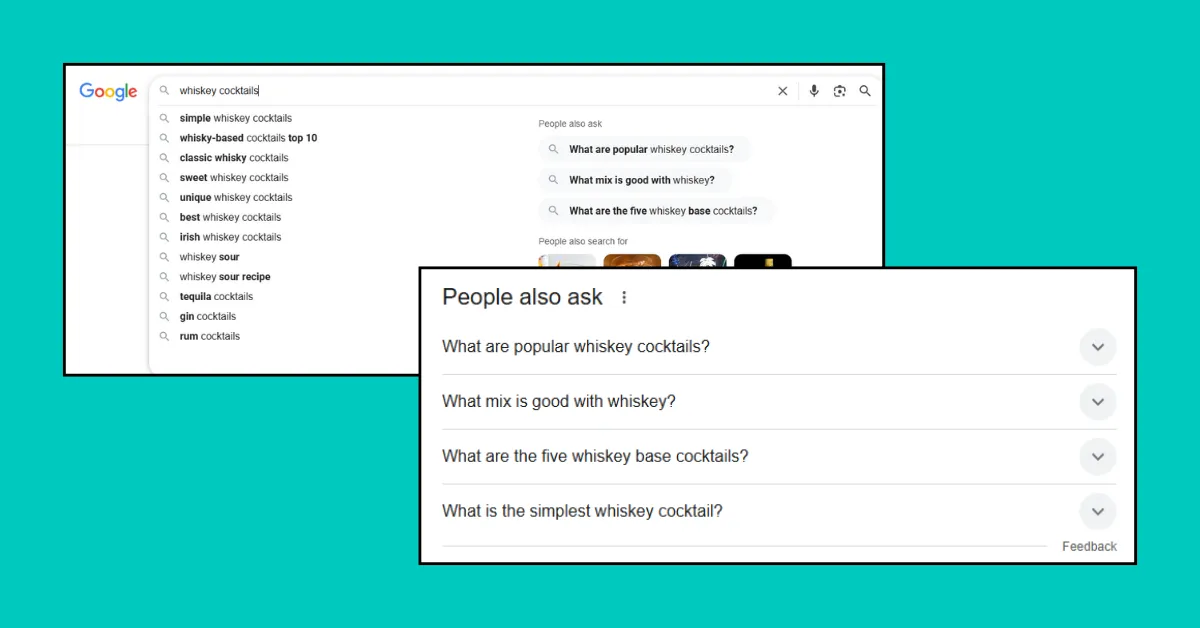
Google Search (People Also Ask & Autocomplete) – A free and powerful way to see what users are looking for.
Side note: If you don’t have access to premium keyword research tools, Google Search itself is an excellent alternative. The “People Also Ask” box and autocomplete suggestions can provide valuable insight into what your users want to know.
How the auto-complete and People also ask sections appear in SERP.
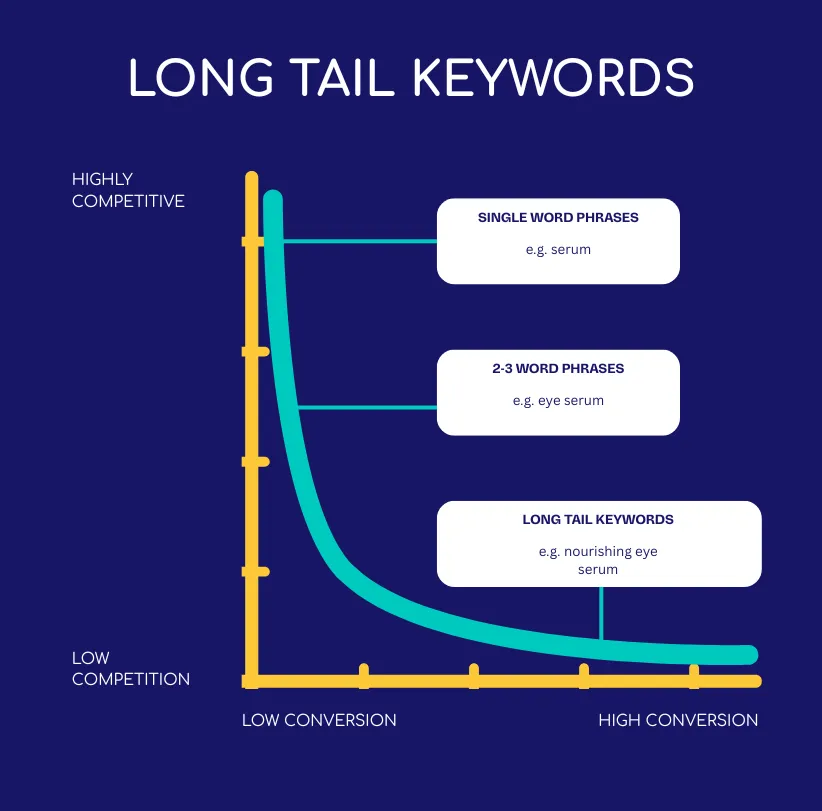
Remember: short-tail keywords are broad and competitive, while long-tail keywords are specific and easier to rank for. Mixing both helps you get traffic and attract the right visitors.
The difference between simple and long tail keywords: single word and 2-3 word phrases are highly competitive and not a good bet for conversion, while long tail keywords (3 or more word phrases) are less used by competitors, so they have a higher chance to convert.
An effective SEO content plan can truly help you lay out the content strategy.
It is a structured roadmap that aligns content creation with search visibility and business goals. It typically begins by organizing content by month and date, ensuring consistency and alignment with seasonal trends.
A template we use at Midsummer for SEO Content Creation Plans.
Each piece is assigned a specific content type, such as a blog post, case study, review, or category page, tailored to match audience intent. This helps clarify whether the goal is to drive awareness, attract traffic, or support conversions.
By defining a clear main topic and indicating whether the piece is new or a review, you can strike the right balance between evergreen content and timely updates.
To plan ahead, or to automate parts of your workflow with tools like Make or n8n, include the target URL, relevant category for topic clustering, and both primary and secondary keywords.
You can also define your H1 title, meta title, and meta description manually if you prefer full creative control over automated outputs.
Altogether, a well-structured content plan not only supports editorial efficiency but also helps you drive long-term strategic growth.
Step 4: Optimize Existing Content for Better Rankings
Once you’ve identified the content worth keeping, it’s time to give it a second change in life. Refine and resharpen it to optimize it for search engines and users
Improve on-page SEO: Use the main and secondary keywords naturally in headings, meta descriptions, and throughout the text.
Enhance readability: Break up text with bullet points, short paragraphs, and subheadings.
Update outdated information: Refresh statistics, sources, and examples.
Improve internal linking: Link to related content to enhance user experience and SEO.
Optimizing existing content is often more effective than creating new content from scratch, especially when you have pages that are already ranking but need a boost.
Step 5: Structure Content for SEO (and above all, humans!)
Planning is one thing, but how you actually write and structure your content is where the magic happens.
Yes, you can totally use tools like ChatGPT, Make or n8n to help you create drafts or outlines, but let’s be real: a human touch still matters a lot.
Why? Because AI doesn’t have full memory of your business, your tone, or your audience. And while it can spit out decent content, it’s still not great at truly creative writing.
Being original, sounding human, and writing in a way that’s more helpful and enjoyable than your competitors, that’s what gets people to stick around.
Some quick SEO content writing tips:
Hook readers early with a clear, helpful intro
Research your top ranking competitors and see what they are doing well, and consider incorporating some of their tactics.
Use keyword-rich headings, concise meta descriptions, and engaging introductions. No, please don’t keyword stuff!
Break things up with headings and short paragraphs (no walls of text!)
Write something that’s truly useful and well-researched. If you’re writing about kitchen knives, why not actually test some to incorporate your personal knowledge into the text?
Use internal links, examples, or analogies to make things easier to understand
Use lots of optimized images and videos to improve readability and provide even more value
Don’t be afraid to show personality: robots don’t connect with people, but you do!
End with a clear takeaway or a little nudge (like a CTA)
So yes, let AI help, but don’t forget to add yourself into the process.
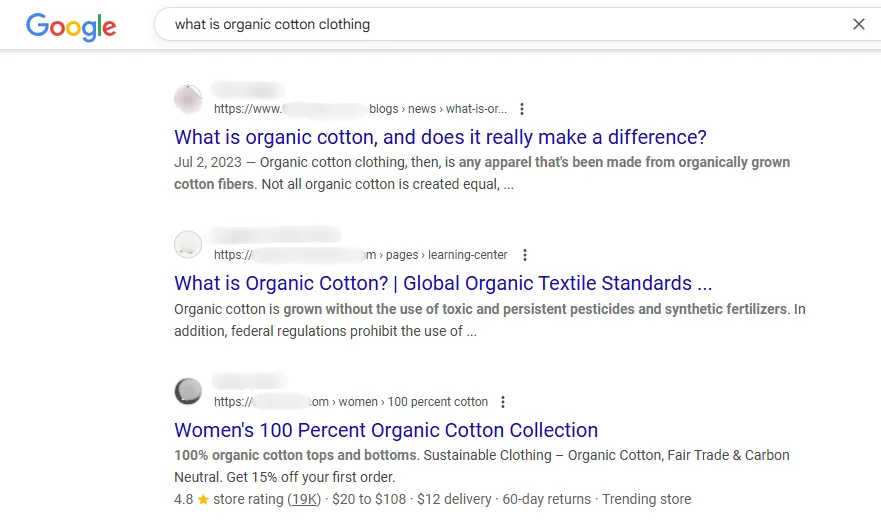
You can look at the first results in SERP to understand what competitors are doing with your chosen keywords. In this case we see that all sites use a different angle, but they always focus on the keyword “organic cotton”, while “clothing” seems less relevant in the meta title.
Step 6: Monitor Performance and Adjust Strategy
SEO is not a “set it and forget it” kind of game. It requires ongoing monitoring and refinement. Regularly tracking your content’s performance helps you identify what’s working, what’s underperforming, and where you need to pivot your approach.
Key Metrics to Track:
Organic Traffic: Measure how much traffic your content is attracting from search engines.
Keyword Rankings: Track how your pages rank for target keywords and monitor changes over time.
Organic Position Variations: Pay attention to shifts in rankings, as Google’s algorithm updates and competitors’ strategies can impact your visibility.
Click-Through Rate (CTR): Understand how often users click on your content after seeing it in search results.
Bounce Rate & Time on Page: Evaluate whether users find your content engaging and relevant.
Conversions & Goal Completions: Align your SEO efforts with business outcomes by tracking lead generation, sales, or other meaningful interactions.
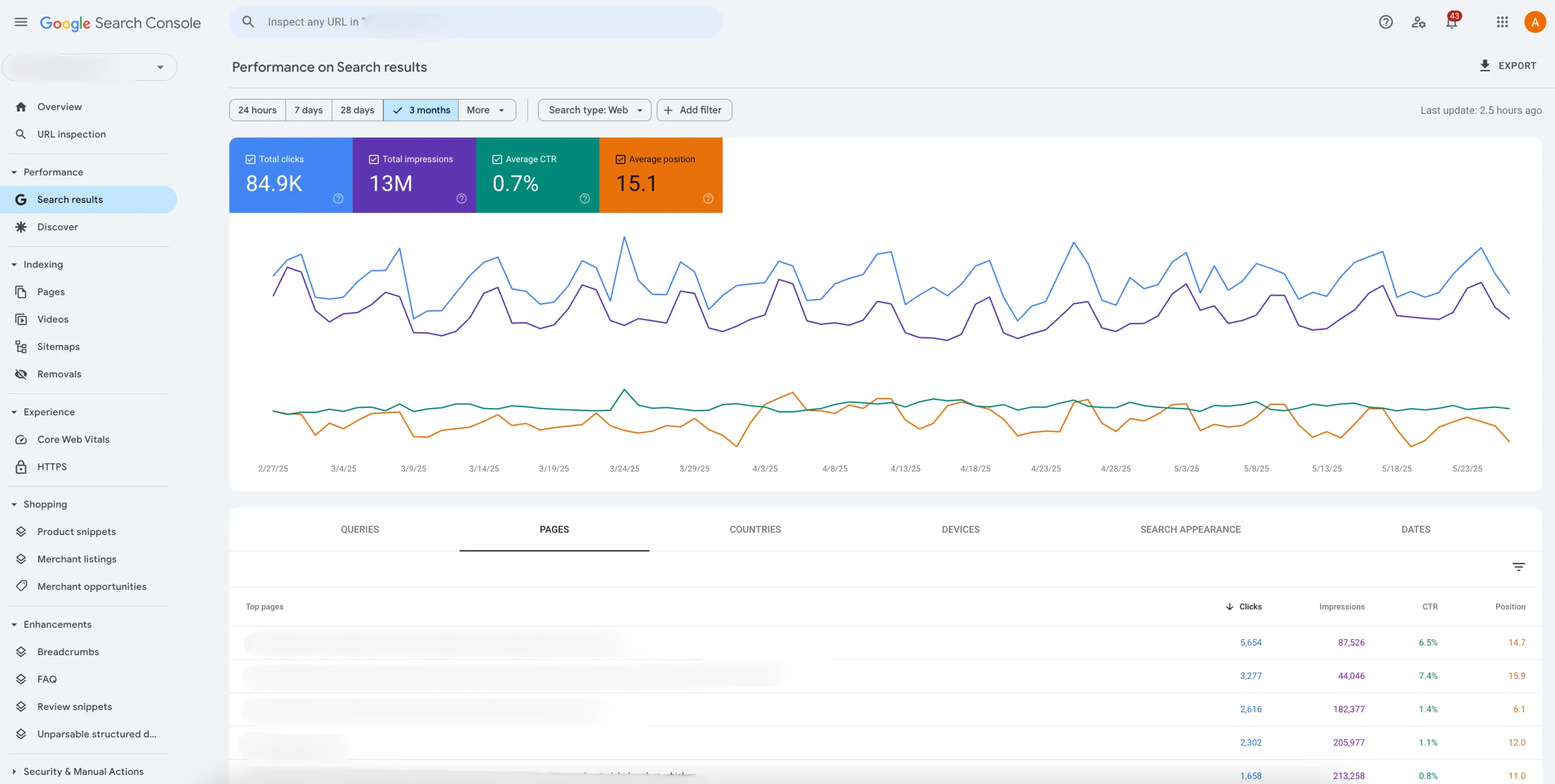
You can find all the key metrics you need for your analysis on tools like Google Search Console.
However, it’s important to keep in mind that search behavior is evolving. Today, a significant portion of search results in zero-click search result pages, where users get the information they need directly from Google’s SERP without clicking on a website. This means focusing solely on a single metric, such as organic clicks, might not give you the full picture of your content’s performance.
Instead, consider a holistic approach – assessing rankings, engagement, and conversions together to evaluate the true effectiveness of your SEO content strategy.
Ongoing Optimization & Content Pruning
SEO is dynamic, and so should be your content strategy. Regularly updating and optimizing content is essential, but sometimes, less is more. If some pages have lost traction, are outdated, or no longer align with your goals, consider a content cleanup approach. This could mean:
Refreshing old content with updated statistics, insights, and relevance.
Consolidating similar content into more comprehensive, authoritative pieces.
Removing or redirecting pages that are no longer valuable.
A well-maintained content ecosystem not only improves your SEO performance but also ensures that users find the most relevant, high-quality information when they land on your site. Keep iterating, testing, and refining your approach to stay ahead in an ever-changing digital landscape.
How We Supercharged Zucchet ZCT’s SEO Through Smart Content Optimization
When Zucchet ZCT, a trusted pest control leader in Rome, faced fierce competition and brand confusion online, we stepped in with a sharp, local-focused SEO content strategy. By crafting targeted, locally-optimized blog content that addressed seasonal pest problems and linking it strategically to revamped service pages, we transformed their website into an authoritative resource.
This content-first approach, paired with technical fixes and smart link-building, skyrocketed organic clicks by over 1100%, drastically improving visibility and brand recognition in a crowded market. It’s proof that thoughtful content optimization can be a game-changer for local businesses aiming to dominate search results. Curious? Check out the full case study and content strategy behind the success.
Want Us to Take a Look at Your SEO Content Strategy?
If you’re publishing content but aren’t sure if it’s truly optimized – or you’re starting fresh and want to build a strong foundation – let’s talk. We’re an international SEO agency that thrives on tackling bold, challenging projects.
✅ Free SEO audit: we’ll analyze your existing content and highlight areas for improvement.
✅ Strategy session: we’ll craft a custom SEO content roadmap tailored to your e-commerce goals.
✅ Full-service management: from keyword research to content creation, we handle everything so you can focus on growing your business.