
Web Analytics
Building A First-party Data Strategy For Ecommerce After The Cookie
Third-party cookies are gone and platform signals keep shrinking. We show you what data to collect first, how to activate it, and where it outperforms.
Read MoreMaster market analysis and research in 2025 by leveraging AI-powered tools, real-time data, and predictive analytics. Understand consumer behavior, track trends, and personalize strategies to stay…

Whether you are a startup or an established brand, knowing your market is key to success.
This is especially true in today’s fast-changing business world. But don’t worry: this step-by-step guide will get you covered! Together, we’ll dive into how to conduct market analysis and research in 2025, using the tools, techniques, and insights that will keep you ahead of the curve.
Before we discuss how to do market analysis, let’s review the difference between market analysis and market research. Both are important for eCommerce businesses like yours.
At its core, market analysis is the process of evaluating the dynamics of a market within a particular industry. This includes evaluating factors such as consumer behavior, market trends, competitor strategies, and economic influences that may impact the business environment. Essentially, market analysis helps eCommerce owners understand the “big picture” of their industry, revealing opportunities, threats, and gaps they can leverage or mitigate.
Market research means collecting and studying data from primary and secondary sources. This helps businesses make informed decisions. Research can take many forms: from customer surveys and focus groups to online analytics and competitor reviews.
By performing market research, you can:
With the rise of AI, machine learning, and more advanced analytics tools, today the way you can conduct market research is evolving rapidly. Using big data, real-time analytics, and predictive modeling helps you do better market analysis. You can get more accurate and useful insights than ever before.
Today market research has become more streamlined and data-driven thanks to a variety of digital tools and technologies. Here are some examples:
Google Trends
This is a personal favorite, because it helps identify popular search terms and emerging trends in real-time. You can track how interest in a specific topic or keyword has evolved over time.
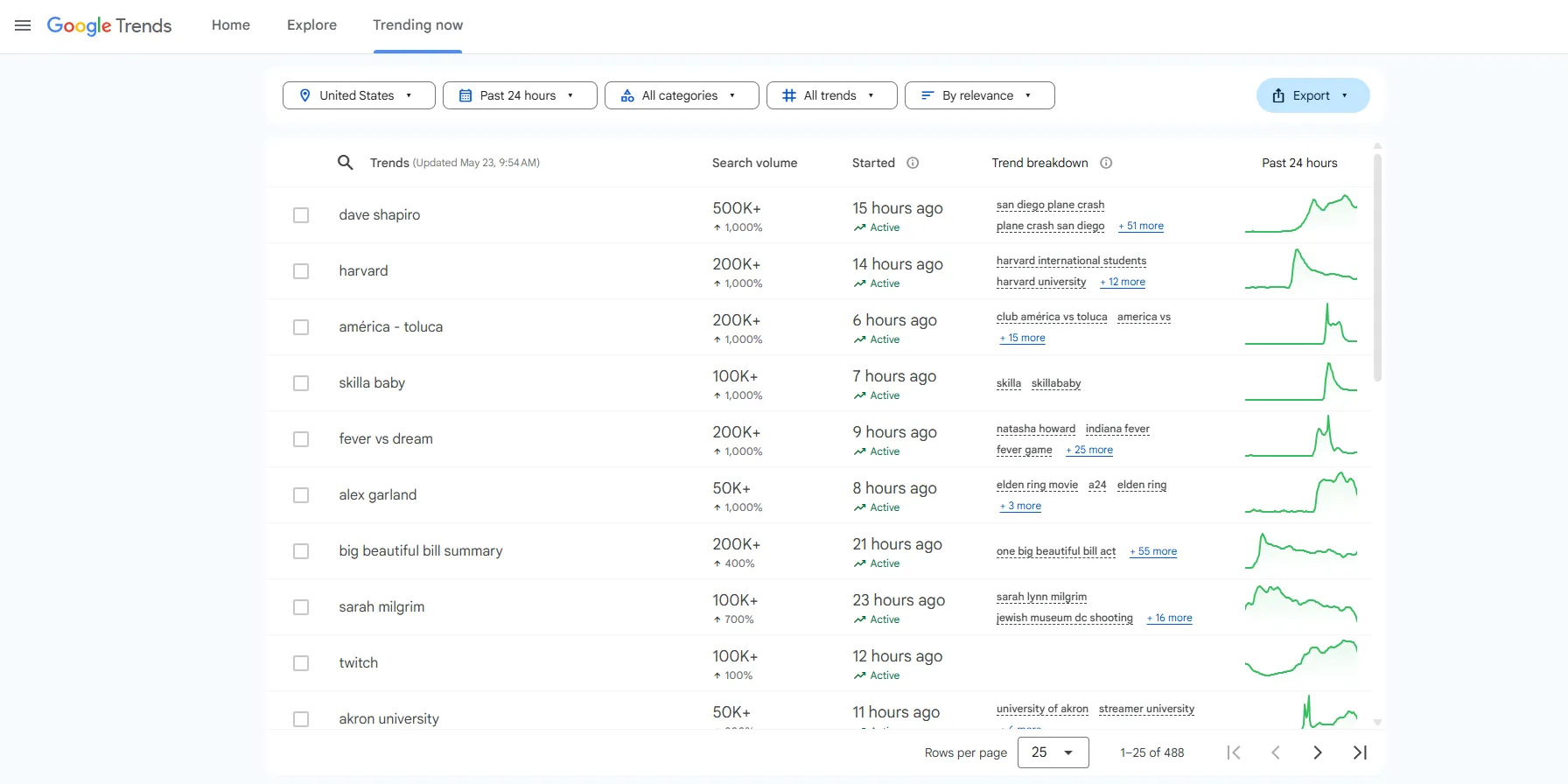
The Trending now section on Google Trends, showcasing the most popular search terms in the last 24 hours.
As businesses change, AI tools and machine learning are becoming important. They help analyze large datasets and give predictive insights. These tools help not only understand current trends but also forecast future consumer behaviors and market conditions.
As we move further into the year, market analysis and market research are becoming more sophisticated, driven by technological advancements and changing consumer behaviors.
Now, let’s look at some key trends that will shape market analysis in the future. You can stay ahead by embracing these trends.
Artificial Intelligence (AI) and automation are transforming the landscape of market research. These technologies are helping businesses automate data collection, streamline analysis, and uncover insights that would be difficult or time-consuming for human analysts to identify manually.
AI can automate data gathering from various sources, including social media, news sites, and customer feedback platforms, which significantly reduces the time spent on data collection. Tools like IBM Watson and Google Cloud AI can analyze vast amounts of data to detect patterns, sentiment, and emerging trends in real-time. This enables businesses to monitor market shifts and consumer sentiment more effectively.
By analyzing historical data, machine learning algorithms can forecast future trends and consumer behavior with remarkable accuracy. This is particularly useful for:
This way you can make data-driven predictions that significantly enhance your decision-making in a fast-changing market.
Personalization is becoming more important than ever. Consumers now expect tailored experiences that cater specifically to their needs, preferences, and behaviors. Businesses that effectively use market research to personalize their offerings are more likely to build stronger relationships with their customers.
Real-time personalization is gaining momentum. Machine learning algorithms track customer behavior in real time and adjust content, recommendations, and offers based on their current actions. For example:
By using market research data to drive personalized experiences, you can increase customer engagement and loyalty, ultimately driving higher conversion rates.
Behavioral analytics tools, such as Hotjar or Crazy Egg, track user actions on websites and apps, providing insights into how customers interact with digital touchpoints. By understanding patterns like clicks, scrolling behavior, or time spent on specific pages, you can optimize user experiences and better align their offerings with consumer preferences.
Ecommerce business owners can no longer afford to wait for months to gather data before making decisions. That’s where real-time market research comes to play, allowing companies to respond quickly to shifts in the market and customer behavior.
Real-time data helps you gain immediate feedback on marketing campaigns, product launches, and other initiatives. For example:

An example of heatmap from one of our clients, as seen on mobile.
Want to know more about how to optimize your pages for conversion rate? Check out our guide!
With increasing concerns over data privacy and stricter regulations like GDPR and CCPA, privacy-first market research is gaining importance. Businesses are now focusing on data transparency and ethical data collection practices to build trust with their customers while still gaining valuable insights.
As consumer privacy becomes a top priority, market researchers are adopting privacy-preserving technologies such as:
By prioritizing privacy in your market research practices, you can build customer trust and avoid potential legal issues, all while continuing to gather valuable insights.
As you can see, market analysis and market research are not just buzzwords: they are powerful tools that can significantly drive your business’s success in 2025 and beyond. By using the right strategies for market analysis, you can gain valuable insights to guide your decisions, boost growth, and stay ahead of competitors.