Choosing a digital marketing agency today is harder than ever. With thousands of agencies claiming to be “full service,” “data-driven,” or “specialized,” it’s easy to feel overwhelmed – especially when your business goals, budgets, and timelines depend on making the right call.
Over the years, we’ve seen countless clients arrive at Midsummer Agency after experiencing disastrous outcomes with previous agencies or freelancers: campaigns that overspent budgets without yielding results, poorly structured accounts, mismanaged paid media, and fractured SEO strategies. These situations often create unnecessary stress and lost opportunities.
Whether you’re an eCommerce founder looking to scale paid acquisition, a marketing manager under pressure to hit revenue targets, or a growing brand seeking a long-term strategic partner, the agency you choose will influence everything from your CAC to your organic growth.
How to Choose the Right Digital Marketing Agency for You
1. Clarify Your Needs Before You Start Searching
Before engaging with any agency, it’s crucial to have a clear understanding of your objectives and internal capabilities.
Knowing what you want to achieve – whether it’s scaling revenue, improving ROAS, launching new products, or enhancing brand authority – allows you to evaluate agencies more effectively.
Consider both short-term goals, such as seasonal promotions or traffic spikes, and long-term ambitions, like international expansion or omnichannel growth.
Equally important is identifying what your internal team can handle versus what you’ll need external support for, ensuring the agency complements rather than duplicates your efforts.
When you know what you need, evaluating agencies becomes dramatically easier.
2. Look for Proven Experience in Your Industry
Industry experience directly influences the quality of strategy you receive.
For eCommerce in particular, an experienced agency will already understand:
- How consumers behave in your specific niche
- Your competitive landscape
- Seasonal demand curves (e.g., beauty Q1 spikes, fashion Q3 drops)
- Typical ROAS or CAC benchmarks
- Best-performing acquisition channels for similar brands
- Common technical SEO issues for Shopify or WooCommerce
- How to prepare your store for Black Friday or seasonal sales
This dramatically reduces the learning curve and allows your agency to deliver impact faster.
A digital marketing agency may look impressive on paper, but the real test lies in its experience working with businesses like yours. Start by examining their case studies – not just the success stories, but the ones that include real numbers, clear challenges, and measurable outcomes.
Strong case studies should feel familiar: similar business models, comparable customer journeys, and shared growth obstacles. If you run an eCommerce store, for example, look for examples where the agency has scaled ROAS, optimized product feeds, or built profitable omnichannel acquisition funnels.
Pay attention to how the agency talks about your industry during calls. Do they understand seasonality patterns? Are they familiar with the platforms and vertical-specific tactics that actually move the needle? Experienced partners naturally speak your language; inexperienced ones stay vague or overly generic.
Don’t hesitate to ask what common mistakes they see in your industry and how they typically fix them. Clear, candid answers usually signal real field experience, not theory.
Remember: if an agency has no meaningful experience in your vertical, it’s you who ends up paying for their learning curve. A great partner should accelerate your growth, not experiment with your budget.
3. Evaluate Their Track Record of Results
Vanity metrics like traffic increases or social impressions only tell part of the story. The right agency demonstrates impact in business terms: revenue growth, improved conversion rates, higher ROAS, and meaningful engagement.
Look for agencies that can show before-and-after comparisons, explain the methodology behind their campaigns, and provide transparent, real-world examples of success.
Metrics should align with your goals, helping you understand exactly how their work contributes to your bottom line.
4. Assess Their Strategic Thinking
Tools and dashboards are just the starting point. True value comes from the agency’s strategic approach. Strong agencies analyze data to uncover insights, diagnose problems, and design solutions tailored to your business. They can identify technical SEO issues, diagnose organic traffic drops, map customer journeys, and optimize paid campaigns for maximum efficiency.
At Midsummer Agency, we approach strategy holistically. We combine technical SEO audits, paid media diagnostics, tracking and CRO opportunities into a single, integrated strategy – rather than tackling each area in isolation. This integrated approach ensures every touchpoint is aligned with business goals, reduces inefficiencies, and allows us to uncover opportunities that siloed approaches often miss.
For example, insights from a paid media campaign can reveal content topics that drive organic traffic, while SEO audits can identify gaps that directly affect conversion rates. By connecting all these dots, we create strategies that are both actionable and measurable.
Agencies that rely solely on tactics, without a broader strategy, often miss opportunities for sustainable growth.
Choosing a partner with proven strategic expertise ensures your marketing efforts are cohesive and forward-thinking.
5. Understand Their Communication and Reporting Style
Clear, proactive communication is a key differentiator. The right agency will explain insights in plain language, flag emerging trends, and provide actionable recommendations without requiring you to ask.
Reporting should be tailored to your team’s needs, highlighting the metrics that matter most, explaining why certain actions are taken, and showing the impact of every dollar spent.
Observing how an agency communicates during initial conversations can be a strong indicator of how collaborative and transparent the partnership will be.
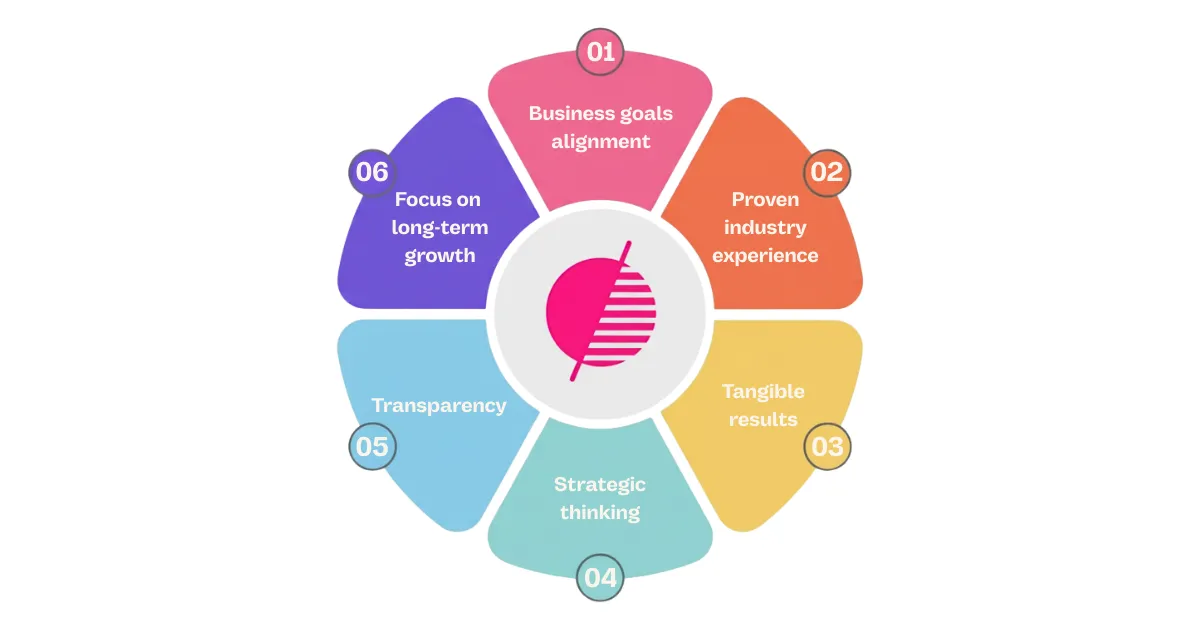
6. Check for Full Transparency
Transparency in pricing, processes, and performance is non-negotiable.
Reputable agencies give full access to accounts, clearly outline deliverables, and explain how budgets are allocated. They are upfront about what’s included in their services and how they measure success.
In our experience, full access to accounts and transparent reporting builds trust and avoids misaligned expectations – a principle we enforce with every new client. From day one, clients have visibility into campaigns, can see the logic behind budget allocations, and understand the rationale for every recommendation. This approach not only ensures accountability but also empowers our clients to make informed decisions, collaborate effectively, and feel confident that their marketing investments are producing tangible results.
An agency that withholds information, provides vague pricing, or avoids explaining its methodology may create confusion or lock you into suboptimal workflows.
Full transparency ensures accountability, trust, and alignment from the very beginning.
7. Review Team Structure and Seniority
The people behind the campaigns matter as much as the agency itself. Ask who will manage your account day-to-day, what level of senior involvement is provided, and how many clients each team member handles simultaneously.
The right agency balances experienced strategists with skilled specialists, ensuring continuity, quality, and proactive problem-solving.
Avoid agencies where your account may be handled entirely by juniors without oversight, as this often leads to inconsistent performance and delayed responses.
8. Focus on Long-Term Growth, Not Short-Term Hacks
A growth-oriented agency prioritizes sustainable results over quick wins. They invest in building a solid technical foundation, optimizing conversion flows, creating authoritative content, and testing scalable acquisition strategies.
Short-term gimmicks may offer temporary spikes but rarely contribute to long-term ROI.
Selecting a partner that emphasizes strategy, testing, and optimization ensures that your marketing investments generate compounding results over time.
9. Evaluate Their Approach to Innovation and Adaptation
The digital landscape evolves constantly, from AI-driven search updates to changing advertising policies. A strong agency stays ahead of trends, adapting strategies to maintain visibility and efficiency. Ask how they approach emerging technologies, new channels, and industry shifts.
Agencies that embrace innovation proactively can turn changes into opportunities, while others may let performance stagnate.
10. Align on Culture and Values
Finally, the agency’s culture and values influence the partnership as much as their expertise.
Look for transparency, accountability, proactive problem-solving, and a collaborative mindset. A shared approach to communication, strategy, and performance ensures a smooth working relationship and positions your brand for long-term success.