Pay Per ClickA single product with a budget of its own
ServicesGoogle Ads · Microsoft Ads · Feed Management
We began by finding out what people actually searched for. We split the feed by category with custom labels and watched where the demand went. It went overwhelmingly to a single place: a pistachio cream bringing in around 80% of revenue, sitting in the same campaign as everything else.
Giving the pistachio cream room
We lifted it out. First came a Performance Max campaign for that single product, then Standard Shopping campaigns with their own labels, and the structure grew as the volume did. With its budget isolated, we could push the product that sells without starving the rest, and pull back the moment the numbers said so.
The rest of the rebuild ran alongside it.
- Brand campaigns and Dynamic Search Ads, replacing the broad keywords
- Separate campaigns for bulk and wholesale products, so trade packs reach trade buyers
- Performance Max built around seasonality and category
- Product titles rewritten by hand in a working sheet, keyword by keyword
The catalog is a couple of hundred products, small enough that a person reading the search terms writes a better title than a rule does, so that is how we do it.
Selling to the bakery without a second price list
The client wanted trade buyers to pay a different price, and explored several ways of doing it, including trade logins. We advised keeping a single price list for everyone. A trial of separate trade pricing cost sales, so the store went back to a single list. We suggested multi-packs instead. A home baker is not going to buy 10 packs of pistachio cream at once, and a bakery will, so the pack size sorts the buyers and the price stays the same for everyone.
With the packs live, we moved budget toward the trade side on both Google and Meta. Bakeries come back more often than home bakers and buy more each time, so we stopped judging campaigns on the cost of a single first order and started judging them on what a business customer is worth.
Measuring the business
As spend climbed, we moved the reporting off platform ROAS and onto the Marketing Efficiency Ratio, total revenue against total ad spend, with a profit dashboard on top of Shopify. Every ad platform claims more of the revenue than it really drives, so for a while we also ran an independent attribution tool beside it. It sits outside the ad platforms and measures what each channel really adds to total sales, which showed us what Meta actually contributed, and we split the budget on that. Budgets now follow business targets the client sets with an in-house team that has grown alongside the account.
Microsoft Ads took the same structure and earned its place quickly. A lot of Americans still search on Bing.
We are now working the rest of the catalog harder, so the account depends less on a single jar of pistachio cream. Multi-packs come first, then more single-product campaigns aimed at people searching for a specific product rather than a category or a brand.
Paid SocialFood that sells on how it looks
ServicesMeta Ads · Creative
The client had run a few Meta campaigns and watched the business grow off the back of them, so we took the channel over. The account grouped most of the catalog into a handful of campaigns, and remarketing was the next layer to build.
A campaign for each product that matters
Meta’s own advice is to put the products in a single campaign and let the algorithm decide. We went the other way and gave categories, and the products that matter most, campaigns of their own, several of them built around a single product. It gives us control over where the budget goes, and it works.
We built the product sets directly in Commerce Manager, segmented by category through attributes we manage in Shopify, and pushed the multi-packs of the best sellers there too. The structure around them covers the whole path to purchase.
- Catalog and collection ads for people already close to buying
- Single image and single video ads, each with its own hook and angle on the product, for people who have never heard of Cambie
- Advantage+ retargeting, taking the people those ads caught and moving them onto the catalog campaigns
- A full remarketing layer, new to the account
We tested audience after audience to find out which ones responded best to each kind of ad.
Briefing the designer
We write a short creative brief for every request, and the designer produces against it, so new ads arrive shaped by what the account data says is working. Chocolate and pistachio cream photograph beautifully, and the top performer on the account is a single image or video ad, well ahead of the catalog. Much of the pistachio cream’s push comes from there.
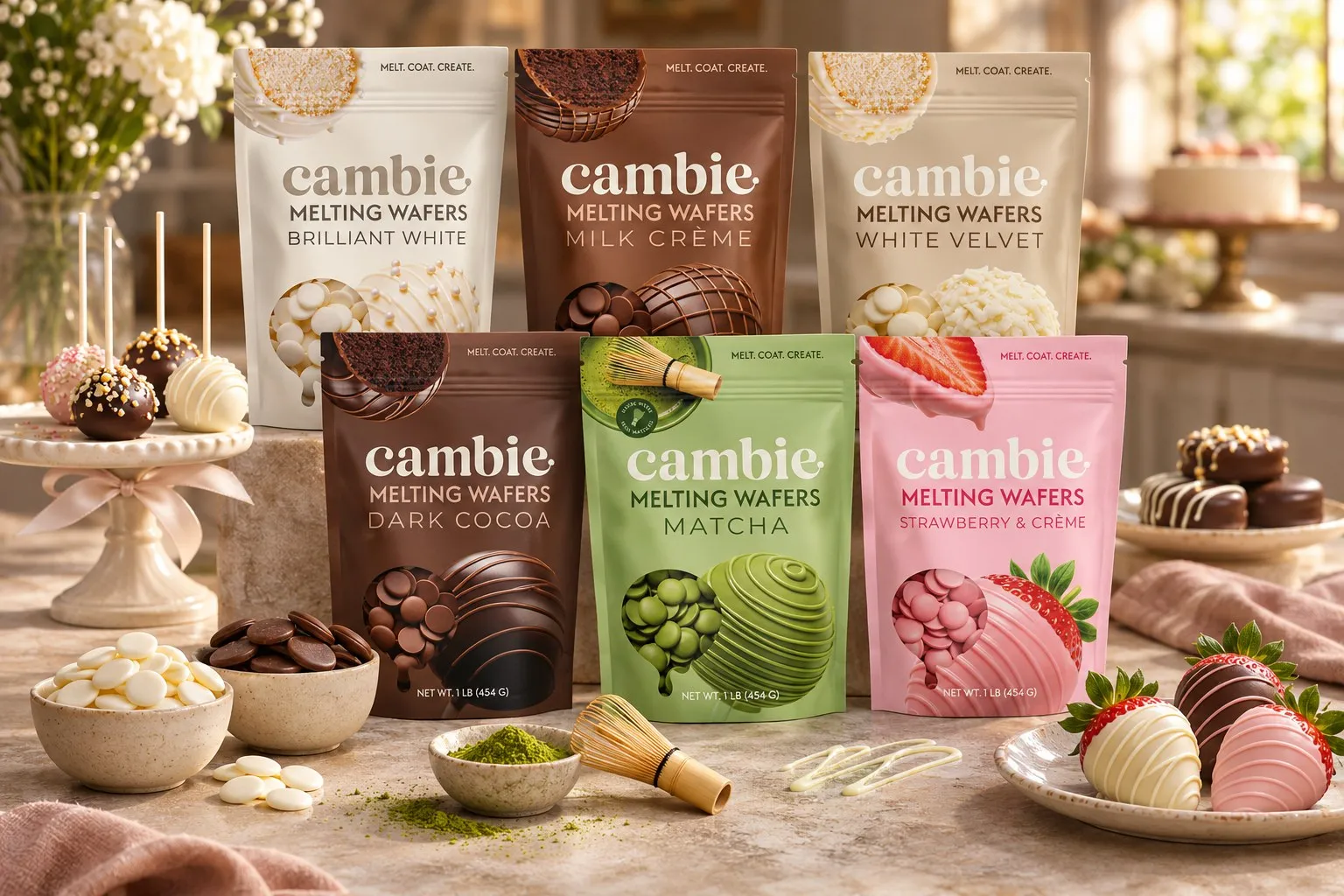
Meta video ads for the melting wafers: from the bag to the bowl, and a matcha dip.
Rebuilding after Andromeda
When Meta rolled out Andromeda, the system that now chooses which ad each person sees, the way the platform rewards an account changed. The structure that had grown the account was built for the old system, so we have been rebuilding it layer by layer. A change this size needs time, because Meta needs time to learn, so the work runs over months rather than in a single switch-over.
The new structure splits on 2 things at once: product category and pack size. The pack size tells us who is buying. A single jar speaks to a home baker or a small café, and a multi-pack speaks to a restaurant ordering by the case. So a single product range can have a multi-pack campaign aimed at trade buyers and a single-product campaign beside it aimed at home bakers, each with its own copy and its own visuals. The pistachio cream works the same way, and a separate campaign runs multi-packs on images alone, to test a different kind of creative in isolation.
All of it pushes the lever that matters most to Cambie’s profit, average order value. The biggest orders come from the café owner ordering pallets, without forgetting the home bakers who still make up an important segment.
Timed to the season
Chocolate sells all year, and it sells hardest in winter. We spread the restructure across the year so each piece landed when it mattered to the business, and the chocolate range is being rebuilt ahead of its winter high season.
That rebuild leans on AI. Hundreds of products with very different prices and margins, 2 audiences, and pack weights from 1 pound to 50 make a matrix nobody can hold in their head. We use AI to cross platform data, sales data and the catalog, including new packaging and newly launched own-brand products with little history yet, and decide the segmentation from there with what we know about the account.
A test campaign that sells
New creative goes into a dedicated test campaign first, so results stay isolated, and the winners move into campaigns that already work. Cambie’s ads have always used a classic luxury look, black and gold. Recently the client asked us to test something brighter that still felt premium, with colors matched to each product: a warm background for an orange product, pistachio green for the pistachio range.
The campaign exists to test, and it still pulls its weight, returning well above the account’s target. Awareness campaigns run on the account too, testing how far the brand can reach people who have never heard of it.
AI drafts the short copy, headlines, primary text and descriptions, from a brief that holds the client’s context. We choose and edit every line before it runs. We are also writing ad-focused brand guidelines with the client, so every ad carries the brand the same way and any test that steps outside it does so on purpose.