

+1156%
Organic Clicks Increased for Pest Control Brand – Local SEO Case Study
How we boosted Zucchet ZCT's organic clicks by 1156% and branded visibility through targeted SEO and blog strategy.
Read the storyHow we implemented CAPI tracking on a WordPress site, boosting event coverage to 96% and improving Facebook ad performance for a home remodeling company.
Analytics

Sea Pointe is a well-established home remodeling company specializing in kitchen and bathroom renovations, as well as whole-home remodeling. They are based in the US and offer a range of remodeling services, focusing on a comprehensive approach to home improvements. Their website, built on WordPress, serves as a crucial lead-generation tool, driving potential clients to book consultations. The primary challenge for the company was tracking conversions more accurately to optimize their Facebook Ads campaigns, specifically in relation to appointment scheduling and contact conversions.

The client faced significant challenges with inefficient tracking on their WordPress website, which resulted in suboptimal performance in their Facebook Ads campaigns. The event tracking was reliant on URL-based events rather than custom data layer pushes, leading to duplicate and inaccurate data.
Their existing pixel setup was also limited, causing key events – such as appointment form submissions or contact form events – to be missed or incorrectly tracked. Furthermore, the website’s custom configuration made it difficult to implement a standard, plug-and-play Facebook Pixel solution. Given that the client heavily relied on Facebook Ads for lead generation, accurate conversion tracking was critical for optimizing and scaling their campaigns effectively. To sum up, the client’s main challenges were the following:
To address these challenges, we implemented Facebook’s Conversion API (CAPI) on the client’s WordPress website, allowing for more accurate, server-side tracking of user interactions and conversions. Here’s how we did it:
Custom Event SetupWe worked closely with the development team to create custom events that triggered only when a user successfully completed a specific action, such as filling out the appointment scheduling form. This ensured that the most important conversion events were accurately tracked, even in cases where browser-side tracking failed due to ad blockers or privacy settings.
Facebook Pixel & CAPI IntegrationWe set up Facebook’s Conversion API through Google Tag Manager (GTM) to handle both client-side and server-side tracking. This dual approach made sure that all conversion events were captured accurately, bypassing any restrictions caused by browser-level blockers. We also implemented GA4 server-side tracking to be able to set up CAPI through GTM.
Custom Loader ImplementationTo mitigate the impact of ad blockers and improve the loading speed of scripts, we used a custom loader script for GTM. This script prevented Facebook’s tracking code from being hindered by external blockers, improving data reliability and overall event accuracy.
Event Debugging
To achieve accurate data tracking, we performed thorough event debugging to verify that the fbp (Facebook Pixel ID) and fbc (Facebook Click ID) parameters were being passed correctly. These parameters are crucial for attributing user actions to the correct Facebook ad interactions, particularly when tracking cross-device and cross-platform behaviors. By debugging the events and verifying that these parameters were sent correctly, we eliminated discrepancies and allowed Facebook Ads to attribute conversions more accurately, leading to better campaign optimization. We also confirmed that deduplication was functioning properly to prevent the same event from being tracked multiple times across client- and server-side tracking.
The implementation of the Conversion API tracking resulted in a significant improvement in data accuracy and campaign performance. The key results were as follows:
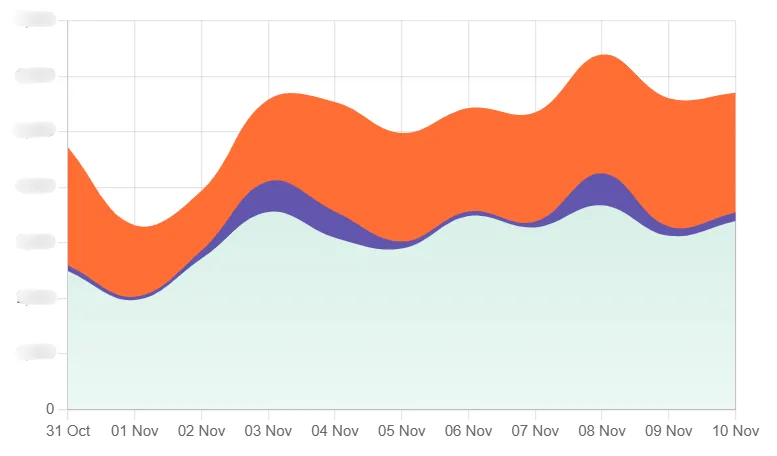
Number of recovered requests from ad blockers and browsers with tracking preventions from the 31st of October, until the 10th of November.
These improvements allowed the client to maximize the impact of their Facebook Ads campaigns, ensuring that their lead generation efforts were both cost-effective and highly optimized for conversion.
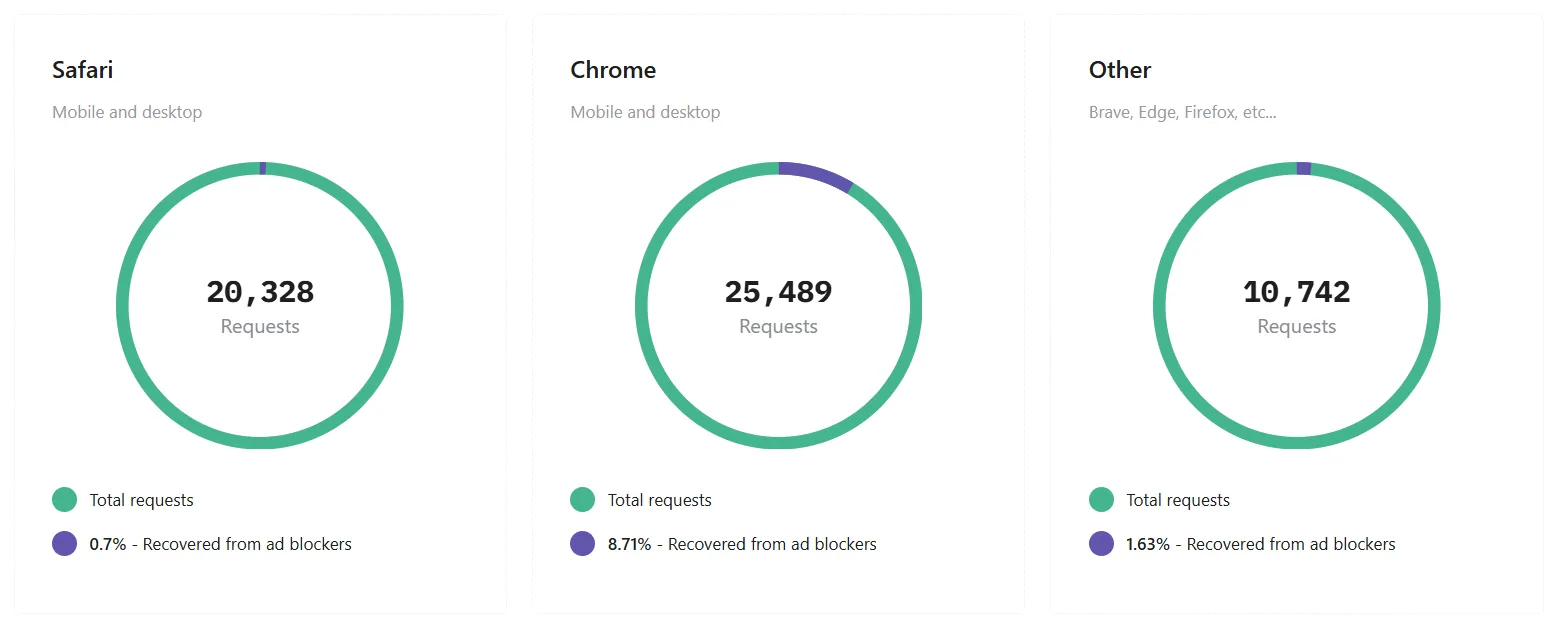
Browser-level request analysis revealed that the SST implementation, especially on Chrome, successfully recovered a substantial number of ad-blocked requests.
Ecommerce plus physical stores? B2B and B2C under one roof? One market or eleven? The businesses other agencies find too complex are the ones we make shine.