The solution
We picked up Google Ads first. Meta Ads followed once Blanc Space had watched how the search account was run, and SEO came after that, when the brand wanted less of its revenue resting on paid clicks. A CRO program and a full tracking rebuild ran underneath all 3.
The partnership has changed shape as the business has. Microsoft Ads had its run, CRO carried the site through its redesign, and Meta went from a supporting channel to one of the biggest levers on the account.
Blanc Space works with AI as heavily as we do, and it can see every number we can. So we know what each campaign is doing before anyone asks, and the conversation runs between partners: both sides bring analysis and ideas to the table.
Pay Per ClickLetting every product earn its own budget
ServicesGoogle Ads · Microsoft Ads · Feed Management
Blanc Space already had a working account. What it needed was a structure that could carry 240,000 products into countries that had never seen them, so we took what was there and rebuilt around dynamic labels.
Labels that move overnight
Every product in the feed carries a label for how it performs against target: over index, index, near index, under index, no index. A rule in the feed moves products between those labels daily, so a design that starts pulling traffic one day sits in a better-funded ad group the next. Shuffling products every day can look like a good way to stop any of them gathering enough data, but the performance never wobbled, so the daily cadence stayed.
The UK, the main market, kept a structure split by phone model instead. A handful of models drive most of the traffic there, so giving each one its own budget keeps control where most of the sales happen. Labels suit the newer markets, where they let us launch a country quickly.
Opening a country
New markets come out of the EU campaigns one at a time, and each launches with the same 5 campaigns as the last: a Shopping campaign split by label at ad group level, Performance Max segmented by the same performance labels, and brand. The campaigns are twins everywhere, so opening Belgium looks like opening the Netherlands.
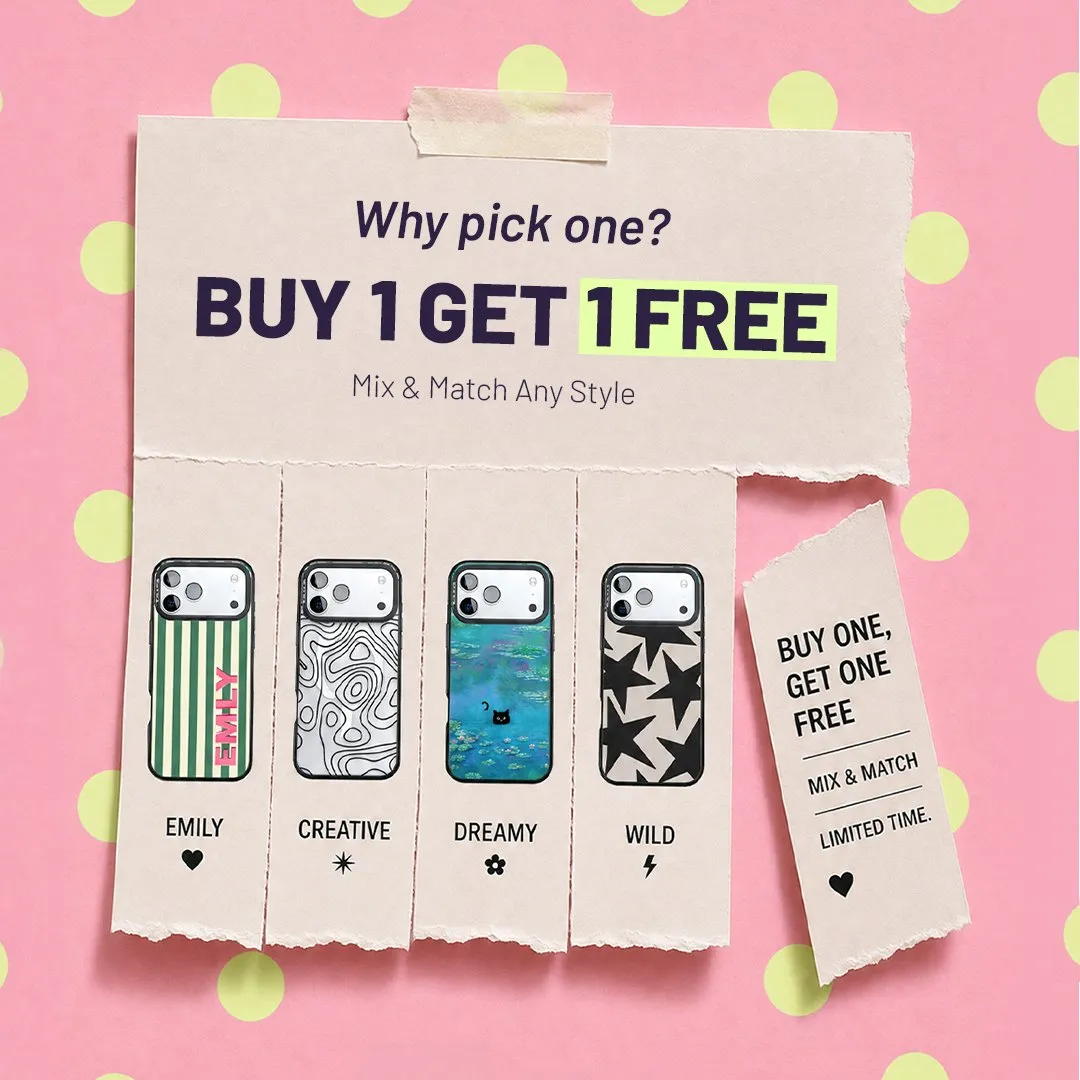
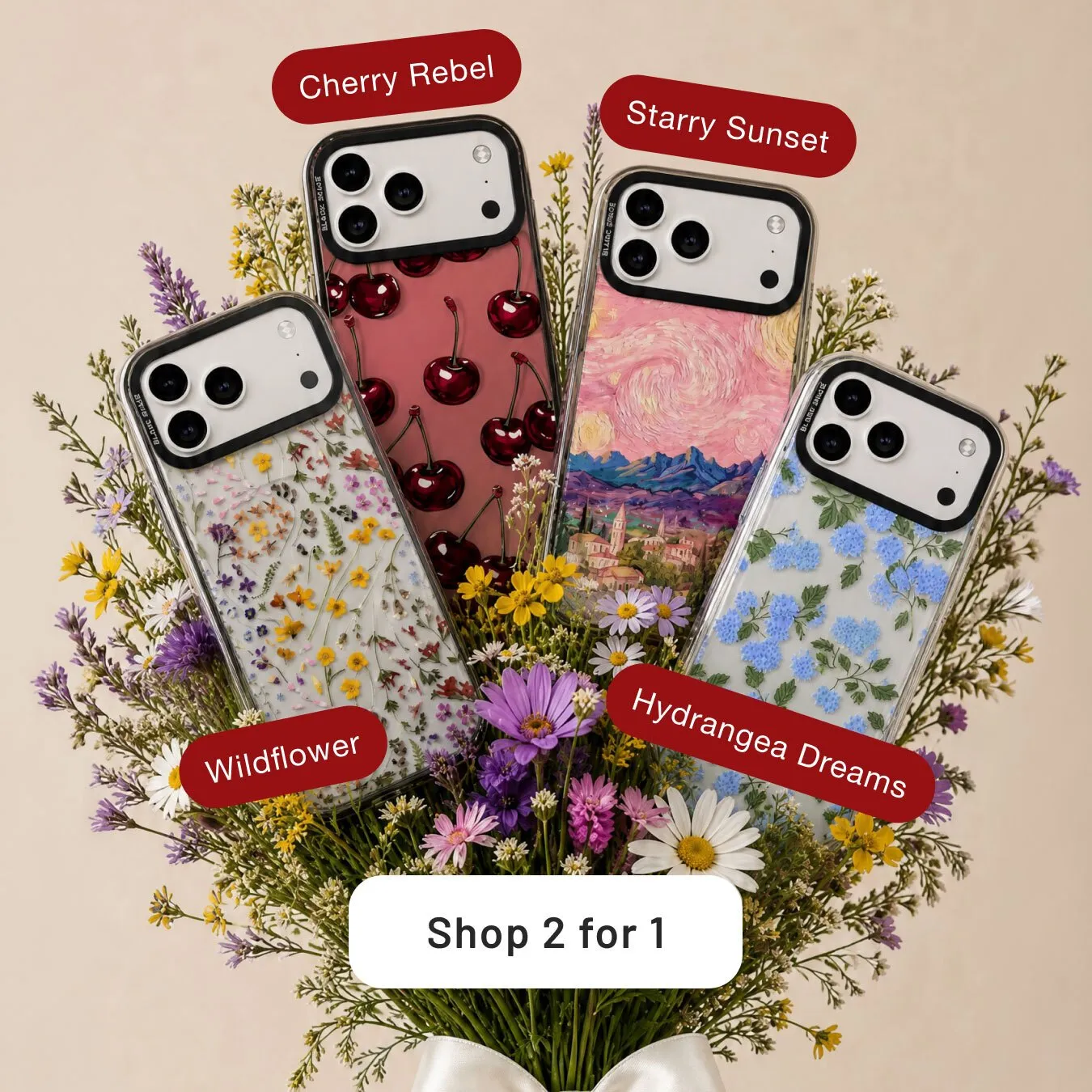
Google Ads images built around the 2 for 1 offer.
Keywords into the titles
The feed titles came first, before any of the structure work. We pulled keywords with real search volume out of Keyword Planner, terms like protective case and MagSafe that shoppers type and the titles never mentioned, then wrote them into the catalog in bulk with feed rules applied at parent level and cascaded to every variant. At this catalog size, that is the difference between an afternoon and a month.
Traffic held up afterwards, and the growth since has not come at the cost of efficiency. We never chased a higher ROAS by giving up volume: spend kept rising, and the return on it rose too.
Microsoft Ads had a run with respectable results, and Blanc Space chose to focus the budget on Google and Meta, where its shoppers spend far more of their time.
Reporting runs partly outside the ad platforms. A profit dashboard sits on top of Shopify for actual profit, cost per acquisition and the split between new and returning customers. A phone case gets replaced roughly once a year and a second purchase is never a given, so knowing how many buyers come back matters more here than in most catalogs.
Paid SocialServicesMeta Ads · Creative
Meta started small. Search was doing the work and the budget reflected that, and the case for spending more grew as it became obvious how well a phone case performs in a feed.
The first structure split the catalog into best sellers, breakdowns by phone model and remarketing, so somebody saw a case for the phone in their hand rather than a wall of designs for phones they did not own. It worked and it brought in sales. It also had a ceiling: you can only push the same top products so hard before they saturate.
Country first, then category
Blanc Space set itself ambitious targets for the year, so we began rebuilding the account around how Meta now expects to be run. Geography came first. The UK, the US and a set of EU countries picked on sales data each got campaigns of their own, and later we lifted Ireland out of the EU group too. Shipping costs differ from country to country, so each market has its own room to spend, and the structure now lets us respect that.
Categories came next, chosen from what the business was seeing: what sells, and what the brand is designing next. When a design range starts climbing, we build a product set for it and give it a campaign straight away, then brief creative to match.
Briefs instead of requests
The account used to run mostly on the catalog, with fresh creative arriving now and then. We stopped asking for “some creative for this campaign” and started writing exact briefs: how many assets, what quality, why we are launching them, where they will run, and what we expect back if it is a test.
Blanc Space produces a lot of its creative with its own AI system, so a big part of the work is lining that output up with what Meta actually needs. Ad copy runs the other way. The brand handed us an excellent set of brand guidelines, and we write copy from them with AI, so every line sounds like Blanc Space.
Testing creative at scale
New creative arrives in batches, and we test it inside the performance budget rather than a separate one. Each creative gets enough spend to reach a valid result, the tests run in parallel, and the profit percentage stays above the target we agreed throughout.
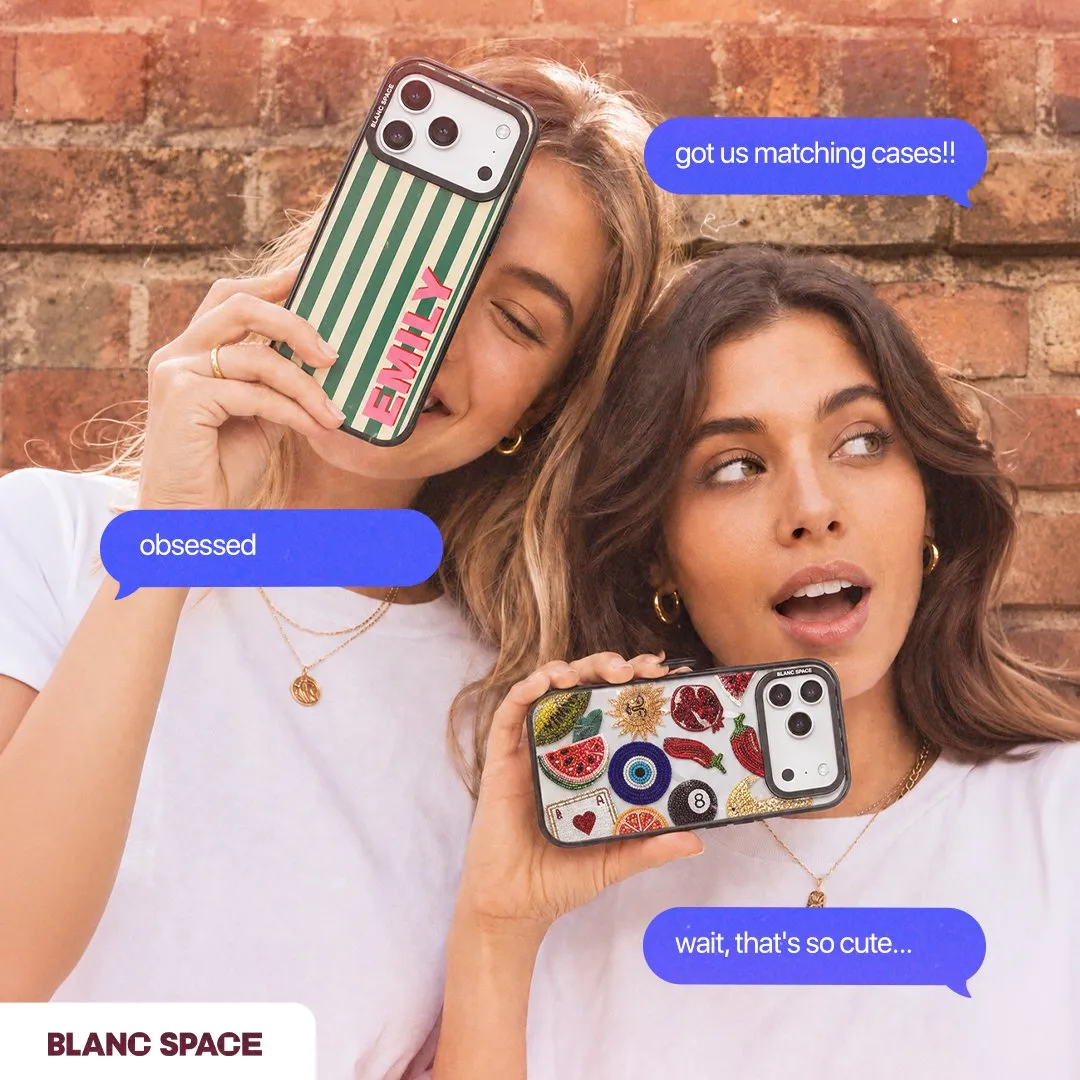
Meta video in a creator style: a personalised photo case, a get-ready-with-me, and a friends’ group rating their cases.
We are a performance marketing agency at heart, but performance is hard to sustain without a brand behind it. So we always look for the right mix of performance and branding. Blanc Space works hard on its identity, which gives awareness campaigns something to say, and those campaigns are already bringing in purchases from people who had never heard of the brand, going a long way toward paying for their own reach.
Offers & SalesDeciding when to run a sale, and what kind
ServicesPromotional Planning · Google Ads · Meta Ads · CRO
Promotions move a phone case brand more than almost anything else, so we plan them with Blanc Space rather than react to them. We coordinate every offer with the team, line the campaigns up behind it, and support the initiatives that start on the brand’s side.
- When to run a sale. We propose the moments worth a promotion, from the iPhone launch to the run-up to Christmas and the quiet weeks at the start of the year
- What kind of promotion. We suggest the mechanic that suits the moment, rather than the same discount every time
- Where shoppers see it. The offer has to reach the page as well as the ad. The CRO work moved the 3 for 2 offer up the product page and into the cart, where most shoppers actually saw it
SEOTaking weight off the paid clicks
ServicesTechnical SEO · On-Page Optimization
SEO joined the account because Blanc Space wanted less of the business depending on paid media. The brand had worked on organic search before, so this was a second run at it rather than a standing start.
A good share of the work is maintenance at a scale that only exists because the catalog does. Old product URLs return 404s where they should be returning 301s, and matching a dead URL to the right live page 240,000 times is not a job a person finishes. We run the matching with AI: each old URL gets compared against what is on the site now, and where the match is a good one the redirect goes in. Where it is not, the URL is left to go.
CROHelping more US shoppers reach checkout
ServicesConversion Audit · UX & Design · Testing & Implementation
In the US, 17% of shoppers who put something in the cart went on to checkout. Most traffic and revenue came from phones, so we analyzed mobile first, with heatmaps, funnel analysis and session recordings, and the findings were mostly mechanical.
- Personalized cases, a quarter of the revenue, buried in the second layer of the menu and halfway down the homepage
- A Customize Now button that loaded slowly and forced shoppers into the customizer just to add a case to the cart
- Menu images, scrolling, filters and the case selector, all behaving inconsistently on mobile
- The Black Impact Case chosen by 46% of customers against 15% for the MagSafe version, with no price shown next to each case type, so the upgrade never reached people at the moment they would have said yes
What we changed
Each finding came back as a prioritized list with a mockup beside it.
- Split Customize and Add to Cart into 2 buttons, and made MagSafe the default, priced, option
- Swapped the sticky search bar on product pages for a sticky Add to Cart
- Moved the 3 for 2 offer up the product page and into the cart, where most shoppers actually saw it
- Localized the wording: US shoppers search for “custom” cases and UK shoppers for “personalised” ones, so each market now sees its own word
How the work ran
Every quarter we found the friction points, mocked the fixes up in Figma, A/B tested the promotional offers, then handed developers something specific enough to build. That grew into a full redesign on an updated theme, built alongside Blanc Space’s own developers.
In 3 months conversion rate rose 20%, average order value 6%, and engagement 7%.
Web AnalyticsGiving every visit its true source
ServicesGoogle Tag Manager · Server-Side Tracking · Consent Management
UTM and GCLID values were being stripped before analytics saw them, so 75% of traffic came through as organic no matter where it had actually been. Every bid, every budget shift and every read on what was working rested on that.
What we rebuilt
- The custom Shopify theme script, so the parameters survive the journey
- The Meta Pixel, out of the Shopify app and into Google Tag Manager with email hashing attached
- The existing tracking app, whose template misconfigurations and consent mode settings needed correcting before an upgrade
- Purchase tracking, moved into GTM, which ended the duplicate thank-you page triggers inflating Google Ads conversions
Then the whole setup went server-side with a custom loader, putting the measurement out of reach of ad blockers and onto first-party data.
Conversion accuracy now sits at 99%, the data is 100% first-party, and dynamic remarketing works across the full 240,000 products.