Book a Call

Luxury that shines, even on Black Friday

A US luxury fashion retailer with 4 boutiques and an online store full of the world's most wanted designers, where one order can be $32 and the next $14,000. Midsummer Agency rebuilt its Google Ads around value, and its Black Friday return on ad spend rose from 333% to 1,143%.

PPCFeed Management

Luxury that shines, even on Black Friday

About the client

The client is a US luxury fashion retailer with 4 boutiques in major cities and an online store on Shopify. It curates womenswear, shoes, bags, jewelry and accessories from the best-known designers in the world, and carried around 3,300 products while we ran the account.

3 things made the account demanding.

  • A huge price range. Orders ran from around $32 to around $14,000, so an average order value said very little about any single sale.
  • Shoppers search by designer. That put the store in the same auctions as the designers it stocks, most of them with far bigger budgets.
  • Luxury buyers like to see a piece in person. Plenty of journeys that started online finished in a boutique.

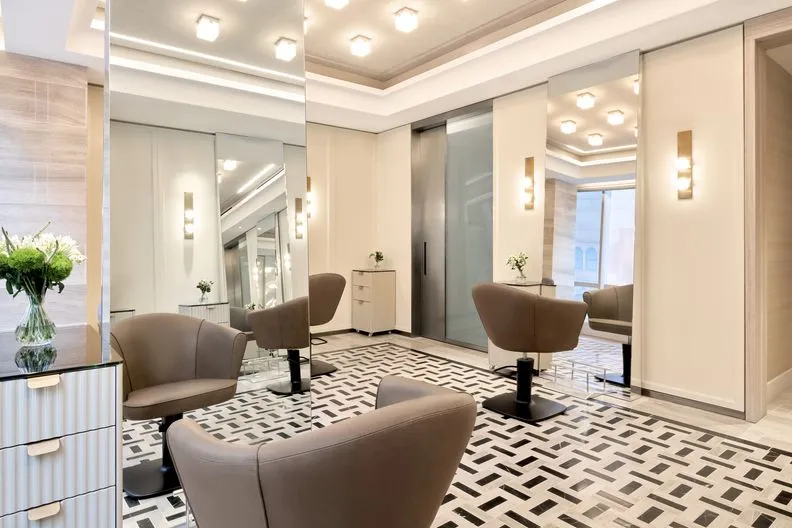
Luxury fashion shopping

Industry

Luxury Fashion

Market

United States

Services

Pay Per Click

Partnership

Started in 2021

The challenge

The retailer wanted Google Ads to return 5 to 6 times what it spent. It had budget ready to invest, but while returns sat below that target, part of it stayed unspent.

The account had a sound structure and plenty of room to grow in traffic and volume. There was room to sharpen it in 4 places.

  • Campaigns overlapping. Some campaigns competed for the same searches, so the account was partly bidding against itself.
  • Product listings. A few sold-out items were still being advertised, shipping details needed correcting, and some non-fashion items sat beside the designer pieces.
  • Measuring sales. Online sales were counted inside the ad platform rather than in the store’s analytics, and sales that finished in a boutique didn’t show up at all.
  • Ad copy and promotions were ready for a refresh.

Black Friday later raised the stakes. The big luxury houses advertise hard that week, clicks get more expensive and returns usually fall. The retailer wanted its strongest week of the year without raising its $30,000 monthly budget.

The solution

We ran Google Ads and Microsoft Ads for the retailer, with the product feed at the center of both. We restructured the account in the first summer, brought the boutiques into the campaigns that winter, then moved early into Performance Max and built Black Friday on top of it.

What made it work wasn’t one clever tactic but 3 principles: separate the intents, bid on value, not on an average, and cover every place the customer buys, online and in store. The tools have changed since then, but the logic is the same one that runs Performance Max today.

Pay Per Click

Splitting the account by intent and by price

ServicesGoogle Ads · Microsoft Ads · Feed Management

We split the campaigns by what the shopper typed into 3 groups.

  • Searches for the retailer’s own name
  • Searches for the designers it stocks
  • Generic fashion searches with no name in them

Campaign priorities and negative keywords kept each search in its own lane, so the account stopped competing with itself. We bid hard on the retailer’s name and stayed disciplined on designer names: those searches carry huge intent, but the designers own those auctions, and paying top price for clicks the store couldn’t win made little sense. Once the name campaigns performed on Google, we mirrored them into Microsoft Ads.

Pricing tiers in the feed

We moved the feed from Feedonomics to DataFeedWatch and tidied it with Merchant Center feed rules, setting the right gender on every product and pulling out the gift cards, books and games. The client’s team fixed the stock and shipping settings on their side. Then we tagged every product with 2 custom labels: 1 for its price band, 1 for whether it came from a top designer, later narrowed to the top 25.

A single order could be $32 or $14,000, so one average target for the whole store fit almost no real product. Grouping products into price bands fixed that: each band got its own budget and return target, so we could back the bands and designers that paid off and pause the ones that didn’t. We also moved spend toward the US states where people actually bought, and started importing sales from Google Analytics as the conversion, so bidding learned from the store’s own numbers.

Bringing shoppers to the boutiques

Many luxury buyers want to try a piece on before they buy it, so we built a location campaign for each boutique, with its own targeting and ad schedule, and had all of them live by January 2022. A few weeks later the client asked us to raise the boutique campaigns’ budget by 50%.

Early into Performance Max

We launched Performance Max in February 2022, as soon as it was available to the account, starting at $80 a day and scaling to $300 a day within the week. We pointed it at the price bands and the top 25 designers, the same signals the rest of the account already ran on.

Black Friday on the same budget

We planned Black Friday from the previous year’s data and kept the $30,000 monthly budget where it was.

  • We eased spend in the first 2 weeks of November, pausing the segments and 12 regions that performed least, and saved that budget for Black Friday week.
  • We put the top 25 designers first, with an average order value of around $700.
  • We swapped search campaigns built on designer names for Performance Max with high-quality display creatives, so the products could shine without bidding head to head against the designers.
  • We wrote creative and copy for 3 audiences: shoppers discovering the store, shoppers comparing pieces, and shoppers ready to buy before the deal ended.


The results

On Black Friday week, revenue rose 157% year over year and return on ad spend climbed from 333% to 1,143%, on the same $30,000 monthly budget.

  • Transactions up 186%
  • Conversion rate up 201%
  • Cost per click down 12%

The restructure had already paid off before that. Comparing May 2022 with May 2021, the month before we took over, the retailer invested 135% more in Google Ads and revenue from Google Ads grew 91%. Cost per acquisition fell 51% and the conversion rate rose 27%, and return on ad spend came in at 4x, the natural trade-off of scaling volume this fast.

+157%
Revenue · Black Friday week, year over year
1,143%
ROAS · Black Friday, up from 333%
+91%
Google Ads revenue · May 2022 vs May 2021
-51%
Cost per acquisition · May 2022 vs May 2021

Timeline

In their words

The Midsummer Team has worked in synergy with our eCommerce department, achieving an amazing return on ad spend using the previous year’s data to smash the market.

Ecommerce Marketing Manager

US luxury fashion retailer

The team

Francesca

Francesca

Francesca

Pay Per Click

Led the account: she set the strategy, ran the client relationship and directed the restructure, from the intent split and price bands to the early move into Performance Max.

Your business could be the next story.

Ecommerce plus physical stores? B2B and B2C under one roof? One market or eleven? The businesses other agencies find too complex are the ones we make shine.

Book a Call